Pacific Northwest reels after atmospheric river, Arctic blast leaves towns stranded
An unusually strong atmospheric river dumped a foot or more of rain across western and central Washington, triggering record floods, thousands of evacuations and dozens of water rescues. The deluge was followed by a surge of arctic air that has slowed runoff, heightened the risk of levee failures and mudslides, and complicated an already costly and protracted recovery.

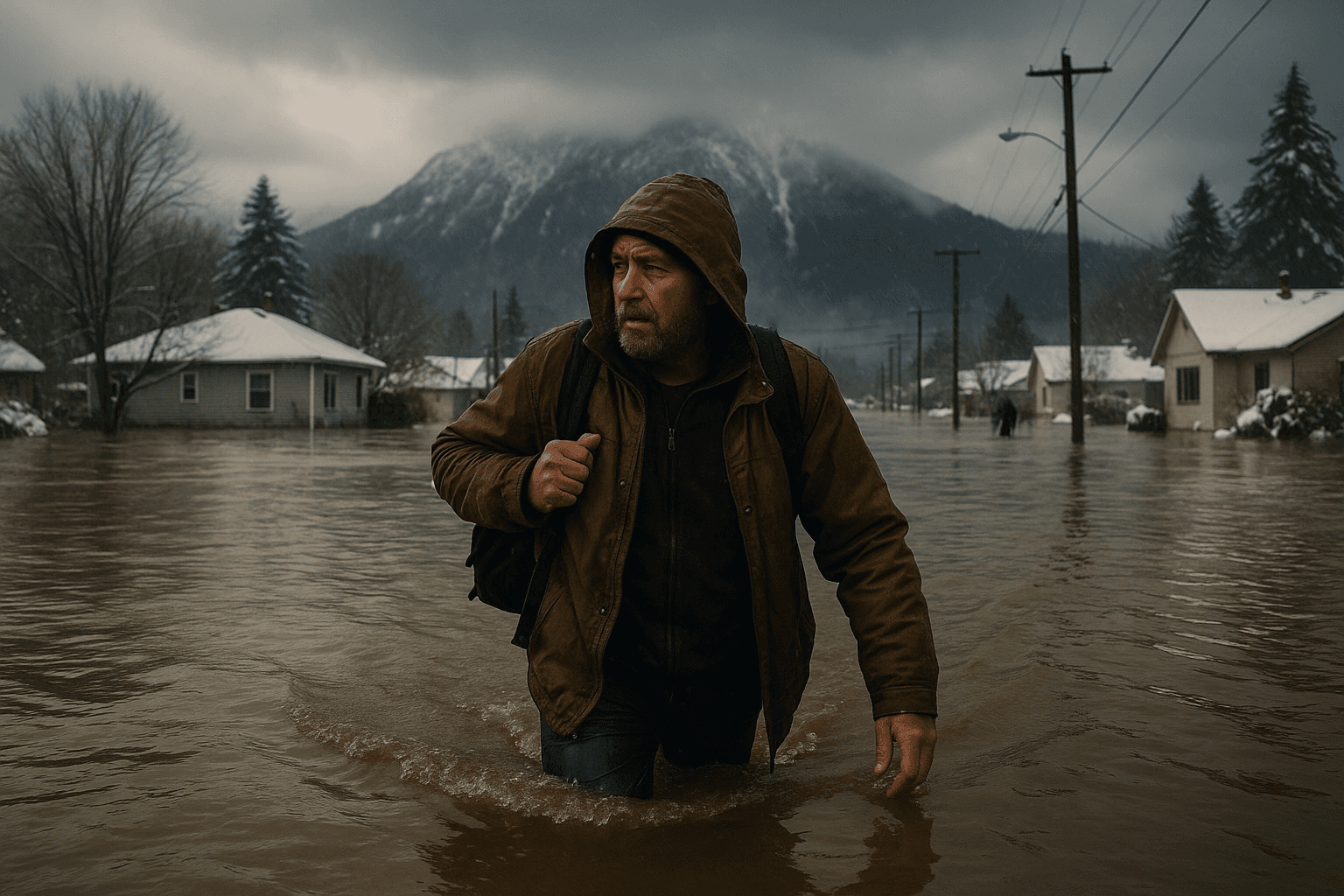
An intense atmospheric river that moved across western and central Washington over several days produced what officials described as record floodwaters, inundating towns along the Skagit and Snohomish river basins and forcing thousands to flee. Parts of the region received a foot, roughly 30 centimeters, or more of rain, according to Associated Press, ABC News and the Los Angeles Times, swelling rivers and overtopping banks in low lying communities.
Snohomish County north of Seattle emerged as one of the hardest hit areas. Emergency officials led federal, state and local dignitaries on a post flood tour to survey damage and coordinate response, as rescue crews carried out dozens of water extractions retrieving residents from rooftops and stranded vehicles. Homes and businesses were flooded, roads and bridges were washed out and highways were closed where debris and mudslides severed critical routes, leaving some communities effectively isolated.
The situation was complicated by a blast of arctic air that swept south from Canada after the rain event. The abrupt drop in temperature has slowed the pace of recession for swollen rivers, officials warned, and raised the risk that saturated slopes could produce further landslides or that ageing levees could fail as high water persists for days. Forecasts at the time called for additional rain the day after initial reporting, keeping emergency managers on heightened alert.
Local, state and federal teams remain engaged in search, rescue and damage assessment. In statewide remarks on the scale of the damage and the work to come, Washington Governor Bob Ferguson said, “It’s obvious that thousands and thousands of Washingtonians and communities all across our state are in the process of digging out, and that’s going to be a challenging process.” That assessment echoes the immediate needs on the ground for shelter, emergency repairs and debris removal.
Economic and infrastructure impacts are already visible. Washed out roads and closed highways disrupted commuter traffic and freight movements that serve the region’s manufacturing, agriculture and timber sectors. Emergency responders warned that prolonged high water will complicate repairs and raise costs for local governments already grappling with winter budgets. Insurance claims and public repair bills typically surge after events of this scale, and the need for federal disaster assistance is likely to be a central question for counties assessing damage.
The episode also touches on longer term policy debates over resilience and land use. Planners and engineers face pressure to strengthen levees, stabilize slopes and reassess development in flood prone floodplains as extreme precipitation events become more common. Scientists have increasingly linked warmer atmospheres to stronger atmospheric rivers, making these kinds of compound events a recurring policy and fiscal challenge for state and federal authorities.
The combined account of the emergency draws on reporting published December 13 by the Associated Press and contemporaneous coverage by ABC News and the Los Angeles Times, with AP contributors Hallie Golden in Seattle and Jeff Martin in Atlanta credited in the reporting. Rescue operations and emergency assessments continue as officials weigh next steps to restore access, protect vulnerable levees and plan the longer term recovery.
Know something we missed? Have a correction or additional information?
Submit a Tip