Practical Pickleball Primer Boosts Dinking and Third-Shot Drop Skills
A concise coaching primer lays out ten equipment-light drills focused on dinking, control and the third-shot drop, skills that matter most on crowded Asian courts where soft play and placement win points. The primer gives clear practice formats, coaching cues and error corrections that clubs and players can apply immediately to improve consistency and match decision-making.
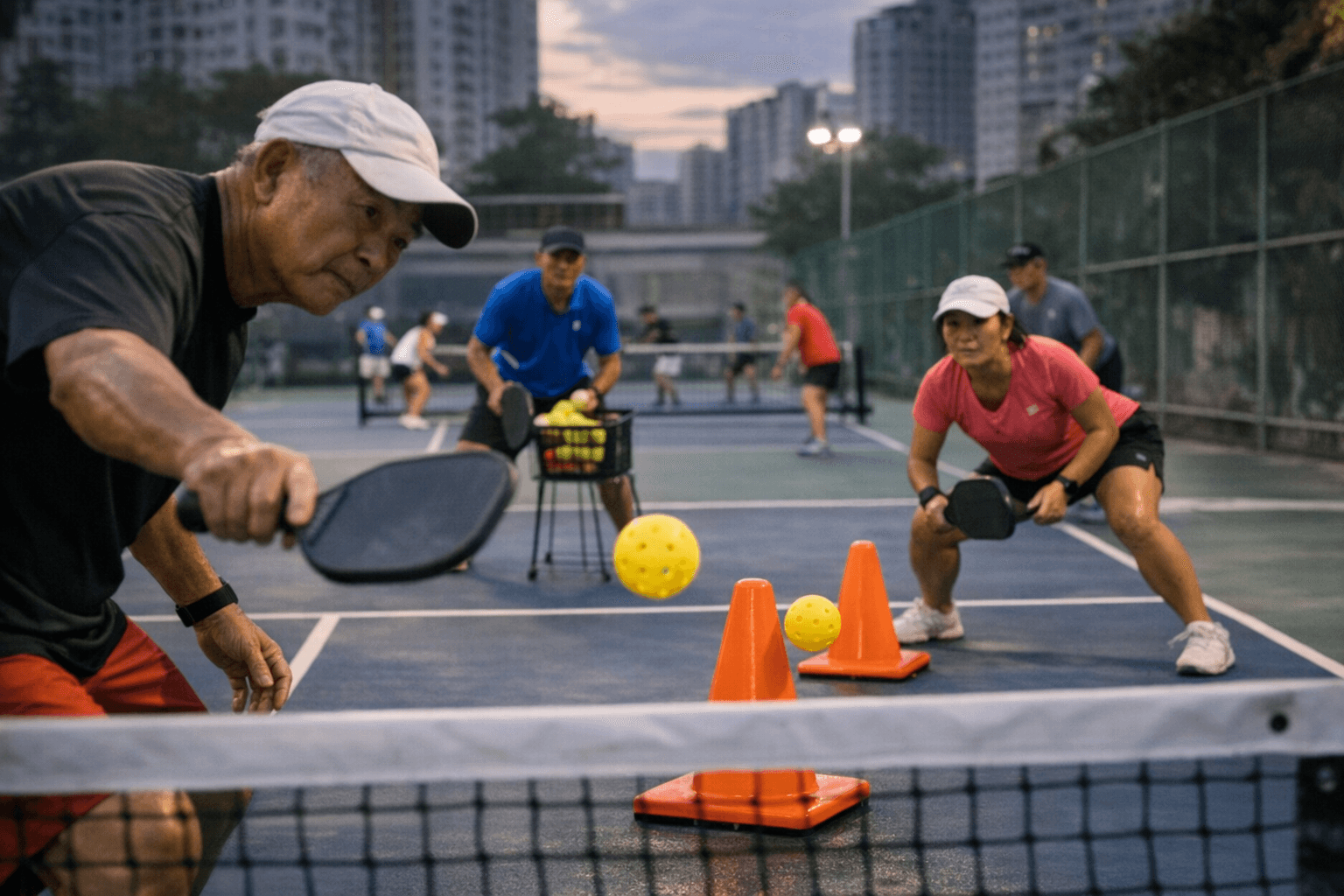
A new coaching primer for pickleball players in Asia concentrates on the soft game: dinking, placement and the third-shot drop. These shot types determine outcomes on many busy courts across the region, where rallies are decided by touch and court awareness rather than power. The primer packages ten drills with practice formats, coaching cues and common errors to fix, all with minimal equipment and suitable for indoor or outdoor courts.
At the core are drills that train repeatable, pressure-ready soft skills. The two-ball dink rally asks partners to alternate two consecutive dinks before switching, improving consistency under pressure. The crosscourt dink ladder moves a player progressively deeper crosscourt while maintaining soft contact to sharpen directional control. Non-dominant-hand dinking prescribes performing 20 to 30 percent of reps with the weaker-hand volley to balance coordination and reduce exploited weaknesses.
Third-shot drop work follows a clear progression. Start with slow-feeding from the baseline, then move to live returns to develop touch and trajectory judgement. Block-to-drop gives a realistic transition scenario: one partner attacks, the other blocks, then executes a third-shot drop to simulate match rhythm. Zone-targeting uses cones placed in the kitchen to train placement, while pressure points plays to three but penalizes kitchen-line hits to build controlled focus under scoring pressure.
Team skills receive attention as well. Poach-read drills add a third player who signals a poach, improving communication and court awareness for doubles. Soft-to-attack transition drills train decision-making by dinking until an opening, then finishing with a soft cut or drive. The primer concludes with match-scenario simulation: short-format games that prioritise dinking and successful third-shot drops so players can apply skills under realistic conditions.
Coaching cues and common errors are explicit and practical: relax the wrist, use the elbow, and follow through low. Coaches are given time and repetition guidance for each drill so sessions can be scaled to beginners or advanced players. The equipment-light approach means clubs only need paddles, balls and a few cones, making these drills accessible to crowded community courts and smaller clubs.
Integrate these exercises into a regular 45 to 60 minute session by warming up with basic dinks, progressing through targeted drills, and finishing with short-format games. Track progress by noting consistency in two-ball rallies and success rate of third-shot drops. That focused practice can translate directly into fewer unforced errors, better transitions to the kitchen and more effective play on Asia’s busy courts.
Know something we missed? Have a correction or additional information?
Submit a Tip