Revolutionary Guards Declare 'Red Line' as Protests Spread Nationwide
Iran’s elite Revolutionary Guard Corps has warned that protecting the 1979 revolution and national security is a “red line” as protests over economic hardship enter a 13th consecutive day. The warnings, arrests and a near-nationwide internet blackout heighten the risk of a harsh domestic crackdown with significant political and economic fallout for Iran and external actors.
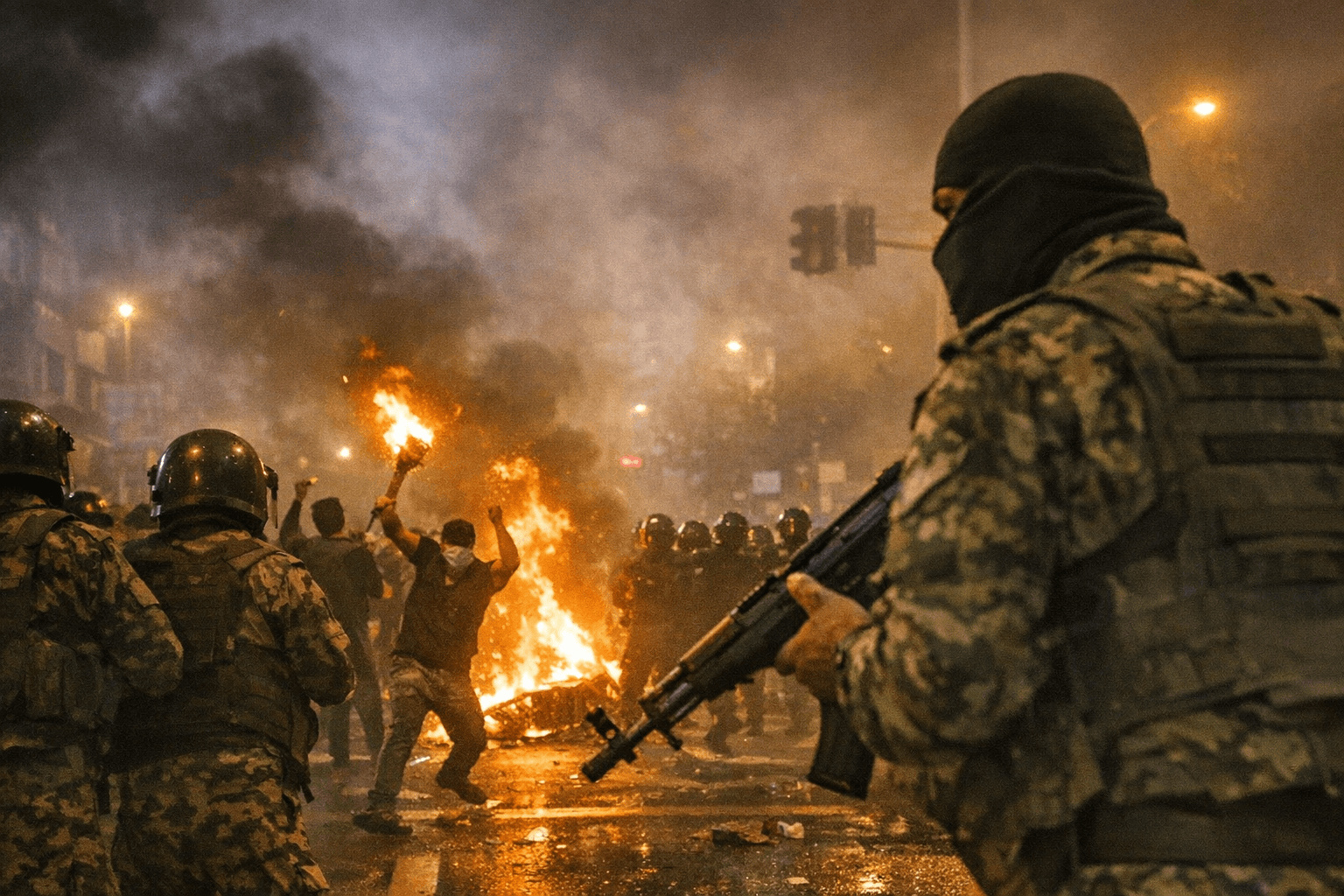
Widespread protests that began over deepening economic hardship have escalated into the most sustained challenge to Iran’s clerical establishment in years, spreading from Tehran into western and central provinces and entering a 13th consecutive day. State and independent accounts describe clashes in Tehran, fires at the capital’s bazaar, and demonstrations in Kurdish-majority Ilam and restive Lorestan provinces, with some protesters chanting "Death to Khamenei" and others heard in videos saying "This is the last battle, Pahlavi will return."
Iran’s Islamic Revolutionary Guard Corps issued a public warning, describing safeguarding the achievements of the 1979 Islamic Revolution and maintaining national security as a "red line" and saying the continuation of the situation was "unacceptable." The Guards’ intelligence arm said the blood of those killed in recent "terrorist incidents" rested on the hands of their planners and vowed to protect the Islamic Republic and public security. The tone of the statement was mirrored by the regular army, which pledged to "protect and safeguard national interests, the country’s strategic infrastructure, and public property," and urged citizens to foil what it called enemy plots.
Security organs have moved swiftly. State media reported at least 100 "armed rioters" arrested as authorities sought to suppress demonstrations, and state-affiliated security outlets said 950 police officers and 60 Basij paramilitary personnel were injured in confrontations with demonstrators alleged to be armed with firearms and grenades. Iran’s attorney general warned that anyone taking part in protests could be considered an "enemy of God," a charge that carries the death penalty under Iranian law.
Tactics to rein in the unrest have included a sweeping shutdown of internet services. Digital-monitoring groups reported a nationwide outage lasting roughly 36 hours, a move Amnesty International criticized as seeking to "hide the true extent of the grave human rights violations and crimes under international law" being carried out to crush protests. The shutdown has complicated independent verification of casualty and arrest figures and limited the ability of Iranians to organize and share information.
Domestic political voices have been mixed. Elements of the clerical establishment acknowledged economic grievances while condemning "violent rioters." Iran’s top Sunni cleric Molavi Abdolhamid publicly backed protests and warned many Iranians "are in need of bread," accusing officials of looting national resources. From abroad, Reza Pahlavi, the exiled son of Iran’s last shah, urged coordinated nationwide action and reportedly encouraged efforts to seize and hold city centers.
International reactions have added pressure. U.S. officials issued warnings to Iranian leaders, and one U.S. senator declared, "The United States supports the brave people of Iran." European leaders urged restraint and condemned violence.
Policy and market implications are immediate. A sustained crackdown would deepen domestic instability and likely trigger further sanctions and diplomatic isolation, undermining investor confidence. Disruptions to transport and infrastructure, if extended, could affect energy shipments and regional supply perceptions, with knock-on effects for global markets. Longer term, the protests underscore chronic economic malaise and political fragility that have driven episodic unrest in 1999, 2009, 2019 and 2022, complicating any quick policy response by Iran’s leadership and increasing the potential for structural economic reforms or harsher authoritarian measures.
Know something we missed? Have a correction or additional information?
Submit a Tip