Russia Fires Massive Drone and Missile Barrage, Strikes Ukraine Amid Talks
Russia is launching a large scale overnight assault on Ukraine while U.S. and Ukrainian envoys hold talks in Florida aimed at a security framework, underscoring how military action is colliding with diplomacy. The strikes targeted energy infrastructure and transport links, and temporarily cut off grid power to a nuclear plant, raising acute risks as winter deepens and markets and policymakers assess the fallout.

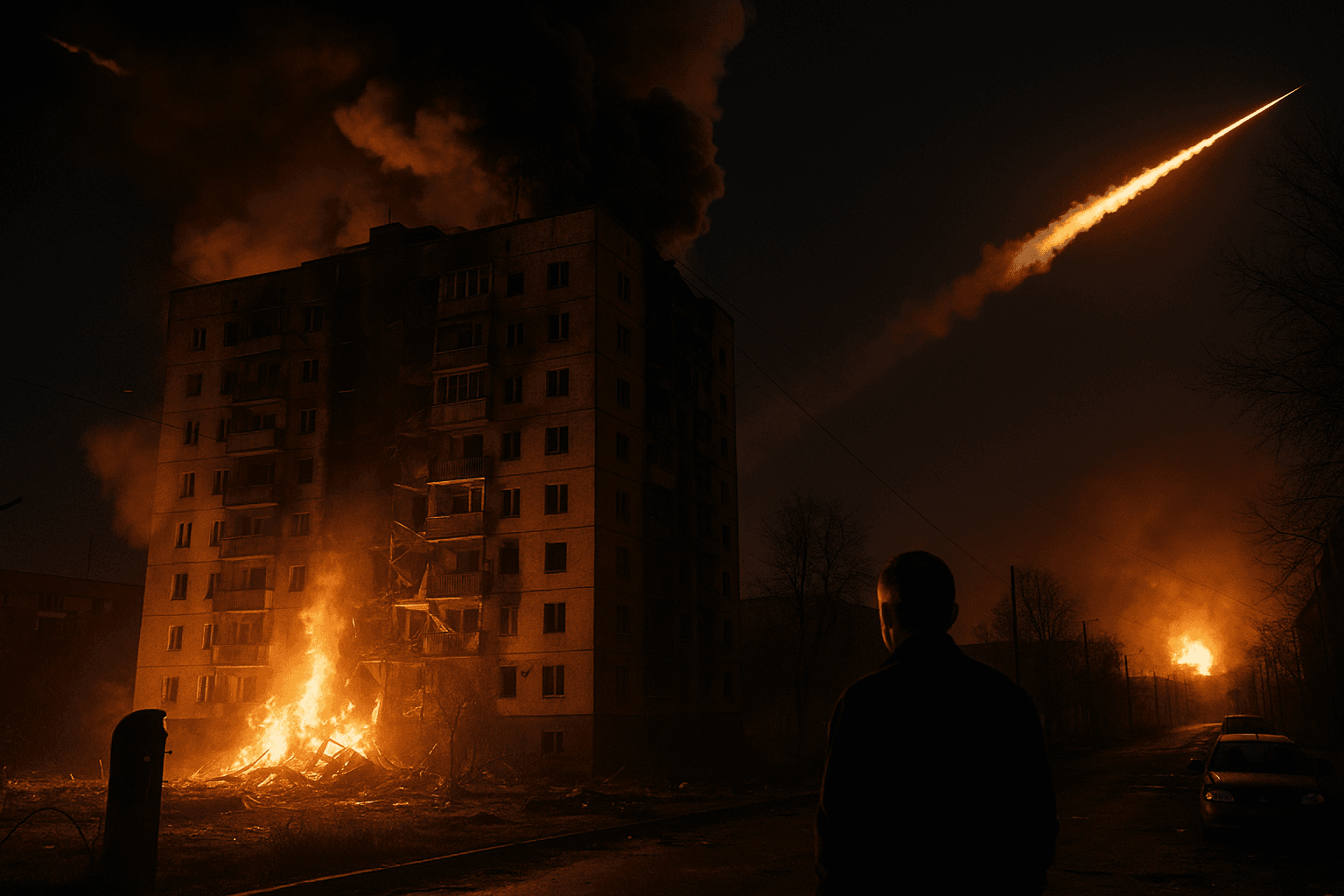
Ukrainian authorities report that Russia unleashed 653 drones and 51 missiles overnight into Saturday December 6, 2025, in one of the most intense barrages since the war began. Ukraine said its air defenses intercepted 585 drones and 30 missiles, leaving at least 29 locations struck across multiple regions. At least eight people were wounded, including three in the Kyiv region, and reported damage included energy infrastructure and a railway station.
The interception figures imply an air defense success rate of roughly 90 percent against drones and about 59 percent against missiles, a performance that both highlights the growing capacity of Ukraine's integrated air defenses and the limits those systems face under massed attack. The scale of the assault imposed large operational strains on missile defense batteries and on the logistics of ammunition resupply, while the number of incoming weapons, more than 700 in total, reflects Russia's increasing reliance on volume to overwhelm defenses.
The International Atomic Energy Agency reported a temporary loss of off site power to the Zaporizhzhia nuclear plant during the strikes, elevating concerns about the vulnerability of critical infrastructure. Loss of external electricity at a nuclear facility increases dependence on onsite backup systems and raises the stakes for emergency planning, especially as heating season intensifies electricity demand across Ukraine and neighboring countries.
The attack comes as U.S. envoys and Ukrainian negotiators meet in Florida to discuss a potential security framework intended to reduce violence and create pathways to de escalation. The simultaneity of strikes and talks underlines the tension between battlefield dynamics and diplomatic efforts. Military analysts say such strikes can be interpreted as pressure tactics aimed at shaping bargaining positions, while also risking international backlash if civilian infrastructure and nuclear safety are endangered.
Economic and market implications are immediate and potentially lasting. Damage to energy infrastructure increases short term risks to electricity supply and could exert upward pressure on regional power and natural gas prices as cold weather raises demand. Insurance and freight costs may rise if transport hubs such as railway stations are perceived as at risk. Defense procurement pressures are likely to intensify as Ukraine and its partners assess gaps in air defense coverage, creating further budgetary and industrial demand for interceptors and radar systems.
Longer term, the operation reinforces trends seen over the past four years, including the use of saturating drone attacks and the erosion of safe operating environments for civilian infrastructure. The cost asymmetry between inexpensive attack drones and more costly interceptors creates an expensive defense burden for Ukraine and its supporters. How Western partners respond with additional systems, funding, and diplomatic leverage will shape both battlefield outcomes and the prospects for any negotiated security arrangements emerging from the talks in Florida.