SFCC Offers Free Introductory Digital Design and 3D Printing Course
Santa Fe Community College announced a free, hands on introductory course in digital design and FDM 3D printing that will run Jan. 12 to Jan. 30, 2026 at the SFCC Higher Education Center. The short evening program aims to give local youth and adults practical skills in Tinkercad and fused deposition modeling that can feed into manufacturing, art, education and small scale fabrication opportunities.
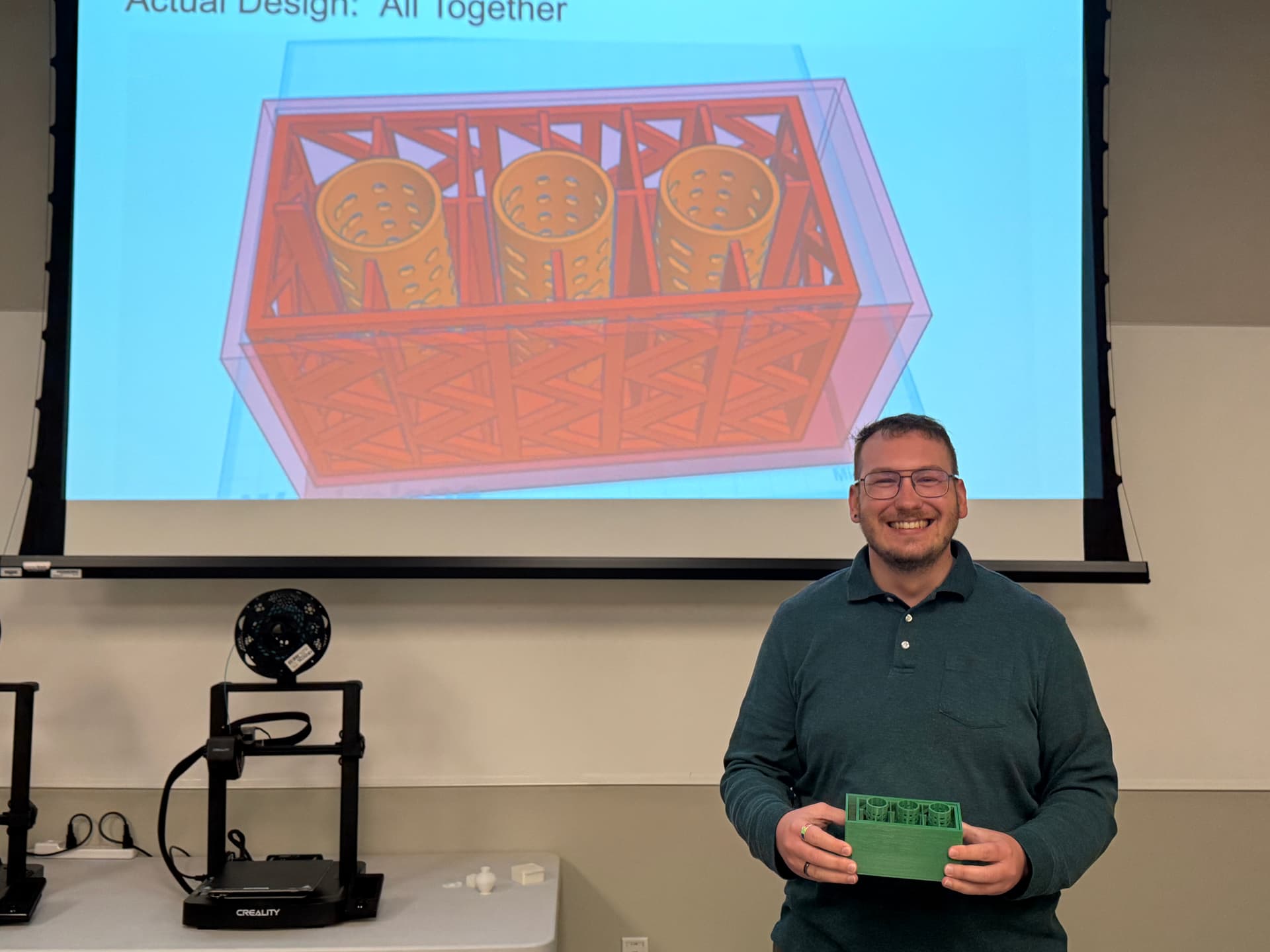
Santa Fe Community College posted on Dec. 12 that it will offer a free introductory course in digital design and 3D printing at the SFCC Higher Education Center from Jan. 12 through Jan. 30, 2026. The course meets on Mondays, Wednesdays and Fridays from 5 to 7 p.m., with a date adjustment to accommodate the Martin Luther King holiday. It is open to participants ages 12 and up and carries no tuition charge.
The class curriculum centers on basic digital design using Tinkercad and hands on operation of fused deposition modeling 3D printers. Organized as student projects, the course is structured to provide roughly 18 hours of in person instruction across the three week period. SFCC’s workforce development office is promoting the class as practical preparation for careers and activities ranging from small scale manufacturing and prototyping to art projects and classroom makerspace work.
For Los Alamos County residents the offering reduces common barriers to entry for digital fabrication skills training by eliminating tuition and scheduling evening hours to accommodate working adults and school age participants. Skills in CAD and 3D printing are portable across industries and can help diversify income opportunities for local workers, hobbyists and small business owners who are exploring product design, rapid prototyping and custom manufacturing at modest scale.
Community colleges nationally have expanded short form workforce programs as employers seek candidates with applied technical skills. Locally, this course adds to that trend by providing nearby access to equipment and instruction without the cost and travel time associated with longer certificate programs. That accessibility can strengthen the local talent pipeline for employers that rely on rapid prototyping and small run production, while also offering young residents exposure to technology that is increasingly used in education and creative industries.
The announcement includes enrollment directions and a contact for the instructor for residents who want to sign up or learn more. As community training options grow, free introductory offerings such as this one serve both immediate learning needs and longer term efforts to build practical skills in the regional workforce.
Sources:
Know something we missed? Have a correction or additional information?
Submit a Tip