Shell halts two Gulf platforms after HOOPS pipeline shutdown, production paused
Shell temporarily shut output from its Whale and Perdido platforms today after a shutdown of the Hoover Offshore Oil Pipeline System, a disruption that removes roughly 147,000 barrels per day of capacity from regional flows. The interruption matters because it concentrates downside risk for Gulf of Mexico output and could tighten crude flows to Texas refineries if operators do not restore service quickly.

Shell notified regulators and industry partners today that production at two Gulf of Mexico platforms, Whale and Perdido, was temporarily suspended following a shutdown of the Hoover Offshore Oil Pipeline System, known as HOOPS. The company said it expects production to resume by the end of the following day, and declined to provide current output figures while investigations continue into the cause and the timeline for a full restart.
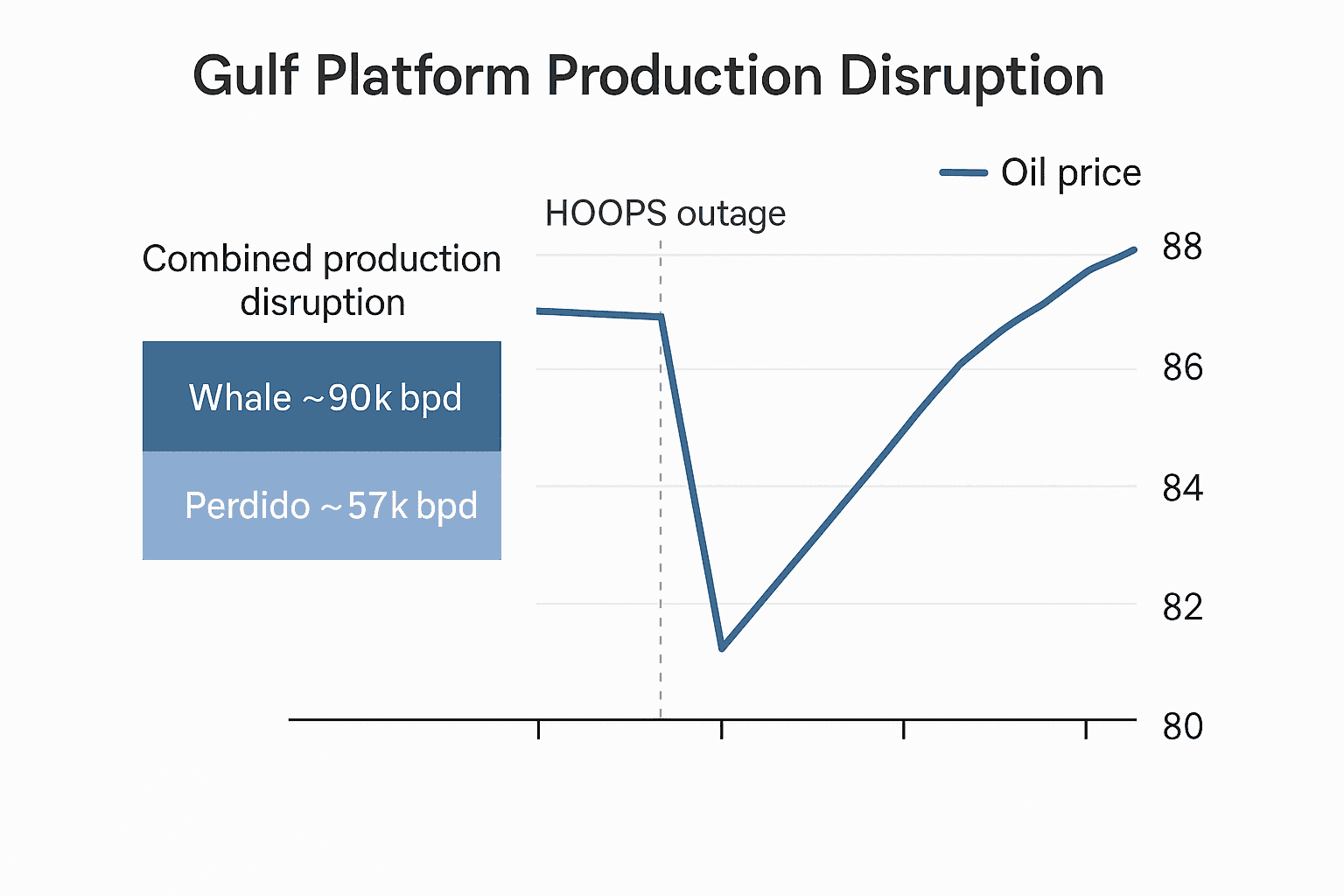
Based on earlier September estimates, Whale produced near 90,000 barrels per day and Perdido near 57,000 barrels per day, giving a combined capacity disruption of roughly 147,000 barrels per day. That scale of interruption is material for regional flows, because the HOOPS pipeline moves crude from offshore facilities to the Texas coast where major refineries and export terminals are concentrated.
Markets reacted modestly to the outage, with traders and refiners monitoring the situation for signs of extended downtime. Short term price sensitivity was muted in part because temporary outages can often be absorbed by floating storage, alternative pipeline capacity and refinery stockpiles, but a prolonged shutdown could alter refinery feedstock logistics and raise operating costs for Gulf coast refineries that rely on steady offshore flows.

The incident highlights operational vulnerabilities in offshore production that can ripple through regional supply chains. Operators are investigating the cause of the HOOPS shutdown while coordinating with pipeline and port authorities to restore flows. Shell, which declined to provide up to date output data, framed the suspension as temporary and targeted a restart within 24 hours. That timetable, if met, would limit the economic impact to a brief interruption in crude receipts at Texas terminals.
From a policy perspective, such shutdowns typically prompt heightened scrutiny from federal safety and pipeline regulators, and can accelerate inspections and procedural reviews of offshore transfer and pipeline systems. The event underscores long standing tensions between maintaining aging hydrocarbon infrastructure and the need for reliability in supply chains that underpin refining and export activity. Regulators faced with recurring outages may consider stepped up oversight or changes to maintenance requirements for pipeline operators and platform links.
Longer term, the episode feeds into a broader conversation about energy security and resilience. Offshore fields and the midstream systems that carry their output remain critical to United States crude balances even as the energy transition shifts investment patterns. Investors and policy makers watch interruptions like this for signals about the cost of maintaining production networks and the potential need for redundant capacity or upgraded monitoring technology.
Reporting credited to Reuters via industry outlets.
Sources:
Know something we missed? Have a correction or additional information?
Submit a Tip