Slovakia to sign U.S. nuclear cooperation pact for 1,200 MW unit
Slovakia says it will sign a U.S. nuclear cooperation pact next week to build a roughly 1,200 MW reactor at Jaslovske Bohunice.
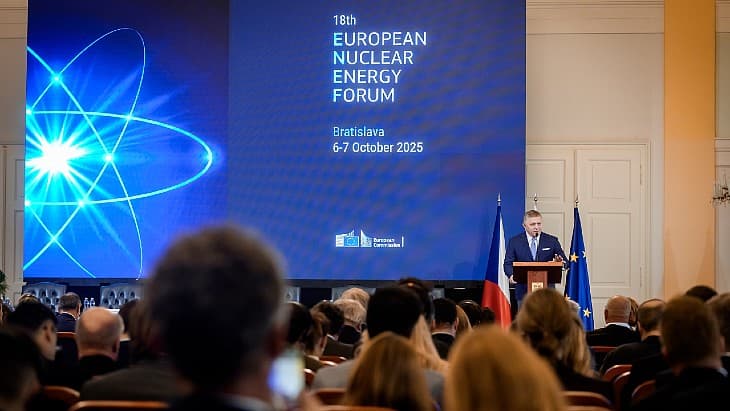
Prime Minister Robert Fico said Slovakia will sign a nuclear energy cooperation agreement with the United States "next week," as Bratislava moves toward constructing a new reactor unit with U.S. assistance. The planned unit, he said, would have a capacity of almost 1,200 megawatts and be sited at the existing Jaslovske Bohunice nuclear complex, with the government intending to keep the project in state ownership.
Fico described the ambition bluntly: "in cooperation with American partners, we want to build a new huge block in purely state ownership." He identified discussions with U.S. partners, including the group Westinghouse, as ongoing, and indicated a diplomatic signing ceremony in Washington was planned for Friday, which he hoped to attend. He also said that U.S. President Donald Trump had invited him to the United States during "this year’s soccer World Cup" for the signing.
The announcement follows earlier intergovernmental movement: the Slovak government approved a U.S.-Slovakia framework for construction of a new unit in October. Slovakia already operates five reactors across two plants, and a single new unit of roughly 1,200 MW would be larger than its current reactors, underscoring a strategic push to bolster domestic baseload generation and reduce reliance on imported fossil fuels.
Many technical, contractual and financing questions remain unresolved. Sources from Bratislava have not released detailed technical specifications, an explicit construction timetable, or final contractual terms and financing arrangements. There is no public confirmation that Westinghouse or any other U.S. firm has signed binding contracts beyond the negotiations referenced by the prime minister. The precise date, signatories and attendees for the planned Washington ceremony were not specified at the time of Fico's remarks.

The proposal carries immediate geopolitical and legal dimensions. A state-owned large-scale nuclear project developed with U.S. technology would strengthen ties with Washington at a time when Central Europe is recalibrating energy partnerships in response to disruption of Russian gas supplies. It also raises questions about procurement and state aid under European Union rules, national regulatory approvals, and oversight by Euratom and Slovak nuclear regulators. Those processes will determine the pace at which construction and commissioning can proceed.
Domestically, Fico's insistence on state ownership signals a political calculation as well as an industrial strategy: control of a strategic asset can be presented as a safeguard for national energy security, but it may complicate access to private financing or international investment frameworks that companies typically provide for large nuclear projects.
Slovakia's next steps will be closely watched by EU capitals and investors. Confirmed texts of any intergovernmental agreement, public statements from Westinghouse and U.S. officials, financing commitments, and Slovakia's regulatory and parliamentary approvals are the key items that will determine whether the announcement translates into a multi-billion-euro construction program or remains a diplomatic headline.
Sources:
Know something we missed? Have a correction or additional information?
Submit a Tip