Small Coeur d'Alene rally marks Jan. 6 anniversary, urges vigilance
About a dozen people gathered on Government Way to mark the five-year anniversary and call for vigilance against threats to democracy. The demonstration highlighted local concern over civil liberties.
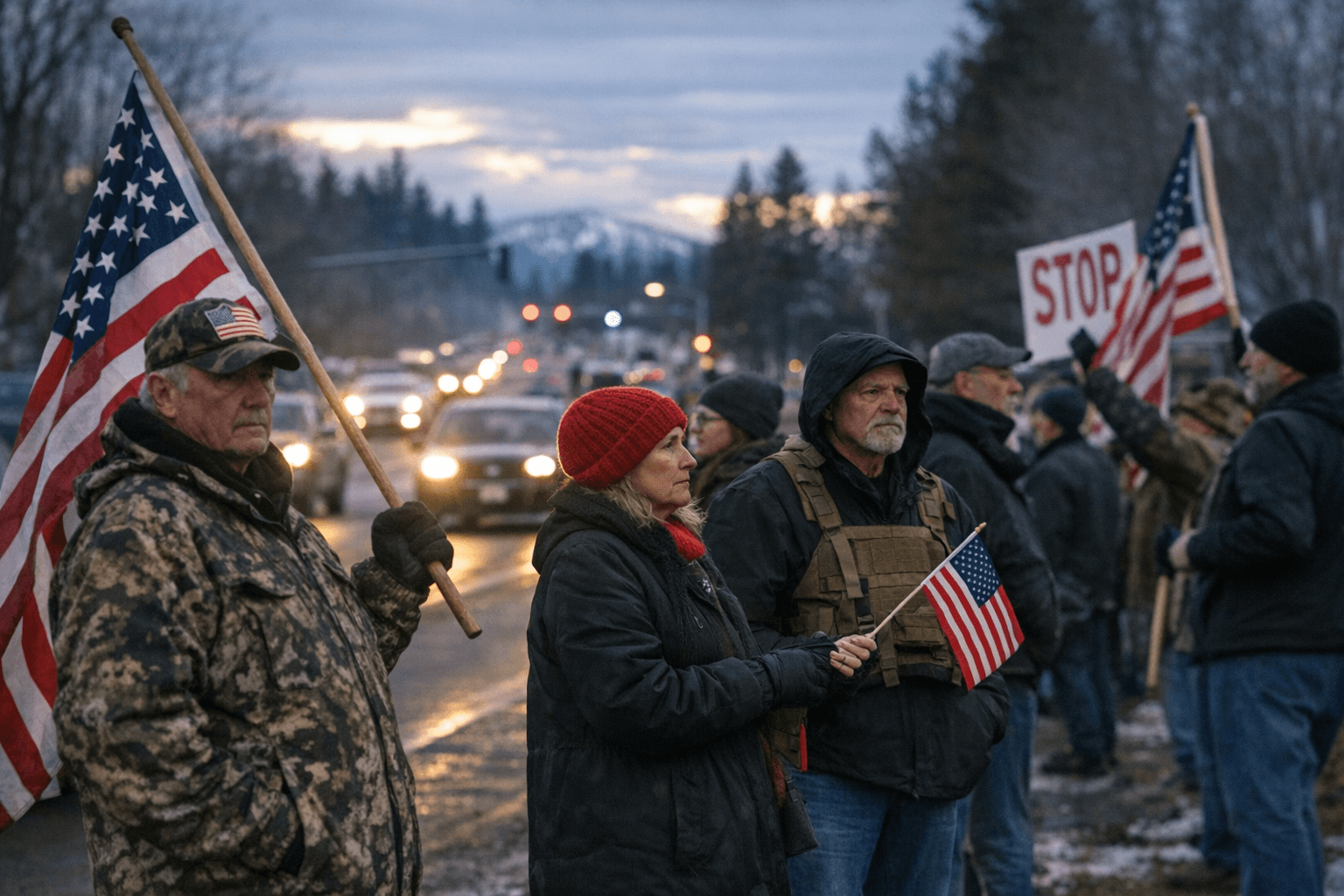
About a dozen people stood along Government Way in downtown Coeur d'Alene on Jan. 6 and Jan. 7, 2026, holding signs and marking the five-year anniversary of the U.S. Capitol breach. The small demonstration was organized by Julie Celeberti to remember the events and to call for vigilance against threats to democracy, and attendees identified concerns about rising authoritarianism, threats to civil liberties, and the need to protect local democratic institutions.
Participants chose a visible downtown stretch to make their point directly to passersby and to spark conversation among neighbors and shoppers. The gathering took place in typical early January conditions for North Idaho; demonstrators stood firm in chilly winter weather as traffic and pedestrians moved by. Although compact, the demonstration was loud in intent if not in numbers, reflecting how national political crises continue to reverberate in Kootenai County civic life.
The rally came amid a contested national conversation over how to remember Jan. 6, with no single national memorial or narrative agreed upon. Locally, the event served as a reminder that debates over free speech, protest, and the line between dissent and violence remain active concerns for residents. For many in attendance, the day was less about spectacle and more about civic responsibility and attention to how political rhetoric can translate into real threats to democratic norms.
Public health and community wellbeing factor into these civic expressions. Small outdoor gatherings pose low infectious disease risk, but the broader health impacts of political polarization are real: prolonged civic stress can exacerbate anxiety, depression, and community fractures. Local public health and social service providers say that when political conflicts escalate, vulnerable residents often feel the effects first—marginalized groups may experience heightened fear around safety, access to services, and equal treatment under the law.
Policy implications for local leaders are practical and immediate. City and county officials can use moments like this to reaffirm commitments to public safety that protect both free expression and vulnerable populations, to support community dialogue, and to fund civic education programs that strengthen democratic skills like critical media literacy and respectful deliberation.
The demonstration on Government Way was small in turnout but pointed in purpose, a local expression of national concerns. The takeaway? Stay engaged, keep conversations civil, and keep watch over the institutions that protect civil liberties—showing up matters, whether at a downtown demonstration, a school board meeting, or the ballot box. Our two cents? Talk to your neighbors, attend a public meeting, and vote—these are the everyday tools that keep democracy local and accountable.
Sources:
Know something we missed? Have a correction or additional information?
Submit a Tip