Small hobby drone forces brief runway closure at Oslo Gardermoen
A small hobby drone prompted the temporary closure of one runway at Oslo’s Gardermoen for about 20 minutes. The interruption underscores rising concerns about unmanned aircraft near major airports.

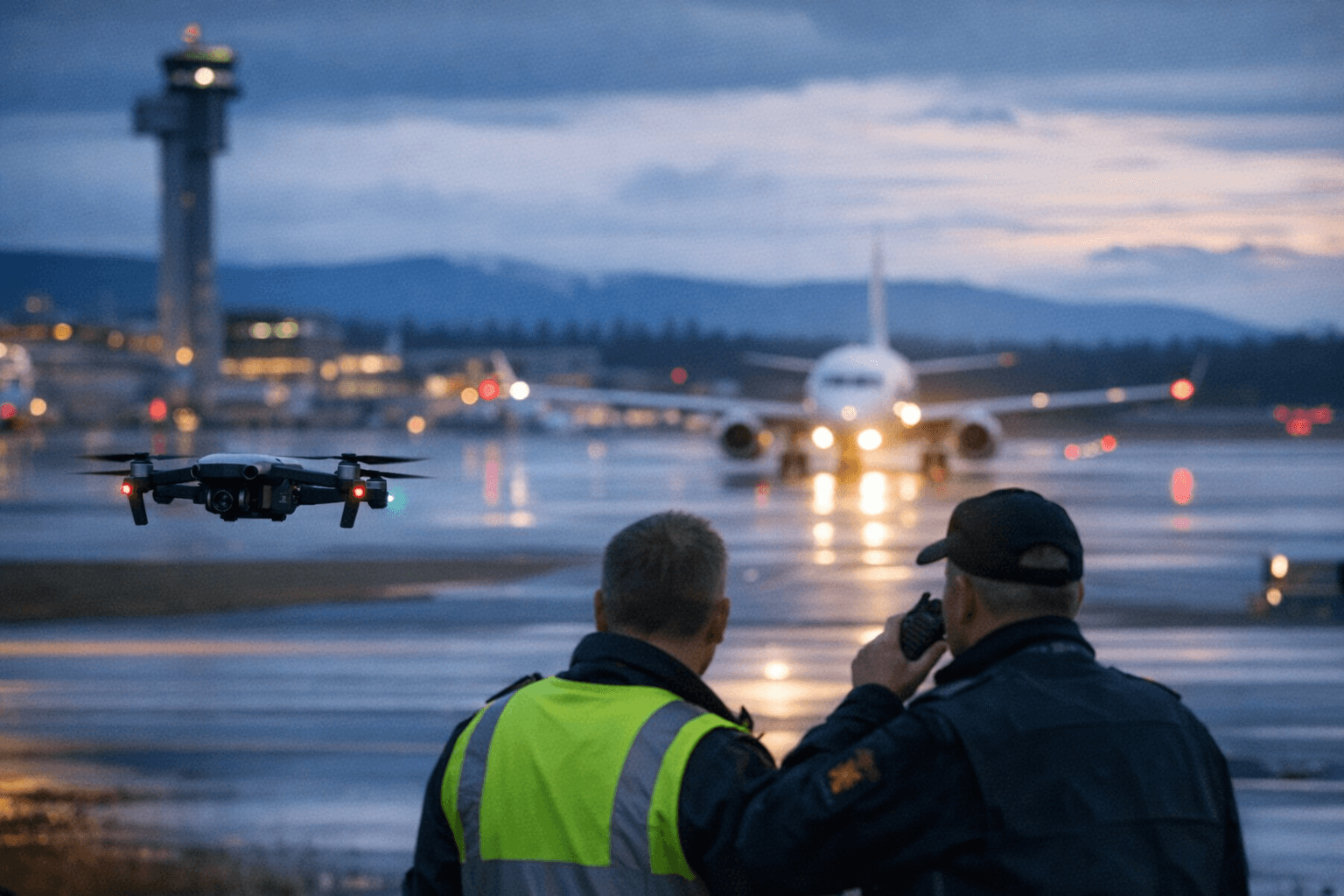
Avinor temporarily closed one of Oslo Airport’s two runways after staff observed a small unmanned aerial vehicle near the airfield, halting use of the strip for "about 20 minutes" before normal operations resumed. The operator described the object as a "small hobby drone," and said the closure affected one runway rather than the entire airport.
Gardermoen, the main international gateway north of Norway’s capital, has two north-south runways and handles the bulk of Norway’s scheduled international traffic. While the closure was short, the incident once again drew attention to the vulnerability of busy civil airports to incursions by unmanned aircraft and the operational decisions that airfield operators must take to preserve safety.
Avinor provided the initial account of the sighting and the precautionary action; the company did not identify an individual spokesperson in its public statement. Beyond the characterization of the object and the approximate duration of the closure, official accounts published immediately after the incident did not disclose whether any flights were delayed or diverted, whether air traffic control recorded any direct conflict with arriving or departing aircraft, or whether local police or the Norwegian Civil Aviation Authority were involved in a follow-up inquiry.
Airport closures and runway suspensions, even brief ones, can produce cascading effects on schedules, particularly at larger hubs where traffic density leaves little margin for recovery. The operational pause at Gardermoen lasted only minutes, but the event will be examined by operators and regulators concerned with risk mitigation, detection systems and the enforcement mechanisms available to deter illegal flights of unmanned aircraft in controlled airspace.
The incident also feeds into a broader European conversation about unmanned aerial systems and aviation safety. Regulators across the region have been tightening rules and investing in counter-drone capabilities after a series of high-profile disruptions at civilian airports and critical infrastructure. For national authorities, the central questions are whether existing no-fly zones are being respected, whether detection and tracking systems are adequate, and how responsibility for policing such incursions should be apportioned between airport operators, aviation authorities and police forces.
At this stage, key pieces of information remain unavailable: the identity or intent of the operator, the drone’s make or model, its altitude and flight path relative to active approaches, and whether enforcement or an investigation was launched. Journalistic and regulatory follow-up would normally seek Avinor’s full incident log, air-traffic-control records, and confirmation from the Civil Aviation Authority and local police about any subsequent actions.
For the travelling public and aviation planners, the Gardermoen episode reinforces the need for clear, enforceable rules and for investment in systems that can quickly detect and attribute unmanned aircraft activity near runways. Even when disruptions are brief, the potential for serious risk to commercial flights makes prevention and rapid response a continuing priority for airports and regulators across the Nordic region and beyond.
Know something we missed? Have a correction or additional information?
Submit a Tip