SpaceX to Launch NASA’s Pandora Exoplanet Observatory in Twilight Rideshare
SpaceX is scheduled to lift NASA’s Pandora smallsat into sun‑synchronous orbit today aboard a Falcon 9 during a large Twilight rideshare carrying about 40 payloads. Pandora aims to separate exoplanet atmospheric signatures from stellar variability, a capability that could sharpen interpretations from telescopes such as Kepler and JWST and accelerate the search for habitable worlds.

A Falcon 9 rocket is slated to lift off from Vandenberg Space Force Base’s Space Launch Complex 4 East this morning, carrying NASA’s Pandora exoplanet observatory as the primary payload of SpaceX’s large Twilight rideshare. The launch window opens at 8:19 a.m. Eastern (13:19 UTC; 5:19 a.m. Pacific) and extends for about 57 minutes. SpaceX plans to livestream the flight on its website and via its X account, with coverage beginning roughly 15 minutes before liftoff.
Pandora is a roughly 325 kilogram small satellite developed under NASA’s Astrophysics Pioneers program and led from Goddard Space Flight Center, with mission operations based at the University of Arizona in Tucson. The observatory carries a 0.45 meter Cassegrain telescope developed jointly by Corning Incorporated and Lawrence Livermore National Laboratory. The spacecraft bus was supplied by Blue Canyon Technologies; post test imagery has shown star trackers and multilayer insulation among visible spacecraft features.
The mission’s central scientific objective is to disentangle the effects of stellar variability from the atmospheric signals of transiting exoplanets by repeatedly observing starlight that has passed through planetary atmospheres. Mission materials describe an observing strategy of long duration, repeated visits: Pandora will return to each target system about 10 times, with each observation lasting approximately 24 hours. Public descriptions emphasize detailed, long‑duration observations of roughly 20 unique planets and their host stars during the mission’s initial phase, although some program materials envision studies of as many as 39 exoplanets over broader timelines. The immediate prime plan calls for about one month of commissioning in sun‑synchronous low Earth orbit followed by a one‑year science phase, with mission data to be made publicly available.
Pandora was selected in 2021 as one of the inaugural Astrophysics Pioneers missions, a program structured to deliver focused science within tight cost and scope constraints. Reporting from the selection period cited a budget cap for Pandora near $20 million, a limit that underlines the mission’s role as a cost‑constrained, high‑impact experiment to augment larger observatories.
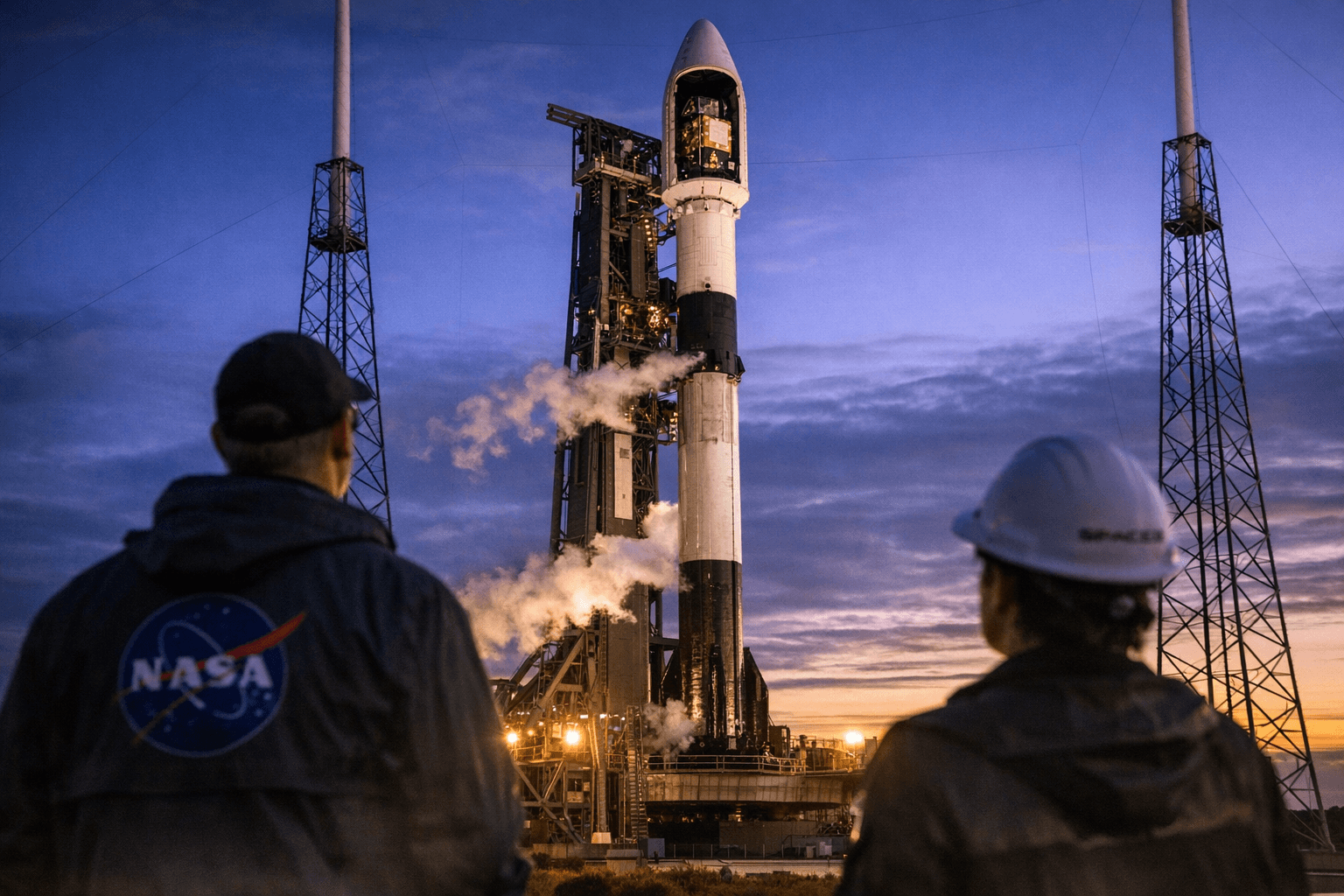
Riding alongside Pandora on the Twilight mission are roughly 40 co‑manifested payloads that include NASA CubeSats such as BlackCAT and SPARCS, plus commercial satellites from operators including Spire Global and Kepler Communications. The flight will place the constellation of payloads into a sun‑synchronous low Earth orbit well suited to long, stable observing campaigns.
Daniel Apai of the University of Arizona, a lead in the Pandora science team, described the mission as "a bold new chapter in exoplanet exploration." Scientists say Pandora’s measurements in visible and near infrared light will help interpret and prioritize targets for larger telescopes, refine techniques for reading faint atmospheric signals, and guide future searches for potentially habitable worlds.
Following today’s launch and the planned commissioning period, the Pandora team will begin its scheduled one‑year primary science campaign, releasing data to the public as it arrives.
Sources:
Know something we missed? Have a correction or additional information?
Submit a Tip