Taco Bell Workers Say Drive-Thru Timers Delay In-Store Orders
A Taco Bell crew member posted on Jan. 5, 2026, complaining that corporate drive-thru timing metrics force staff to prioritize drive-thru orders over in-store customers, sometimes leaving in-store orders waiting as long as 30 minutes. Other current and former employees responded to the thread, saying the timer-driven priorities increase stress, harm customer experience, and feed into managerial pressure tied to scorecards and potential discipline.
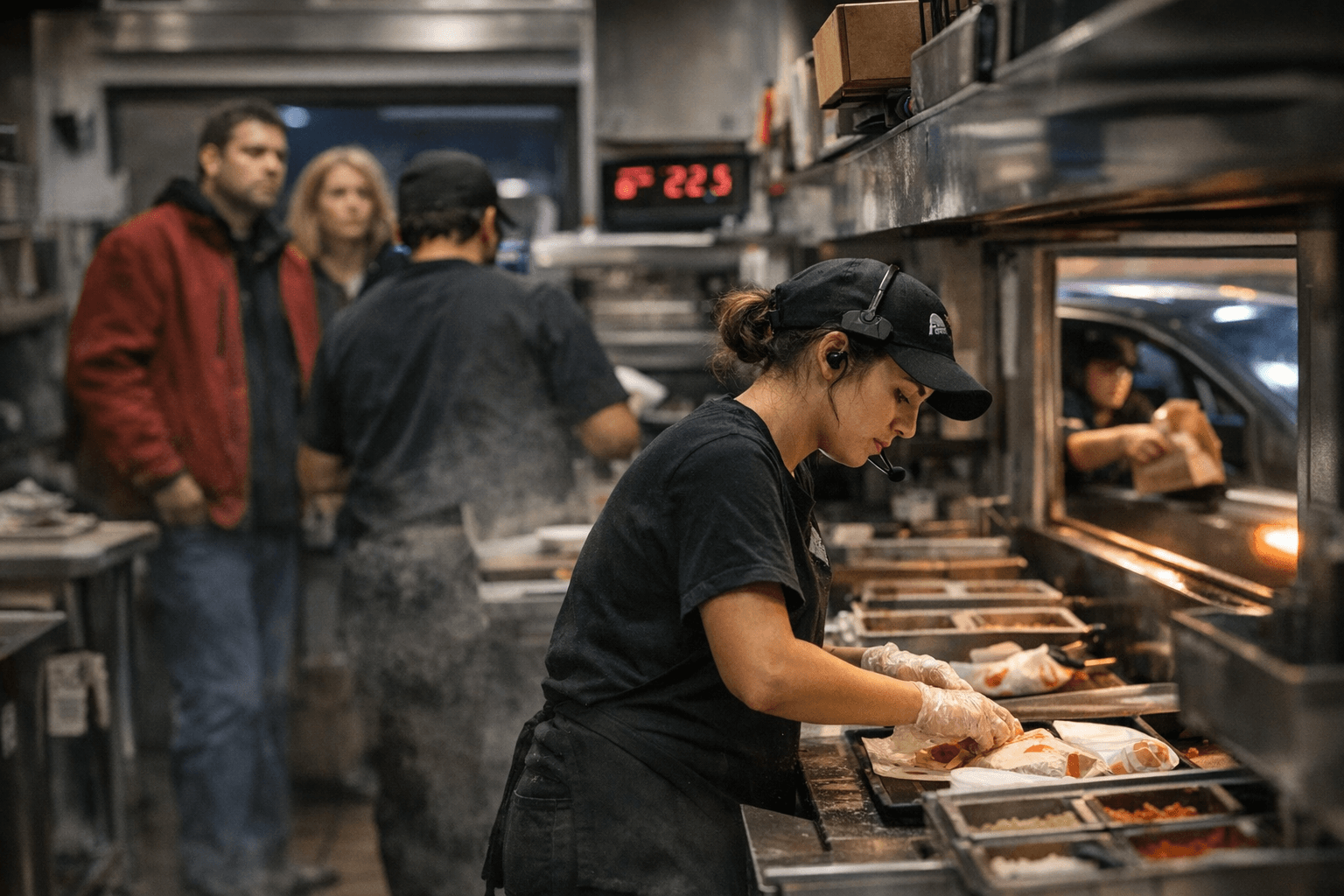
On Jan. 5, 2026, a Taco Bell crew member sparked a worker conversation after criticizing the company’s emphasis on drive-thru timing metrics. The poster described a system in which timers and performance indicators push staff to fill drive-thru orders first, even when sit-down or walk-in customers placed orders earlier. That imbalance, the employee said, has produced situations where an in-store order waited roughly 30 minutes while newer drive-thru orders jumped ahead.
Responses from other current and former Taco Bell employees who joined the thread corroborated the account, describing similar operational friction. Those contributors said timer-driven priorities shift the crew’s focus to the numbers that are being measured at the expense of broader service quality, increasing both the pace of work and the volume of stressful tradeoffs employees must make during shifts.
The tension centers on competing goals: the visible metrics that corporate tracks, such as drive-thru times, and the on-the-ground reality of serving multiple channels simultaneously. According to the discussion, managers face scorecards that reflect store performance on those metrics, and pressure to hit targets can cascade down to staff. When metrics slip, contributors said, managers may face consequences that can lead to increased scrutiny or discipline for store-level employees, intensifying an already high-pressure environment.
The workforce implications are immediate. Crew members report heavier workloads, fractured attention between customers inside the restaurant and those in the drive-thru lane, and declining morale when measured priorities visibly undermine customer service. For customers, the result can be longer waits and frustration for in-store patrons who expect timely service. For managers, the need to balance performance data with real-time operational judgment creates a difficult managerial calculus that can pit meeting scorecard targets against meeting individual customer expectations.
The worker thread functions as a contemporaneous window into how corporate metrics translate into daily decisions on the frontline. It highlights a common operational challenge in fast food and quick-service environments: well-intentioned performance measures can produce unintended consequences when they displace staff discretion and fail to account for multiple service channels. For employees and managers at Taco Bell locations, the discussion underscores a need to reconcile metrics with on-shift realities to reduce stress, protect in-store customer experience, and avoid punitive cascades tied to scorecard performance.
Sources:
Know something we missed? Have a correction or additional information?
Submit a Tip