Turkish Flagged Cargo Ship Struck by Drone in Ukraine’s Black Sea EEZ
Ukraine says a Russian drone struck the Turkish flagged vessel Viva in the Black Sea while it carried sunflower oil to Egypt, an attack Kyiv described as a deliberate breach of maritime law. The incident heightens diplomatic sensitivity around neutral shipping, underscores risks to global food and energy routes, and raises questions about enforcement of freedom of navigation at sea.

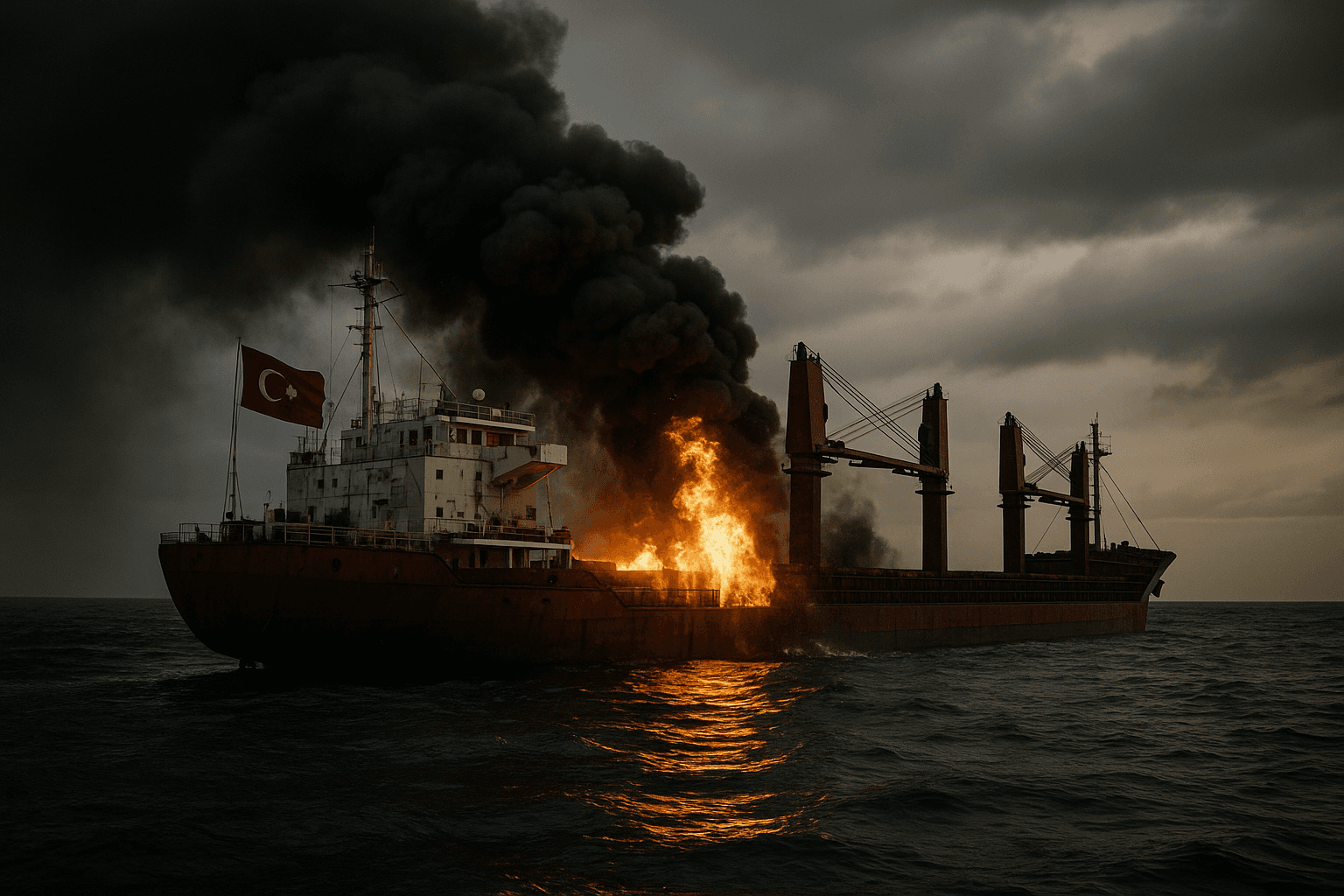
Ukrainian naval authorities said the Turkish flagged cargo ship Viva was hit by a drone on December 13 while transiting the open sea within what Kyiv described as Ukraine’s exclusive economic zone. The vessel was carrying sunflower oil to Egypt, had 11 Turkish citizens on board, and continued toward its destination after the strike, with no reported injuries. Ukrainian officials said they were in contact with the ship’s captain and that maritime search and rescue services were on standby.
Ukraine’s navy explicitly blamed Russian forces for the strike and said the incident occurred beyond the range of Ukraine’s air defence systems. In a statement carried by Ukrinform, the navy said the action “grossly and cynically” violated international maritime law and “directly contradicts the fundamental principles of freedom of navigation,” citing the San Remo Manual as a legal reference for conduct at sea. Those charges were presented without independent on scene forensic confirmation in the initial reporting, and no Russian comment attributing the strike has been published in the sources reviewed.
The Viva incident comes a day after a broader wave of strikes attributed to Russia on December 12 that Ukrainian officials and international outlets said targeted ports and energy infrastructure along the coast. Ukrainian reporting said Russian attacks that day damaged three Turkish owned vessels in port and started a large fire aboard a ship in the port of Chornomorsk. Kyiv linked the maritime strikes to a strategic campaign it portrays as aiming to choke Ukraine’s sea access, after earlier actions damaged tankers thought to be carrying Russian oil. President Volodymyr Zelenskyy condemned the port attacks as having “no … military purpose,” while Ukrainian officials reported at least one injury at Odesa port, damage to cargo handling equipment, and large power cuts affecting more than one million people.
The strike on a Turkish flagged merchant vessel carrying civilian cargo will complicate an already delicate diplomatic equation. Turkey hosts complex ties with both Kyiv and Moscow, and vessels flying Turkish colors operate across commercial routes that feed markets in the Middle East and Africa. An attack on neutral shipping raises immediate questions about insurance costs, safe routing, and the willingness of owners to call at Ukrainian ports or sail nearby waters until clearer safeguards are in place.
Legally the episode revives debates over the protections afforded to merchant shipping under customary international law and the San Remo Manual, and it increases pressure for verification by international bodies. Maritime authorities and naval partners will likely be asked to produce coordinates, imagery or debris analysis to substantiate Kyiv’s attribution and to assess whether the incident merits an inquiry by the International Maritime Organization or coordinated diplomatic protests.
For now the central facts are stark and narrow. A civilian ship carrying agricultural product was struck at sea, no casualties were reported, and Kyiv has publicly accused Russian forces of a deliberate breach of maritime norms. How allies, insurers and neutral flag states respond over the coming days will shape whether the episode becomes an isolated incident or the start of a broader disruption to Black Sea commerce.
Sources:
Know something we missed? Have a correction or additional information?
Submit a Tip

