Hong Kong tycoon Jimmy Lai convicted for collusion with foreign forces, sedition
A Hong Kong High Court convicted media magnate Jimmy Lai Chee ying on two counts of conspiracy to commit collusion with foreign forces under the national security law and one count of conspiracy to publish seditious publications. The verdict crystallizes Beijing’s tightened legal control over dissent, raises questions about investor confidence and press freedom, and sets a January sentencing timetable that could include life imprisonment.

Jimmy Lai Chee ying, the 78 year old founder of the pro democracy tabloid Apple Daily, was convicted by Hong Kong’s High Court on December 15, 2025 on two counts of conspiracy to commit collusion with foreign forces under the China imposed National Security Law and one count of conspiracy to publish seditious publications under the Crimes Ordinance. The judgment, delivered at the West Kowloon court complex in open proceedings before a panel of judges, labeled Lai the "mastermind" of the alleged conspiracies and said there was "ample support for evidence" to sustain the convictions.
Prosecutors had argued that Lai and Apple Daily sought assistance from, or requested action by, foreign entities to impose sanctions, blockades or other hostile measures against Hong Kong or the Chinese government. The court found that Lai used his writings, talk shows and international media interviews as part of an international lobbying effort to urge foreign governments to take such measures, and concluded he conspired with others to instigate international pressure against local and central authorities. Six former Apple Daily executives and editors earlier pleaded guilty to related charges in the same case.
Lai has been detained in Hong Kong for about five years prior to the conviction. Apple Daily was forcibly closed in 2021 after a series of raids, asset freezes and the arrest of senior staff. The trial itself was a multi year, high profile proceeding described in some coverage as lasting roughly two years, and the December ruling was watched in a packed gallery that included representatives of foreign governments. Some international outlets reported the verdict in their local time zones on December 14, though the court record states the judgment on December 15 in Hong Kong local time.
Legally the case carries severe potential penalties. Article 29 of the National Security Law provides that collusion with foreign forces of a grave nature can be punished by between 10 years and life imprisonment, while other collusion offenses carry three to 10 years. The National Security Law permits a maximum penalty of life for the most serious collusion convictions. The sedition count prosecuted under the Crimes Ordinance carries a maximum sentence of two years. A hearing to consider mitigating circumstances is scheduled for January 12, 2026, with sentencing to follow.
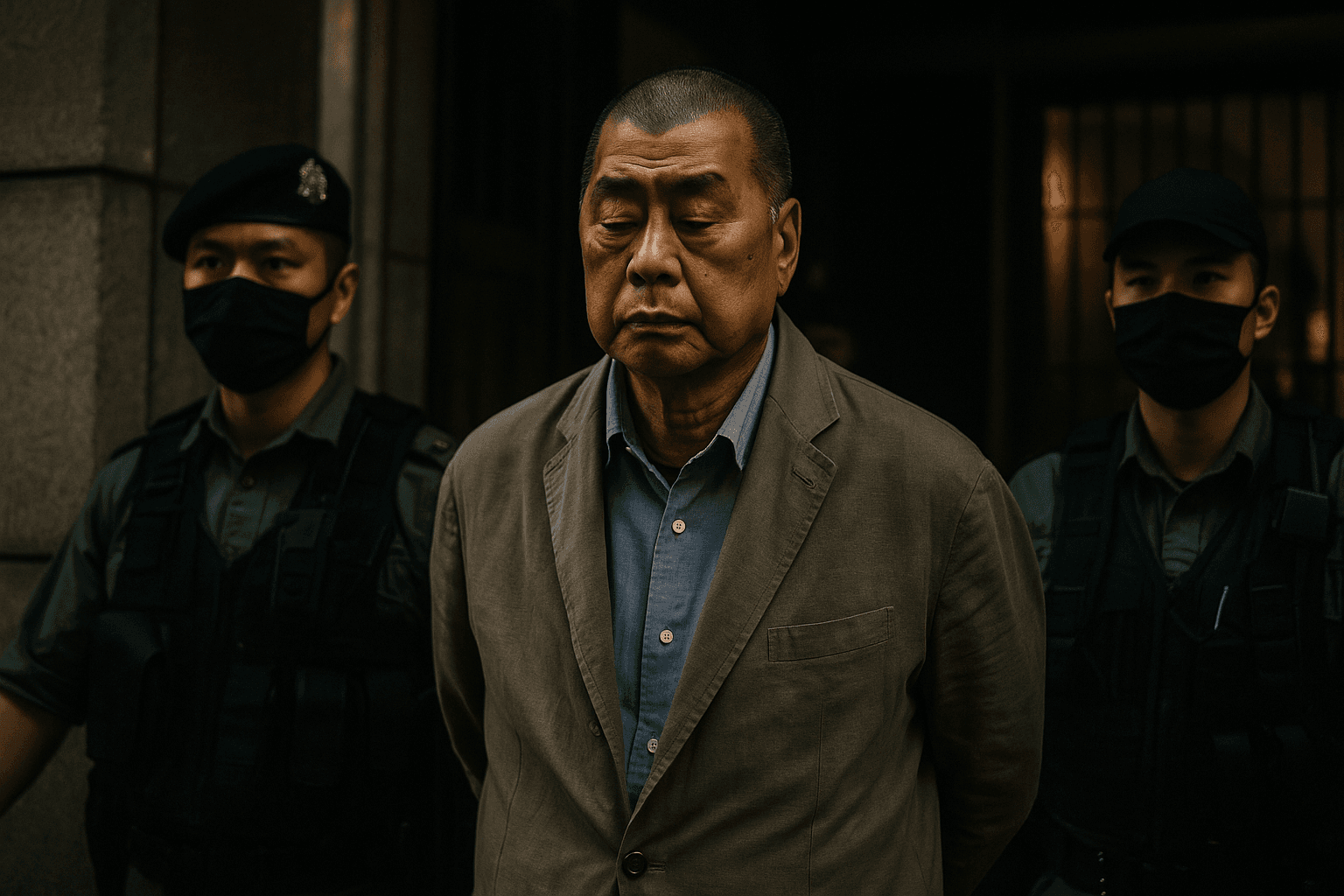
Beyond the immediate legal consequences for Lai, the conviction reinforces a broader pattern of tightened controls over dissent since the National Security Law’s introduction. The decision will be closely watched by multinational corporations, foreign investors and diplomatic missions assessing political and regulatory risk in Hong Kong. Observers say the case is likely to deepen concerns about the territory’s legal autonomy, regulatory predictability and the operational risks for news organizations and civil society actors.
As authorities move to finalize sentencing in January, the ruling is likely to sharpen debates over Hong Kong’s long term role as an international financial center and the balance between national security priorities and economic openness. The conviction of one of the territory’s most prominent media figures marks a defining moment in that debate.
Know something we missed? Have a correction or additional information?
Submit a Tip