Winter Storms Trigger Collapses, Deepen Gaza Humanitarian Emergency
Heavy winter storms have battered Gaza, causing war damaged buildings to collapse and flooding tens of thousands of tents, compounding a crisis that already affects more than two million people. The weather is hampering rescue operations, exposing gaps in machinery and supply flows, and raising urgent questions about reconstruction costs and international aid access.

Two badly damaged multi storey buildings collapsed on Friday in Gaza City and surrounding neighbourhoods, killing at least 12 people and injuring others, Gaza authorities said, as heavy winter rains and wind battered an enclave already devastated by months of war. Civil Defence teams working in freezing, waterlogged conditions retrieved bodies from the rubble while warning that more collapses are likely as storms continue.
Emergency services reported multiple collapse incidents since the storm began on Wednesday, citing at least 12 separate building failures across the territory and thousands of distress calls to clinics and hospitals. Rescue crews recovered 20 bodies from under collapsed structures in recent days and continued searches in areas including Rimal, al Karama and Sheikh Radwan. In Deir al Balah, floodwaters washed through camps of displaced families and left tents flooded and ruined.
The human toll has been amplified by the fragility of shelter and the sheer scale of displacement. UNRWA Commissioner General Philippe Lazzarini said on social media that “people in the Gaza Strip are freezing to death” and warned that “waterlogged ruins where they are sheltering are collapsing, causing even more exposure to cold.” UNRWA has said supplies that could help hundreds of thousands of people remain held up at crossings, unable to enter.
Personal accounts illustrate the immediate catastrophe. Mohammad Nassar lost members of his family when a building where they had been sheltering collapsed. Rescuers pulled the bodies of his 15 year old son and his 18 year old daughter from rubble, and efforts to extract other relatives were slowed by unstable debris and bad weather.
Gaza civil defence officials say they are still digging at scale to recover bodies they estimate may number in the thousands beneath rubble, and that they lack the heavy machinery needed to accelerate clearance and search operations. The interior ministry described crews working “despite extremely limited capabilities and worn out equipment,” a condition that has left recovery, medical and shelter systems strained as the storm continues.
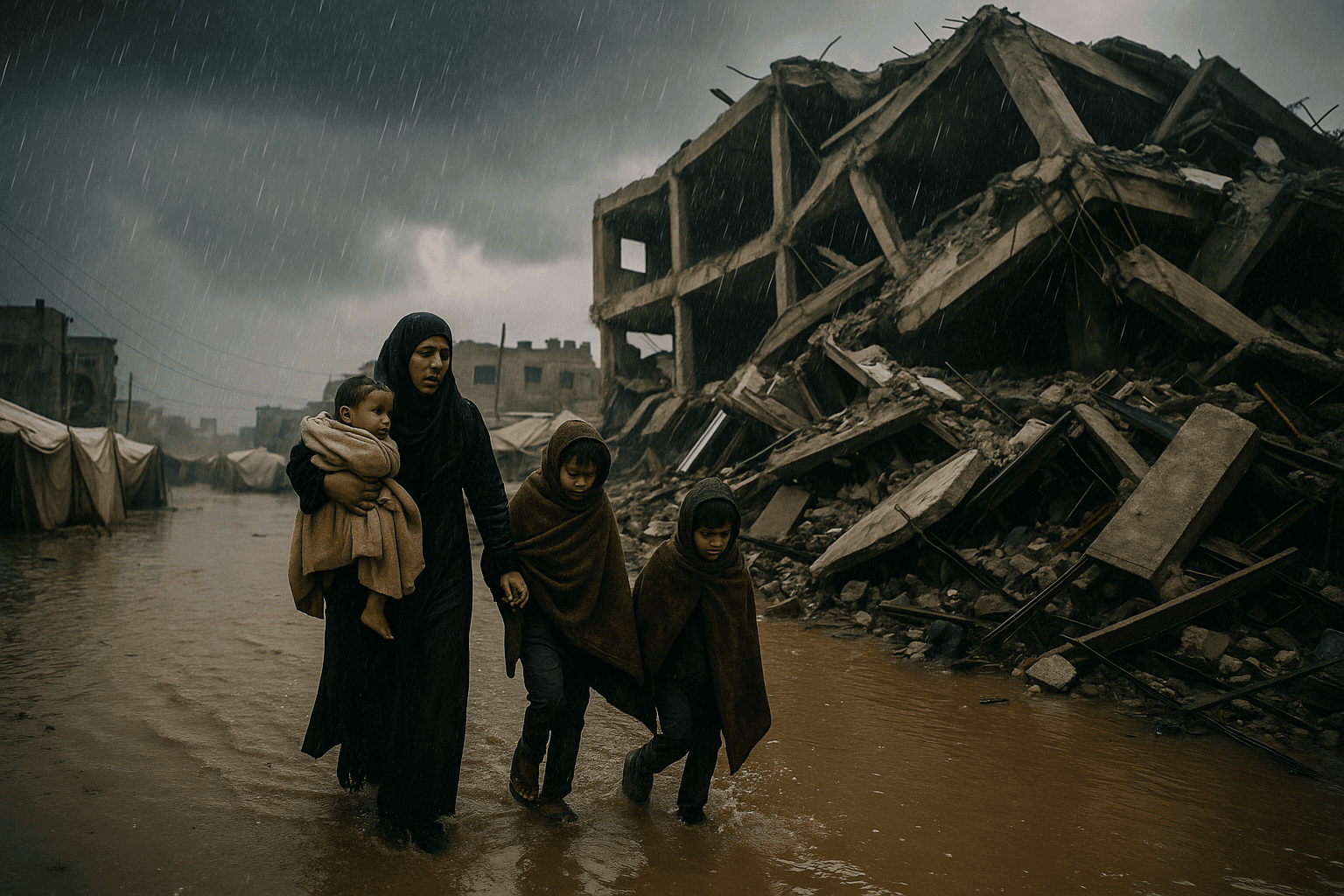
Data reported by authorities and agencies remains provisional and in flux. Distress call tallies ranged in reports from roughly 2,500 to more than 4,300 since the storm began. One field assessment indicated that as many as 27,000 tents were destroyed within a 24 hour period, underscoring the scale of shelter loss when makeshift structures are exposed to severe weather.
Beyond the immediate humanitarian emergency, the storms sharpen longer term economic and policy dilemmas. The destruction of housing and infrastructure will raise reconstruction costs substantially and heighten demand for heavy machinery, cement and steel, placing additional pressure on already strained regional supply chains. Delayed aid at border crossings and shortages of equipment impede the short term response and will likely increase the fiscal burden on donors and local authorities in the medium term.
Policymakers face urgent choices. Rapidly expanding access for humanitarian supplies, prioritising clearance equipment and creating temporary protected shelter away from damaged structures could reduce further loss of life. Without quick improvements in aid flows and targeted funding for rubble clearance and winterisation, officials warn that deaths from exposure and further building collapses will continue to rise, deepening a crisis with economic and social consequences that will persist long after the storms pass.
Sources:
Know something we missed? Have a correction or additional information?
Submit a Tip