Ukrainian Drones Ignite Fire at Volgograd Oil Depot After Hypersonic Barrage
Ukrainian forces said they struck an oil depot in Russia’s Volgograd region overnight on Jan. 10, setting a blaze that prompted warnings of nearby evacuations and further heightening tensions after a major Russian hypersonic missile strike on Ukraine. The incident underscores a widening campaign targeting fuel and logistics on both sides, raising fresh questions about escalation, civilian risk and the limits of cross-border strikes.
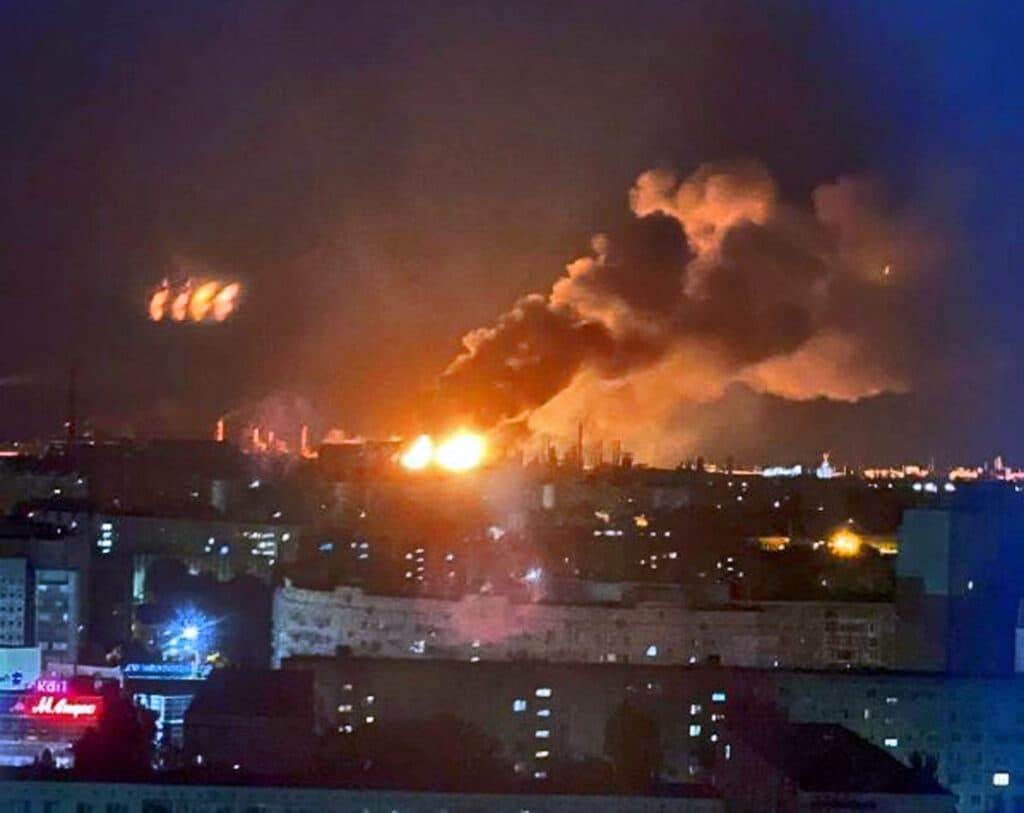
Ukrainian military authorities said their forces struck the Zhutovskaya oil depot in the Oktyabrsky district of Volgograd overnight on Jan. 10, igniting a fire that local officials said emergency services were still fighting on Saturday. Volgograd Governor Andrei Bocharov posted on the regional administration’s Telegram channel that preliminary data showed no immediate reports of casualties, and warned that people living near the depot "may have to be evacuated."
Ukraine’s General Staff framed the attack as part of efforts to disrupt fuel supplies used by Russian forces, saying damage was being assessed. In the same release, Ukraine said it had also struck a drone storage facility in Zaporizhzhia, which it linked to a unit of Russia’s 19th Motor Rifle Division, and a drone command-and-control point near Pokrovsk in eastern Ukraine. Those operational claims were issued by Kyiv and have not been independently verified.
Moscow reported heavy air-defence activity during the period surrounding the strikes. Russia’s Defense Ministry said its forces had downed dozens of Ukrainian drones, reporting 67 downed as of 0600 GMT. Regional and federal Russian statements acknowledged the depot fire and the emergency response but gave limited detail on structural losses or the longer-term impact on fuel stocks.
The Volgograd incident came a day after Russia launched a major bombardment against Ukraine that included hundreds of drones, dozens of missiles and the Oreshnik hypersonic missile, an advanced weapon that international officials described as only the second recorded use of its kind in the full-scale invasion. Ukrainian authorities reported that the Russian strike disrupted power and heating in Kyiv and said there were civilian casualties in the capital, with some reports citing at least four people killed. The United Nations scheduled a meeting to consider the implications of the hypersonic attack.
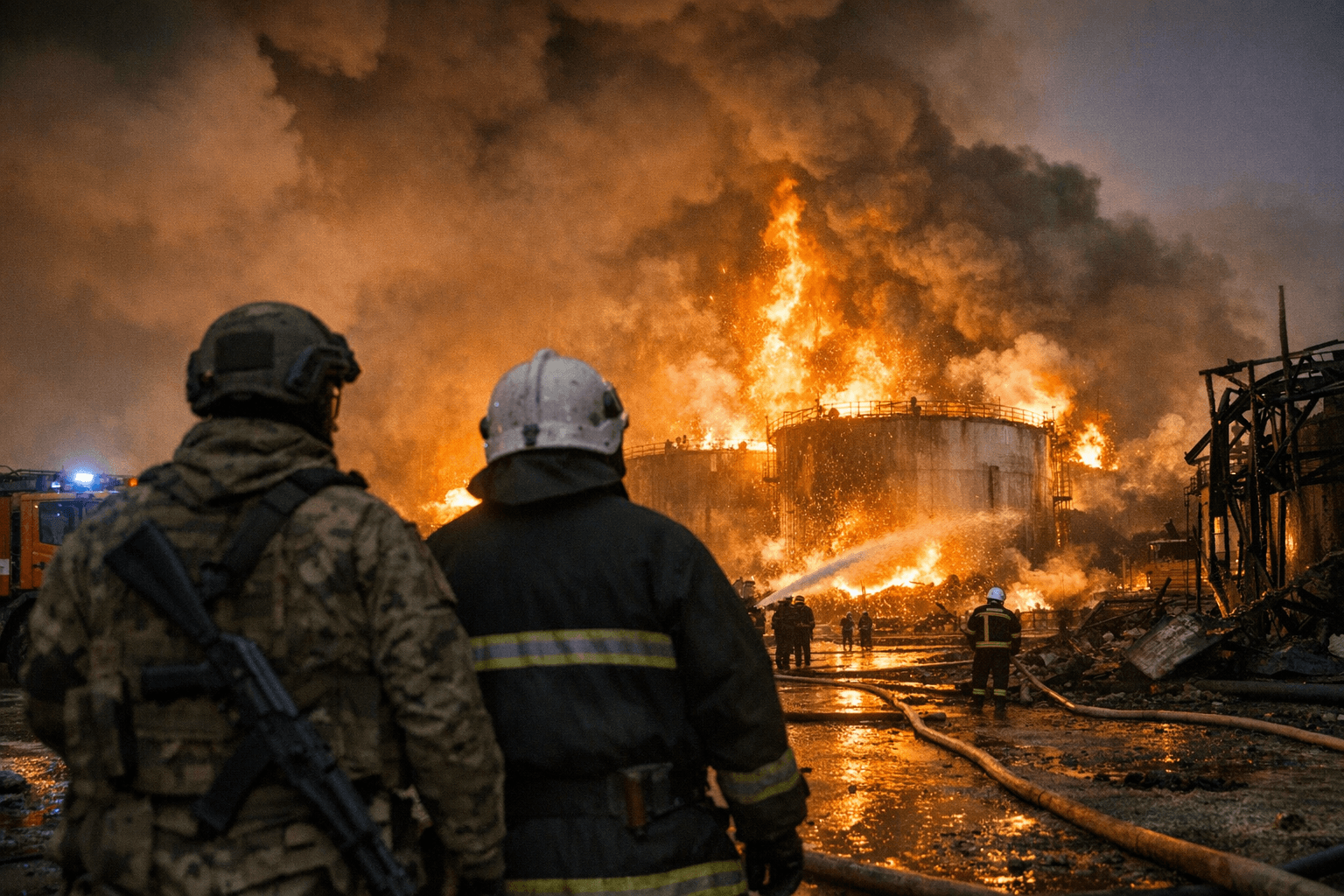
Targeting of energy and fuel infrastructure has become a recurring feature of the conflict, with Kyiv increasingly prioritizing strikes intended to degrade Moscow’s logistics and deny materiel support to front-line units. Russian officials portray such strikes as unlawful attacks on civilian infrastructure and as efforts to intimidate the domestic population. The differing frames highlight the legal and diplomatic tensions that are now central to international responses: strikes on facilities used for military purposes can be lawful under the laws of armed conflict, but they also carry acute risks to civilians and essential services, especially in winter.
Independent verification of the depot’s damage and the wider operational effects remains limited. International monitors and journalists have not yet been able to confirm the extent of destruction at Zhutovskaya, the scale of disruption to Russian fuel supplies, or the tactical consequences of the other Ukrainian claims in Zaporizhzhia and near Pokrovsk.
As the conflict enters another phase of reciprocal strikes and advanced-weapons use, the incident in Volgograd illustrates how battlefield tactics are spilling across borders and into the realms of energy security and international diplomacy. Governments and international institutions will be watching closely for further escalation, humanitarian fallout and legal assessments of cross-border attacks on infrastructure.
Sources:
Know something we missed? Have a correction or additional information?
Submit a Tip