U.N. Warns Hundreds of Thousands of Displaced Gazans Face Flooding
U.N. agencies warned that heavy winter rains from Storm Byron flooded tents and makeshift shelters across the Gaza Strip, placing hundreds of thousands of internally displaced people at severe risk. The crisis exposes critical gaps in shelter supplies and access, increasing the urgency of international aid and long term reconstruction planning.

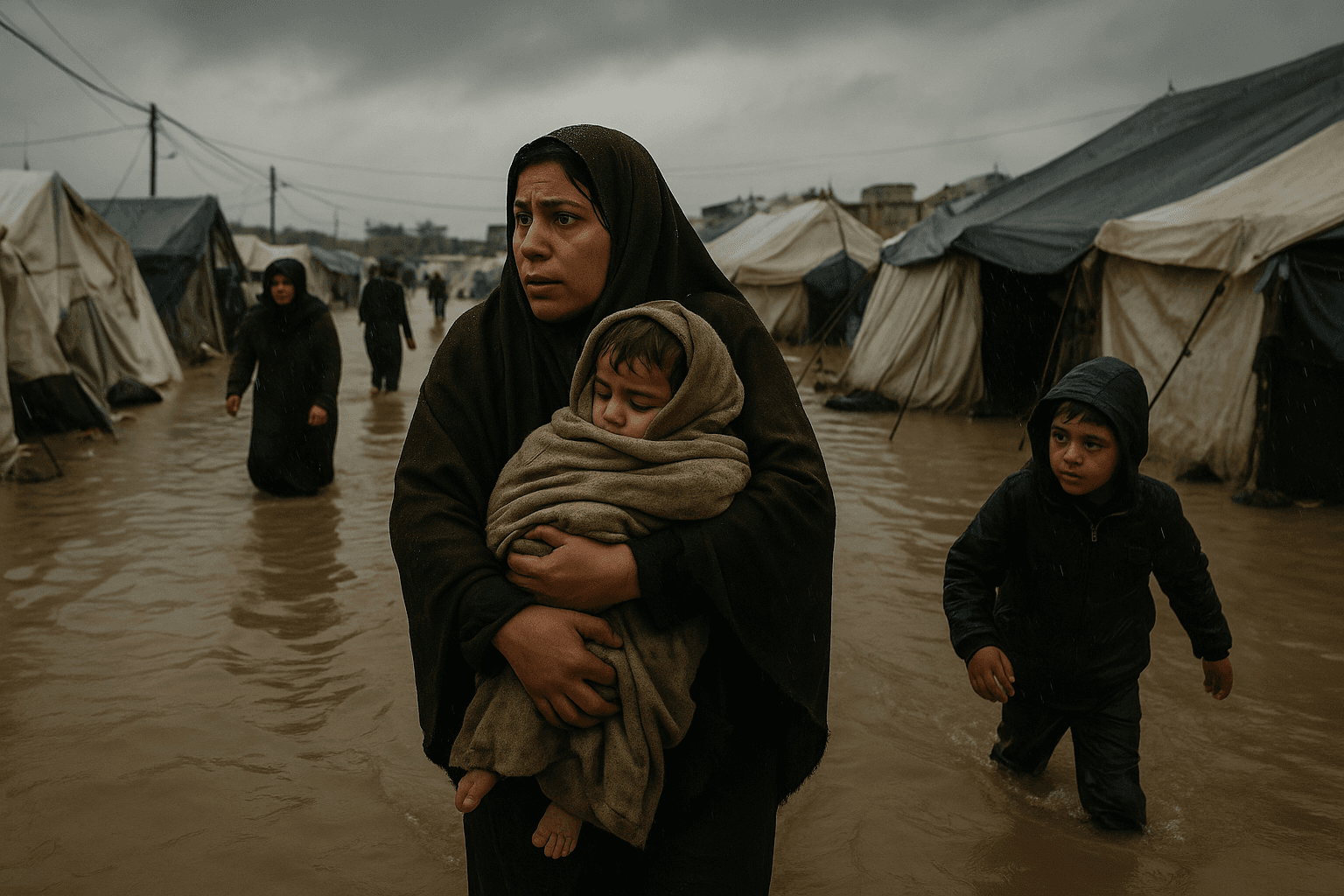
On Dec. 13, heavy winter rains from Storm Byron swept across the Gaza Strip, inundating tent camps and displacement sites and putting hundreds of thousands of internally displaced people in immediate danger, U.N. agencies said. The International Organization for Migration estimated nearly 795,000 displaced people were at heightened risk in low lying, rubble strewn areas. The U.N. Office for the Coordination of Humanitarian Affairs reported nearly 850,000 people sheltering in 761 displacement sites faced the highest risk, and that flooding had already been recorded at more than 200 of those sites, affecting over 140,000 people.
The Hamas run Gaza government media office said a total of 12 people were dead or missing, at least 13 buildings had collapsed and some 27,000 tents had been flooded. U.N. and Palestinian officials said roughly 1.5 million people remain displaced across Gaza and that at least 300,000 new tents are urgently needed to meet basic shelter requirements.
Relief agencies said many of the items sent to Gaza failed to withstand the downpour and that critical reinforcement materials and flood response equipment have been delayed by ongoing access restrictions. IOM said waterproof tents, thermal blankets and tarpaulins that had been dispatched did not hold up to the storm, and that timber, plywood, sandbags and water pumps needed to protect sites were not arriving in time. IOM Director General Amy Pope said, “After this storm made landfall yesterday, families are trying to protect their children with whatever they have,” underscoring the precarious conditions.
Site managers described chaotic scenes as murky brown waters swept across low lying camps, drenching food and possessions and forcing families out of already makeshift shelters. An IOM site management official identified as Mr. Aqel said, “We are doing the best we can, operating in over 120 displacement sites across Gaza City, Khan Younis, and Deir Al Balah, but the needs are overwhelming,” and urged heavy machinery, more shelter items and recovery efforts.
U.N. assessments warned that inadequate drainage and poor waste management in displacement sites increase the risk of communicable disease outbreaks after flooding. Previous storms had already contaminated sites with sewage and solid waste, and the destruction of much of Gaza’s infrastructure during the war that began in October has weakened local emergency response capacity.
The immediate humanitarian implications are stark, and the economic consequences will be protracted. The need to replace hundreds of thousands of tents, to clear rubble with heavy equipment and to rebuild basic drainage and sanitation infrastructure will raise reconstruction costs and intensify pressure on donor budgets. Longer term, repeated climate related shocks, a devastated local economy and prolonged displacement will deepen poverty, raise public health expenditures and complicate recovery and labor market reintegration.
U.N. and local officials warned that forecasts called for continued flash floods, strong winds and hail for several days, making swift delivery of durable shelter materials, pumps and drainage equipment urgent. Access delays and failed supplies mean the difference between temporary damage and a secondary humanitarian crisis driven by disease, exposure and further displacement.
Sources:
Know something we missed? Have a correction or additional information?
Submit a Tip

