United States Suspends Tech Prosperity Deal with Britain, Citing Trade Friction
The United States has suspended the Tech Prosperity Deal it signed with the United Kingdom in September, British officials confirmed on Monday. The move imperils planned cooperation on artificial intelligence, quantum computing and civil nuclear energy and reflects growing U.S. impatience with unresolved trade barriers.
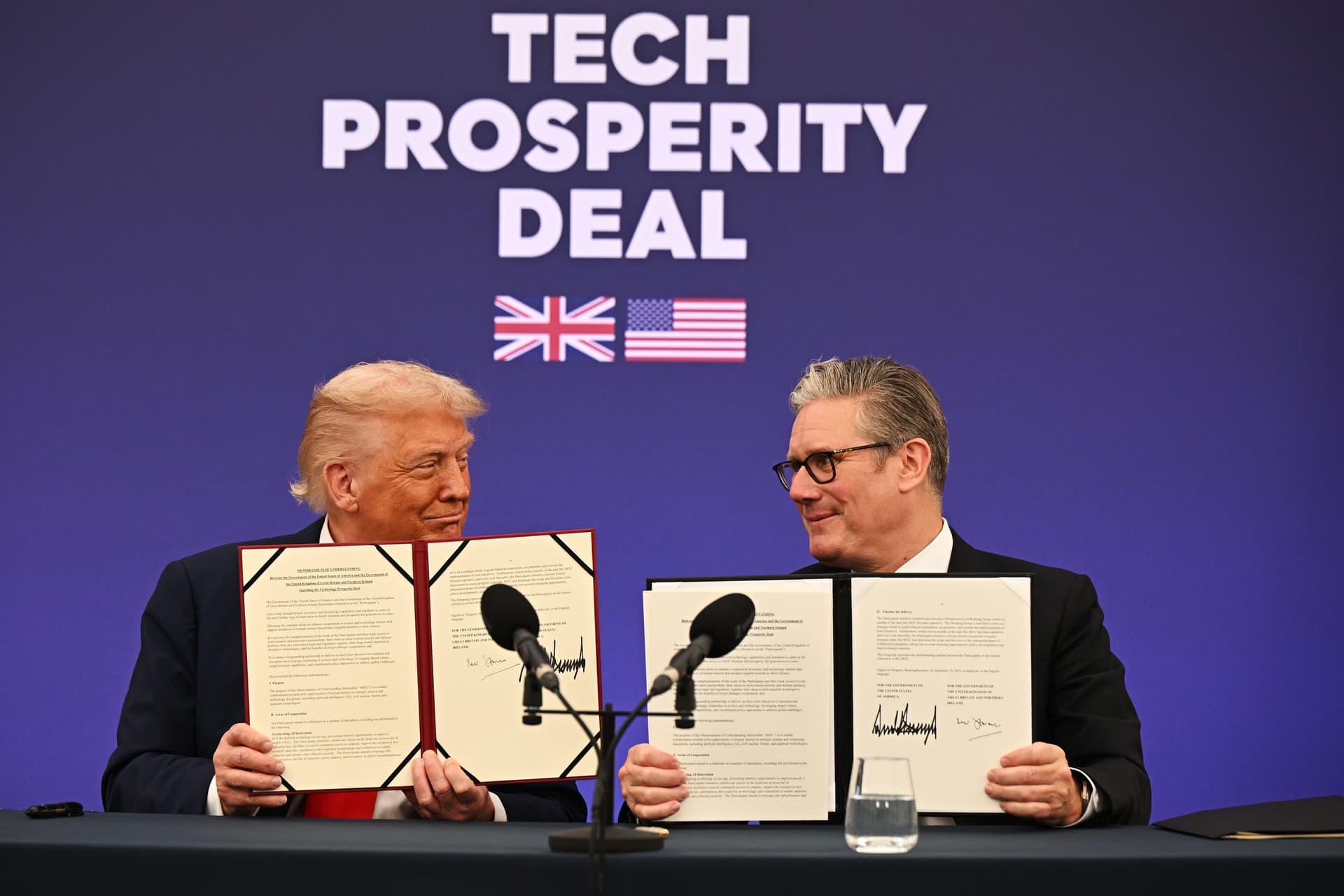
The United States has suspended the technology partnership it agreed with the United Kingdom earlier this year, British officials said on Monday, a step that threatens cooperation on high priority scientific and industrial projects. The agreement, branded the Tech Prosperity Deal when announced in September during President Donald Trump’s visit to Britain, was intended to deepen collaboration on artificial intelligence, quantum computing and civil nuclear energy.
British officials confirmed the suspension after reports emerged on December 15, but neither the White House nor the British government issued an immediate formal statement outlining the legal basis or duration of the pause. Early accounts showed differences in how the action was described, with some characterizing it as a suspension of implementation and others saying the deal itself had been suspended. Those distinctions matter for whether programs already under way will continue or be halted.
U.S. officials have grown increasingly frustrated, according to the accounts, with what they describe as unresolved non tariff barriers in Britain, particularly rules and regulatory approaches governing food and industrial goods. The move appears to reflect a broader U.S. push to extract concessions on trade matters outside the narrow scope of the technology pact. That strategy has raised concern among British officials and industry groups who viewed the deal as a pathway for long term investment and scientific exchange.
The suspension complicates a delicate web of partnerships. U.S. technology companies have invested heavily in the United Kingdom, committing billions of dollars to research facilities, data centers and manufacturing operations. For British universities and research institutes, the deal had promised accelerated joint programs in AI and quantum science, areas where sustained collaboration can take years to organize and fund. In civil nuclear energy, joint projects often depend on long lead times and regulatory certainty, which a suspension could undermine.
Analysts warned that the political gesture could have practical consequences beyond headline disputes. If the pause affects funding commitments, talent exchanges or regulatory alignment, research projects could delay recruitment and procurement, contracts could be renegotiated, and supply chains for sensitive technologies could be disrupted. Smaller British firms that had been counting on U.S. partnerships to scale their technologies may face particular uncertainty.
The episode underscores the fragility of technology diplomacy when it intersects with broader trade disagreements. The United States is a major market for British goods and services, and unresolved regulatory issues have become leverage in negotiations. For policymakers on both sides the immediate questions are procedural. Which formal mechanisms were used to suspend the partnership. Which projects will continue, and which will be paused. What specific regulatory concessions the United States is seeking. And how long the suspension will last.
For now the suspension leaves a cloud over bilateral science and industrial cooperation between two close allies at a moment when competition in advanced technologies is intensifying globally. Officials in Washington and London face pressure to provide clarity quickly to prevent economic and research fallout and to repair trust that the partnership can withstand broader trade tensions.
Sources:
Know something we missed? Have a correction or additional information?
Submit a Tip