U.S. moves personnel from Middle East bases amid Iranian strike warnings
Washington has advised some staff to leave select bases as Tehran warns it would hit U.S. facilities if attacked. The posture change raises regional diplomatic and escalation risks.

U.S. authorities have begun advising or relocating some personnel from certain military facilities across the Middle East as tensions with Iran spike and Tehran publicly warned it would strike U.S. bases in the region if Washington launches attacks. U.S. officials characterized the actions as a limited "posture change" and a "precaution" rather than a full-scale evacuation, but the moves underscore heightened risk of miscalculation.
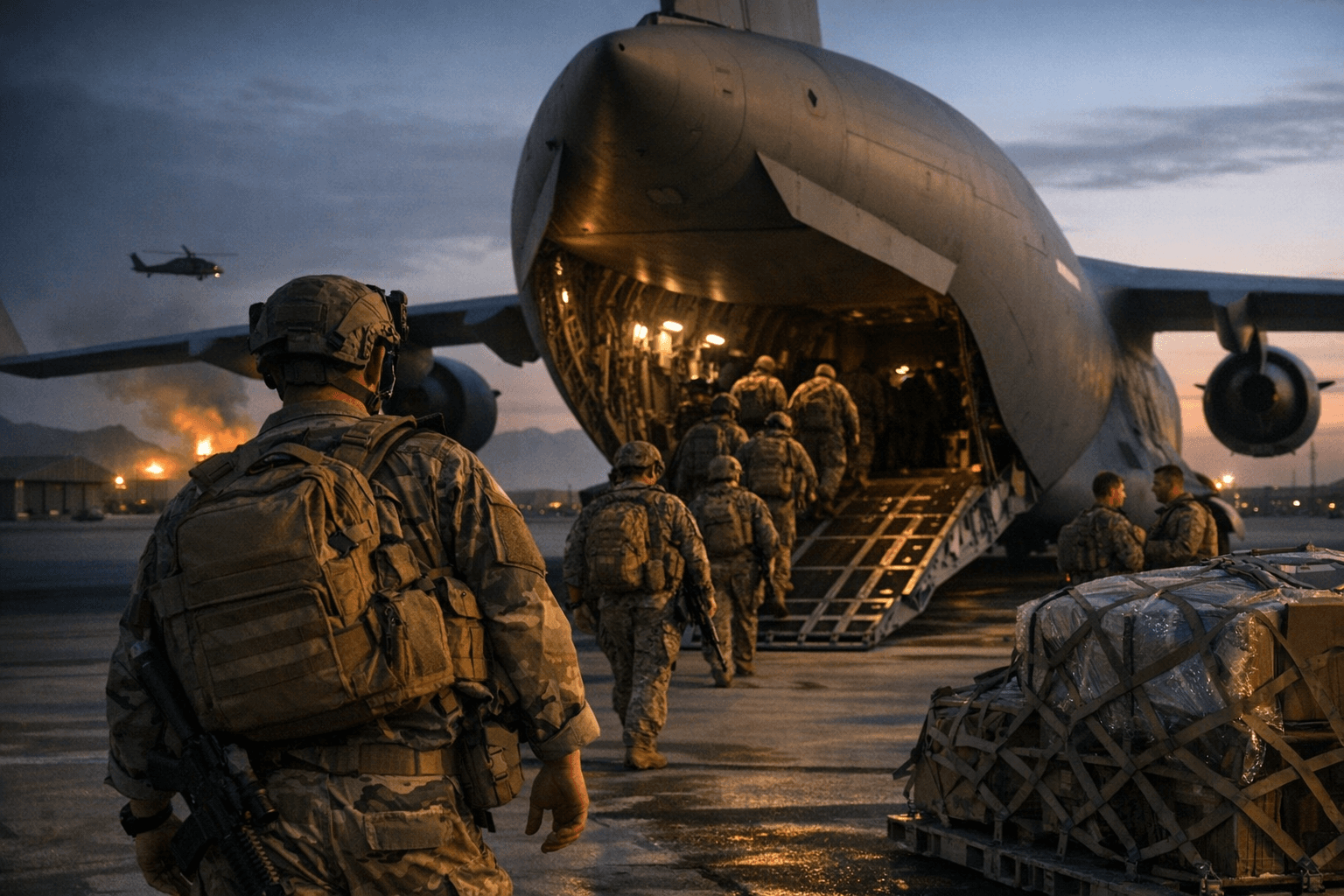
The most specific instance involved Al Udeid Air Base in Qatar, long established as the forward hub for U.S. Central Command and home to roughly 10,000 U.S. service members. Diplomatic and military sources said some personnel were advised to depart Al Udeid by Wednesday evening as commanders adjusted force posture and protective measures. Officials said the adjustments are selective and aimed at reducing nonessential presence, not abandoning operational capabilities in the region.
At sea, U.S. naval activity has also increased. The destroyer USS Roosevelt was ordered into the Persian Gulf this week, with U.S. military spokespeople noting the vessel will help "support maritime security and stability" in the region. Military tracking shows two other guided-missile destroyers already operating independently in the Gulf, a reflection of sustained U.S. naval presence designed to deter attacks and reassure partners.
U.S. diplomatic missions in the region signaled the seriousness of the threat environment. Embassy guidance in Saudi Arabia urged personnel to exercise increased caution, avoid military installations where possible and limit nonessential travel. Host governments now face difficult decisions: Tehran has warned countries hosting U.S. forces - including Saudi Arabia, the United Arab Emirates and Turkey - that they could become targets if strikes are launched from their territory. Iranian officials also said they have urged allied governments to prevent any American military action.
Tehran has intensified diplomatic outreach even as it issues threats. Senior Iranian security officials engaged with counterparts in neighboring states in an apparent effort to press host governments and to reduce space for U.S. military operations. At the same time, domestic pressures inside Iran have surged. State and activist accounts point to the largest anti-government unrest since 1979, with an activist group reporting more than 18,000 arrests and other groups asserting contested casualty figures that include claims of at least 2,500 dead; those figures remain unverified.
The recent posture change recalls a precedent last year when personnel movements preceded air strikes and Iranian missile strikes that struck near Al Udeid. Regional analysts caution that the current cycle of threats and protective adjustments increases the chance of unintended escalation, particularly in crowded airspace and sea lanes where misidentification or an accident could trigger wider confrontation.
Washington's rhetoric adds to the stakes. The U.S. president has publicly warned of intervention should Iran carry out executions of detained protesters, saying the United States would take "very strong action" in response. That posture, coupled with Tehran's explicit threats, places host governments in a diplomatic bind: their decisions on basing and overflight could carry legal and political consequences under international law and complicate relations with both Washington and Tehran.
The situation remains fluid. U.S. commanders describe current steps as precautionary, but allies and regional partners are watching closely as diplomatic channels and military postures intersect with a fragile internal situation inside Iran.
Sources:
Know something we missed? Have a correction or additional information?
Submit a Tip