U.S. Proposal Would Require Five Years of Social Media History
The Department of Homeland Security posted a notice on December 10 proposing that visitors arriving under the Visa Waiver Program must disclose up to five years of social media identifiers and other digital contact history when applying for ESTA. The move is pitched as an expanded security screen, but it could complicate travel for millions of short term visitors, raise privacy concerns and prompt costly changes for airlines and border agencies.
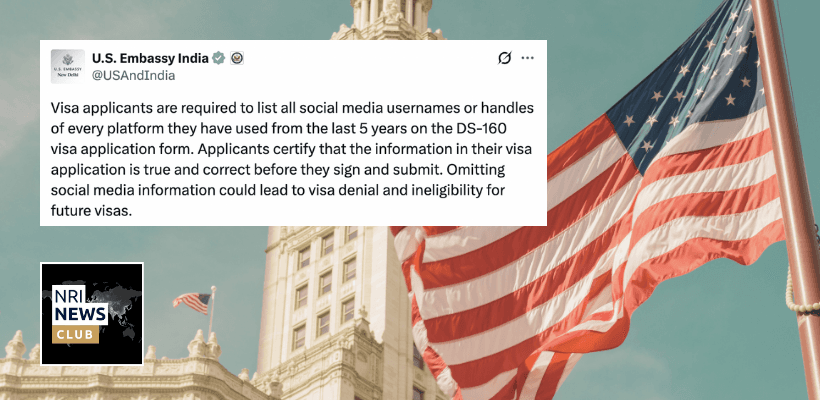
The Department of Homeland Security and Customs and Border Protection published a Federal Register notice on December 10 laying out a proposal to make social media information a mandatory data element for travelers using the Electronic System for Travel Authorization under the Visa Waiver Program. Under the proposal, citizens of Visa Waiver Program countries who seek authorization would need to provide social media identifiers and other digital contact history going back as far as five years. Officials also said the agency was considering adding prior phone numbers, email addresses and certain biometric or technical data to the ESTA application.
The rule was issued for a 60 day public comment period and is not final. DHS framed the measure as an effort to broaden vetting of visa free travel and to address evolving threats that authorities say can be identified through online activity. The proposal follows earlier moves by U.S. immigration authorities to incorporate social media screening into some visa and immigration checks, though the new requirement would apply to travelers who previously required only a short online authorization.
The Visa Waiver Program covers nationals of roughly 40 countries and the ESTA system processes millions of travel authorizations each year. Because the program is a principal channel for short term tourism and business visitors, changes to the application could alter travel behavior and business flows. Economists and industry groups warned that mandatory disclosure of five years of online history could discourage some travelers from using the program, reduce spontaneous tourism, and raise compliance costs for carriers and online booking platforms that rely on the program to route international passengers.
Operationally the proposal presents technical and staffing challenges. Collecting, storing and analyzing social media identifiers for large volumes of applicants would require expanded IT capacity and new analytic tools. Agencies will face questions about how long data is retained, how it is shared with other government bodies, and how to manage false positives when identifiers match common names or shared accounts. Those implementation costs would fall on taxpayers and could translate into slower processing times at airports and higher administrative costs for airlines that help enforce travel authorizations.

Privacy advocates and civil liberties experts cautioned that the requirement could chill free expression, particularly for travelers from allied democracies who use social media for legitimate political speech. There are also potential diplomatic implications if partner countries view the requirement as a disproportionate intrusion on their citizens. Legal challenges are likely if the rule moves forward in its current form.
The 60 day comment window gives industry groups, privacy advocates and foreign governments an opportunity to weigh in. If the administration proceeds after the comment period, a final rule could still be subject to litigation and implementation delays. For now, travelers under the Visa Waiver Program should expect questions over data collection and privacy to dominate the policy debate while officials argue the change is aimed at strengthening border security in an era of expanding digital footprints.
Sources:
Know something we missed? Have a correction or additional information?
Submit a Tip

