Utah Olympic Park Remains Core Asset for Summit County Recreation
Utah Olympic Park, built for the 2002 Winter Olympics northwest of Park City, continues to operate as a year-round training and competition venue for sliding and ski sports, while offering public activities that sustain tourism and local recreation. Its combination of elite athlete development, visitor services and interpretive exhibits matters to Summit County residents because it supports jobs, diversifies seasonal visitation and preserves the region’s winter-sports heritage.
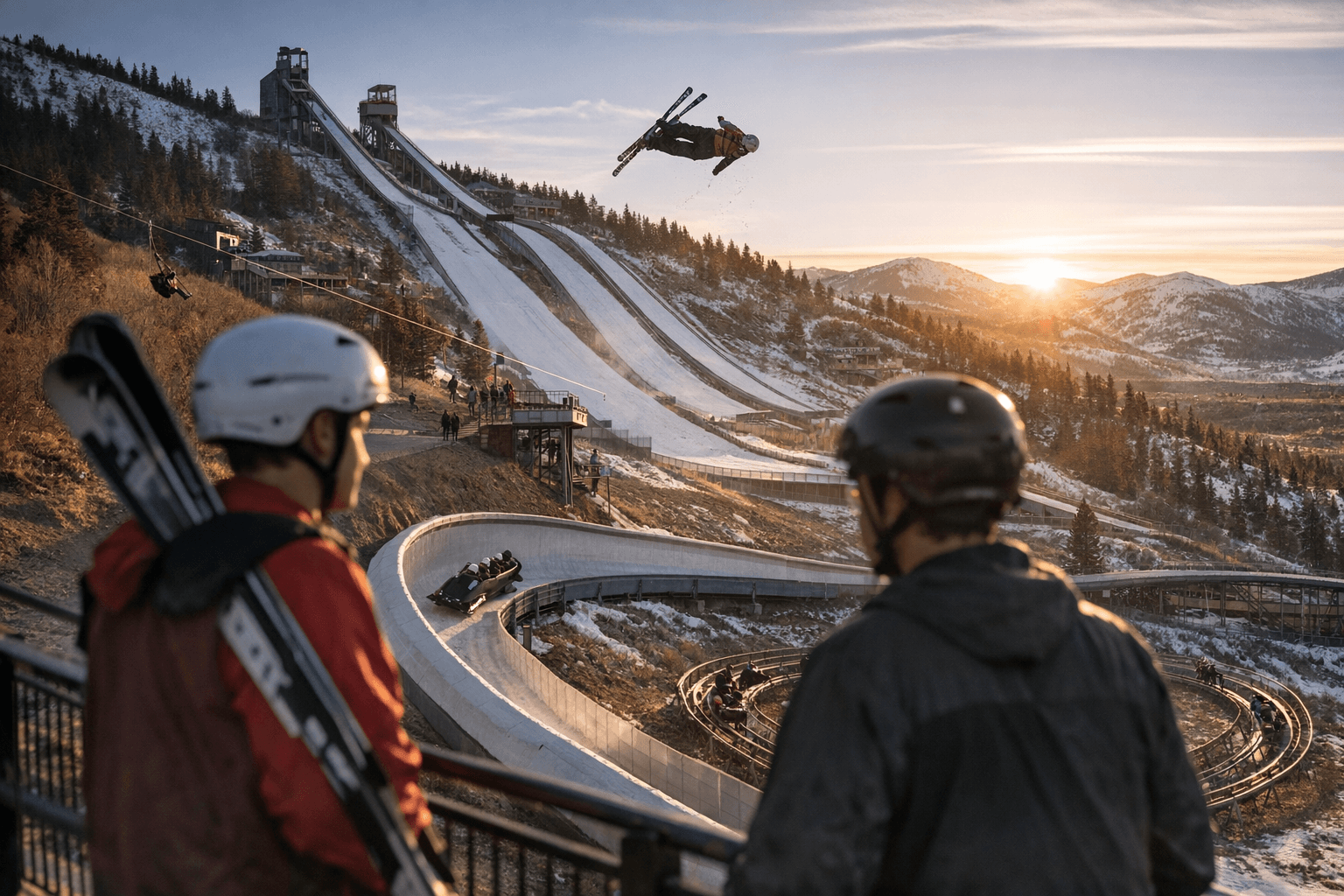
Utah Olympic Park sits northwest of Park City in Summit County and was constructed for the 2002 Winter Olympics. More than two decades after the Games, the park continues to host training and competitions in bobsled, skeleton, luge, ski jumping and Nordic disciplines, while operating a museum and visitor center and offering public activities including bobsled and skeleton rides, a zipline, tubing and interpretive exhibits.
The park’s blend of elite-sport facilities and tourism services has a direct economic footprint for Summit County. Year-round athlete training draws coaches, support staff and visiting teams, while public programs and exhibits attract tourists outside the traditional winter ski season. That dual role helps smooth the county’s seasonal tourism cycle, supporting lodging, restaurants and retail businesses during shoulder months when summer and winter visitation would otherwise diverge.
Beyond immediate visitor spending, the park functions as an anchor for Summit County’s cultural identity. The museum and interpretive displays preserve the area’s winter-sports legacy and provide educational programming that introduces local youth to sliding and Nordic sports. Continued access to high-quality facilities reinforces pathways for athletes who train locally before competing nationally and internationally, strengthening the county’s reputation as a center for winter-sports development.
The park’s operations carry broader market implications. Facilities that host national-level competitions generate episodic spikes in demand for short-term rentals and event services; ongoing training programs create more steady demand for housing and transportation. From a public-policy perspective, maintaining those benefits requires investment in upkeep and adaptive planning. Infrastructure costs, accessibility improvements and marketing to nontraditional seasons are policy levers local officials and stakeholders can coordinate to preserve the park’s value to the community.
Climate variability adds another dimension to long-term planning. As patterns of snowfall and temperature shift, year-round attractions such as the museum, zipline and tubing help reduce reliance on natural snowpack and protect the park’s role in the county economy. Preserving the site’s facilities and programs will be important for sustaining jobs linked to tourism and for keeping Summit County competitive as a host for national and international sporting events.
For Summit County residents, the park is more than a tourist draw: it is an economic engine, a training ground for elite athletes and a repository of local winter-sports heritage. Continued stewardship and strategic investment can extend those benefits while adapting to changing recreational and climate conditions.
Sources:
Know something we missed? Have a correction or additional information?
Submit a Tip