Veteran and Service Dog Improve Independence in Hernando County
Frank Cohen, a 70-year-old U.S. Navy veteran, was paired with a service dog named Grace through K9 Partners for Patriots in a profile published Jan. 10 that traces his journey to greater stability and mobility. The partnership highlights how trained dogs can help local veterans manage PTSD and physical limitations, underscoring broader public health and equity questions for Hernando County’s veteran population.
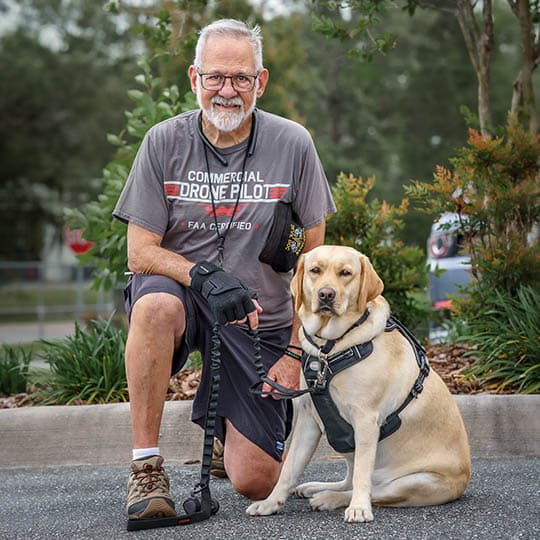
Frank Cohen’s story is at once personal and policy relevant for Hernando County. The 70-year-old U.S. Navy veteran was paired with Grace, a service dog trained through K9 Partners for Patriots, and the match has helped him confront chronic symptoms of post-traumatic stress and challenges with mobility. According to the profile published Jan. 10, Grace performs critical tasks such as waking Cohen from nightmares, sensing and interrupting anxiety episodes, and providing physical brace support that aids his day-to-day movement.
Cohen’s experience illustrated the practical ways a service animal can increase a veteran’s independence. The process of obtaining and integrating Grace required intensive training for the dog and adaptations within Cohen’s household as family members adjusted routines and responsibilities. That integration extended beyond the immediate household; it involved coordinating with trainers and incorporating the dog’s role into medical and therapeutic plans.
The local implications are significant. Service dogs can reduce reliance on emergency mental health care by interrupting panic and grounding veterans during acute episodes, and they can supplement mobility support where assistive devices alone are insufficient. For Hernando County residents, Cohen’s case is a reminder that nonpharmacologic interventions can be a meaningful component of comprehensive veteran care. It also raises questions about equitable access: not all veterans who could benefit from a service dog have information, financial resources, or referral pathways to programs like K9 Partners for Patriots.
Policy and public health stakeholders in Hernando County may need to consider how to strengthen connections between veteran services, local health providers, and nonprofit programs that train and place service animals. Better coordination could help ensure timely placements, streamline certification and medical documentation, and address practical barriers such as transportation to training sessions and follow-up care.
Cohen’s account emphasized improved well-being and independence following his pairing with Grace, illustrating how community investments in veteran-centered programs yield tangible benefits. As Hernando County plans services for an aging veteran population, integrating support for service animals into broader care strategies may reduce strain on clinical services, improve quality of life, and advance equity for veterans living with invisible and visible disabilities.
Sources:
Know something we missed? Have a correction or additional information?
Submit a Tip