Virginia Man Pleads Not Guilty to Planting Pipe Bombs in Washington
Brian J. Cole Jr. pleaded not guilty to federal explosives charges after authorities said he planted two pipe bombs outside the Democratic and Republican national headquarters on Jan. 5, 2021. The case revives lingering security and public-safety questions from the Jan. 6 era and highlights the public-health and community impacts of political violence and online radicalization.
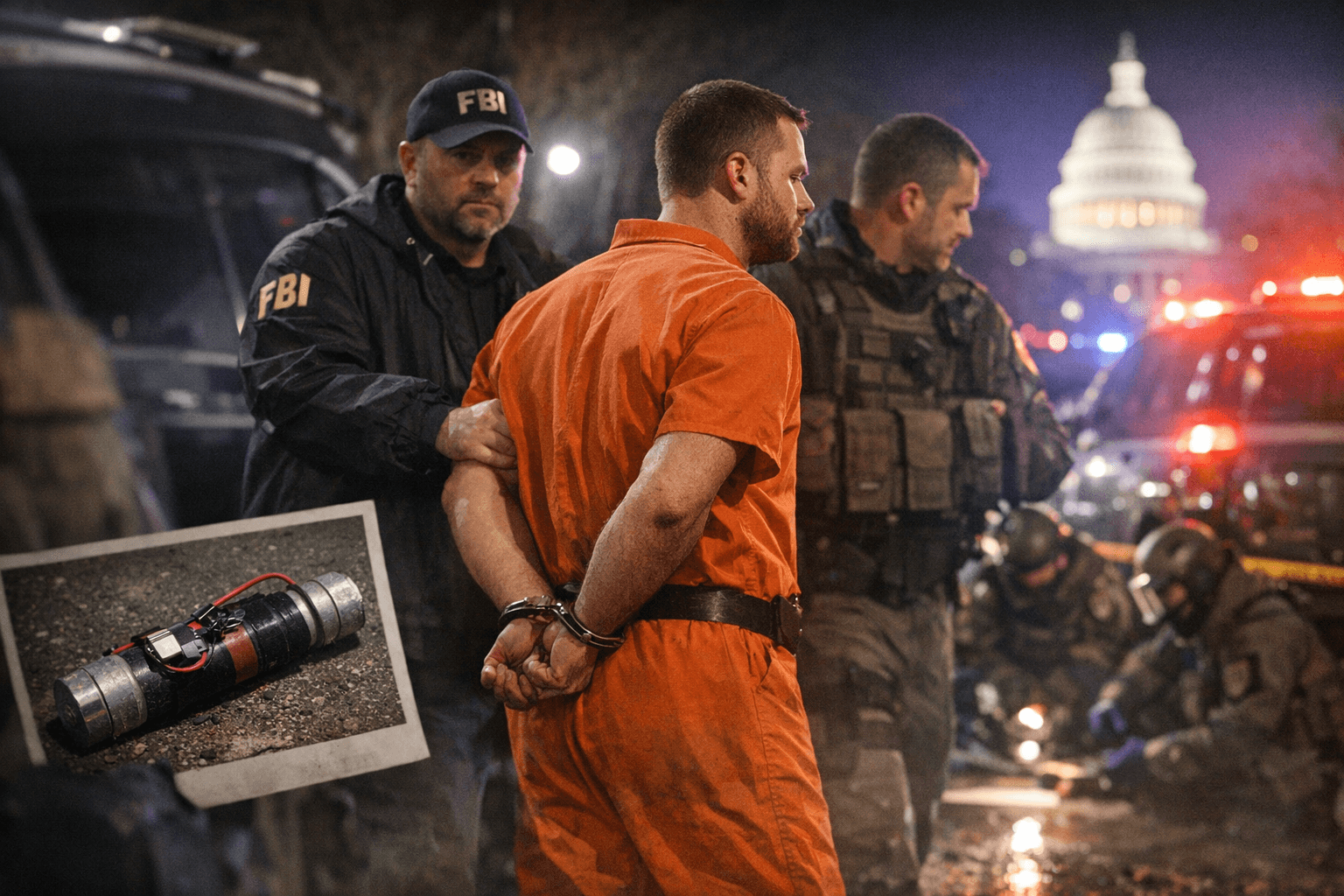
Brian J. Cole Jr., 30, of Woodbridge, Va., appeared in federal court on Jan. 9, 2026, and entered a not guilty plea to multiple explosives-related counts stemming from two pipe bombs left outside the national headquarters of the Democratic and Republican parties on the evening of Jan. 5, 2021, prosecutors and court records show. The devices did not detonate and were discovered the next day as crowds gathered near the U.S. Capitol.
Prosecutors have charged Cole with at least two federal explosives offenses, including counts tied to the use of an explosive device and attempted malicious destruction by means of explosive materials, according to court filings. Authorities said he was arrested in early December 2025 and remained in custody during initial proceedings. Judges have ordered him detained pending further pretrial hearings.
Law-enforcement investigators reopened and expanded a multiyear probe that had gone cold after the devices were first found on Jan. 6, 2021. Surveillance images and video from the Washington, D.C., area became central to the case. According to prosecutors’ filings, when agents confronted Cole with surveillance stills he paused, placed his head face down on the table and answered, "yes."
The filings summarize statements Cole allegedly made to investigators about why he targeted the party headquarters. Prosecutors say he told agents he had come to believe the 2020 election had been "tampered with" and that someone needed to "speak up" for people who believed the election was stolen. He reportedly said he targeted the two parties because they were "in charge" or because "I really don't like either party at this point." Other filings describe an apparent emotional breaking point, saying that "something just snapped," and note that Cole referenced historical violence in Northern Ireland, known as "The Troubles," as an influence.
Court documents further allege Cole spent months acquiring components and learning to assemble the devices from online material and video games, and that he did not test the bombs before placing them. The devices were left outside the DNC and RNC headquarters on Jan. 5, 2021, and were found the following day; neither exploded, prosecutors say.
Beyond the criminal charges, the case raises broader questions about the public-health consequences of political extremism and the role of online ecosystems in radicalizing individuals. Political violence inflicts direct physical danger, but it also produces community trauma, strains local mental-health and emergency services, and undermines public trust in civic institutions. The renewed attention to the Jan. 6 period has again focused policymakers on prevention strategies that blend law enforcement with community-based mental-health intervention and efforts to counter misinformation.
Cole’s not guilty plea sets the case on a path through pretrial motions and potential evidentiary hearings, with further proceedings expected in the coming months. Prosecutors will press evidence gained from surveillance and Cole’s own statements; defense counsel has entered a traditional denial of criminal responsibility. As the court moves forward, communities and public-health professionals will be watching how federal responses to politically motivated violence balance accountability, public safety, and the need to address the underlying social forces that produce radicalization.
Know something we missed? Have a correction or additional information?
Submit a Tip