Wake County DA Explains Court Limits After Protest Over Benji Martin Case
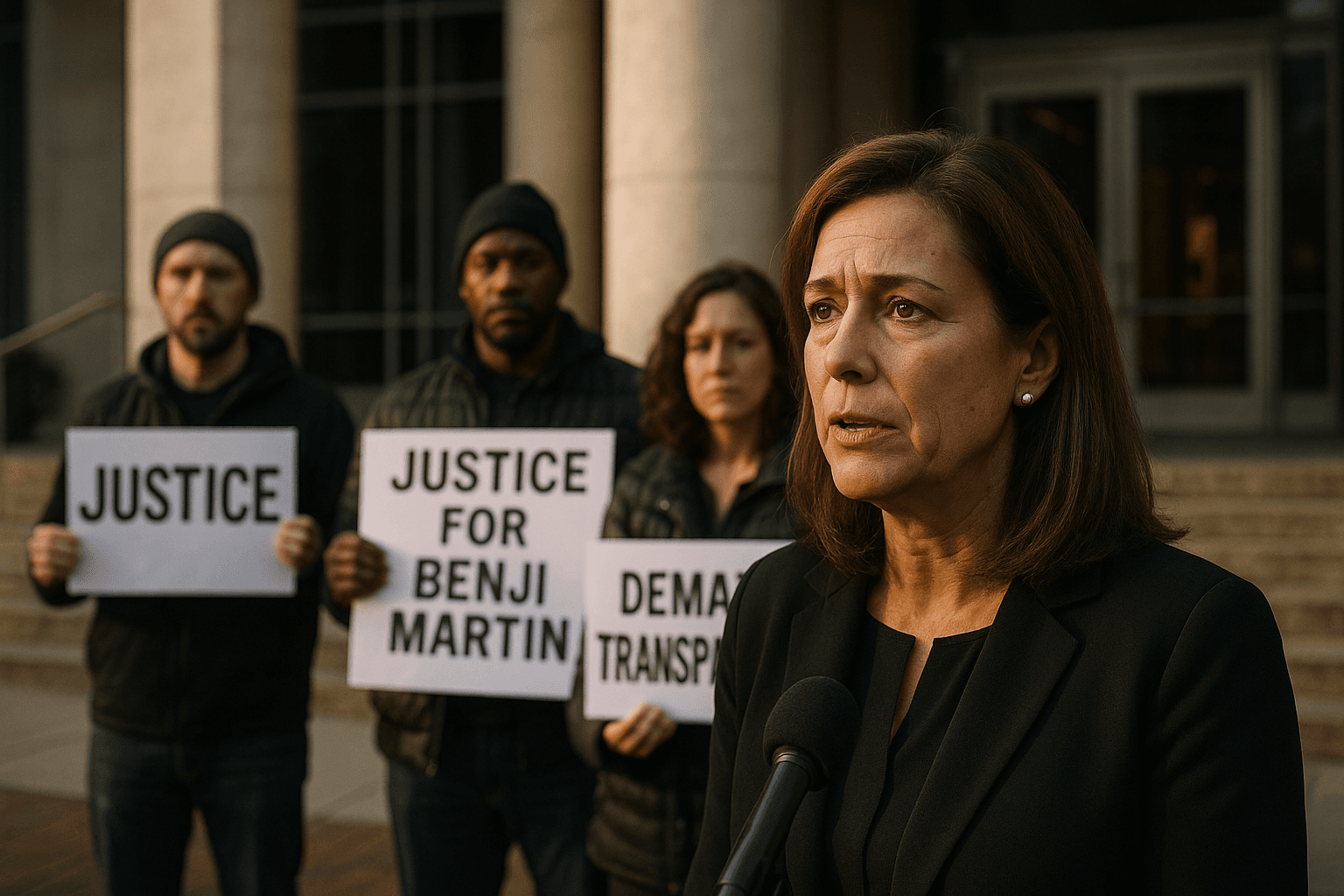
A small group of protesters gathered outside the Wake County Justice Center on December 5 demanding greater transparency in the case against Benji Martin Jr. Wake County District Attorney Lorrin Freeman issued public explanations about how homicide cases move through the courts and why certain investigative material cannot be released without a court order, a point that matters for public trust and the pace of local justice.

A demonstration outside the Wake County Justice Center on December 5 drew attention to the criminal case involving Benji Martin Jr and prompted a public response from District Attorney Lorrin Freeman. Protesters were seeking release of surveillance video from the WakeMed Garner emergency room and broader information about the handling of the investigation. Freeman responded by outlining the limits of the office when cases move from District Court to Superior Court and the legal constraints on releasing investigative material.
Freeman explained that once a case is indicted in Superior Court, District Court proceedings are canceled because Superior Court has jurisdiction over homicide cases. She also described the grand jury process as the mechanism by which homicide cases are initiated in Superior Court. On requests for release of surveillance video, Freeman said the county cannot make investigative videos public unless a court orders their release. Her office is working to turn over investigative material to Martin's defense counsel as required by law.
The developments follow the indictment and ongoing community reaction to the death that prompted the investigation. Members of the community have held local memorials for Officer Roger Smith, and demonstrations have continued weekly as residents press for greater transparency and answers. Those ongoing protests underscore a sustained public demand that local institutions explain their procedures and timetables.
For Wake County residents, the dispute highlights how legal process, public information, and community grief intersect. The Superior Court indictment moves the case into a forum with different rules and timelines, which can slow public disclosure while defense and prosecution assemble evidence. At the same time, requests for investigatory recordings face statutory and constitutional limits that may require judicial review before release.
The DA office position frames the immediate path forward for the case. Community organizers and affected families can expect material to be exchanged between prosecutors and defense counsel under discovery rules, and any public release of evidence will likely require a court decision. The county conversation over transparency and accountability is likely to continue as the case proceeds through the Superior Court docket.
Sources:
Know something we missed? Have a correction or additional information?
Submit a Tip