Wake Forest Tops Mississippi State 43-29 in Duke's Mayo Bowl
Wake Forest defeated Mississippi State 43-29 in the Duke's Mayo Bowl on Jan. 3, a performance led by quarterback Robby Ashford that showcased both high-end passing and explosive special teams. The win will resonate across Wake County through increased program visibility, recruiting momentum, and potential short-term economic activity tied to alumni and fan engagement.
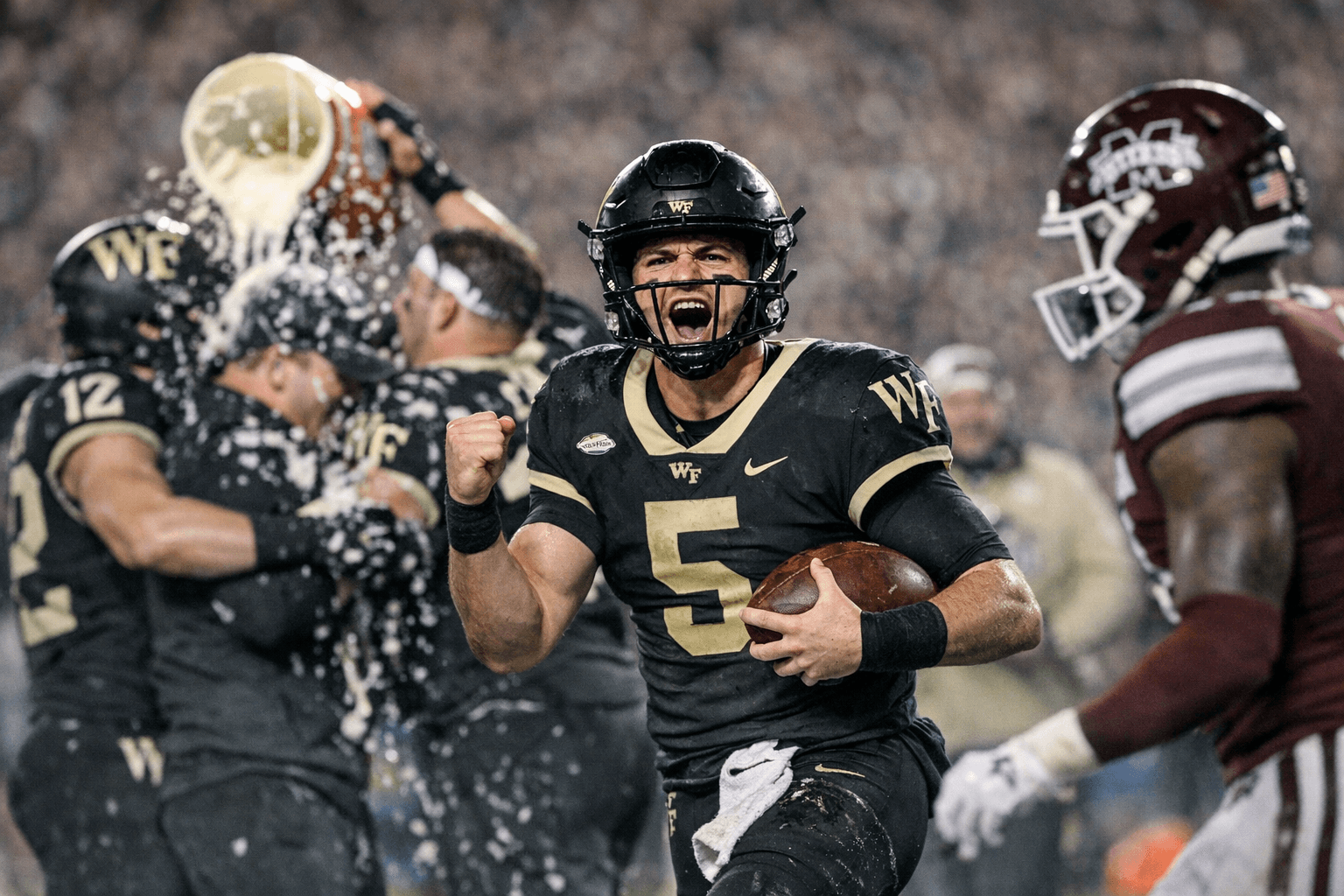
On Jan. 3 in Charlotte, Wake Forest secured a 43-29 victory over Mississippi State in the Duke's Mayo Bowl. Quarterback Robby Ashford accounted for much of the offense, throwing for 303 yards and three touchdowns while also rushing for two scores. Special teams delivered a momentum-shifting play when Koredell Bartley returned a kickoff 100 yards, amplifying a game that featured sustained offensive production from the Demon Deacons.
The final score and Ashford's stat line were the headline takeaways, but the box score also signaled balance: passing efficiency combined with rushing contributions created a dual threat that opposing defenses struggled to contain. Wake Forest's ability to convert big plays into points in a postseason setting reinforces the team's standing as a competitive program in the region.
For Wake County, the game offers immediate and longer-term implications. In the short run, the win provides a spike in local enthusiasm that typically translates into increased merchandise sales, upticks in donations from energized alumni, and larger turnouts at viewing parties and campus events. The regional visibility from televised bowl games can also generate modest tourism spillovers for local businesses when fans travel for bowl-related events or celebrations.
From a recruiting and financial perspective, standout performances in bowl games tend to lift a program's profile among prospective student-athletes and donors. That profile affects recruiting leverage and, over multiple seasons, can influence ticket demand and media interest. In the current collegiate landscape, where name-image-likeness deals and program branding are central, a high-profile win enhances Wake Forest's negotiating position with sponsors and can increase the value of local marketing partnerships.
There are also municipal considerations. Greater engagement around college athletics can prompt local officials and business leaders to evaluate event infrastructure, hospitality capacity, and public safety planning to capture economic benefits from future games and related gatherings. While a single bowl game does not transform local budgets, repeated appearances and wins create a cumulative effect on town-gown relations and regional economic activity.
The game closed with a lighthearted nod to tradition when the coach participated in the Duke's Mayo dunk, a ritual that underscores how sports victories can strengthen community rituals and shared identity. For Wake County residents, the win is more than a scoreline: it is a catalyst for short-term commerce, alumni and student engagement, and a potential accelerant for longer-run program gains that affect the local economy and civic pride.
Sources:
Know something we missed? Have a correction or additional information?
Submit a Tip