Walmart CEO says AI will reshape every job, company promises reskilling
Walmart CEO Doug McMillon warned that artificial intelligence will affect "every job" at the company as Walmart accelerates AI projects for customers and associates. The move matters because it signals widespread operational change across stores, distribution centers and corporate roles, while the company emphasizes upskilling over immediate large scale layoffs.

On December 5, 2025, Walmart outlined an expansive vision for artificial intelligence that executives say will touch operations from front line stores to back office corporate functions. CEO Doug McMillon said AI will affect "every job" as the retailer deepens its partnership with OpenAI and rolls out tools intended for both customers and employees.
The company described a range of AI uses already under deployment or in pilot stages. Consumer facing features powered by the OpenAI collaboration are designed to improve the shopping experience. Internally, Walmart plans agentic AI systems that can take action on behalf of employees, and upgrades to assistant tools that will convert long process documents into concise, step by step guidance for associates. Walmart is also applying AI to scheduling and task management to streamline routines in stores and distribution centers.
Walmart framed the technology push as an opportunity to create higher skilled roles rather than trigger immediate widespread job cuts. Company messaging emphasized investments in reskilling and retraining programs so associates can move into newly created positions that require different skills. Executives say they do not foresee large scale immediate layoffs tied to AI, and they are expanding career pathways intended to help hourly workers shift into roles such as tech support, equipment maintenance, and AI oversight.
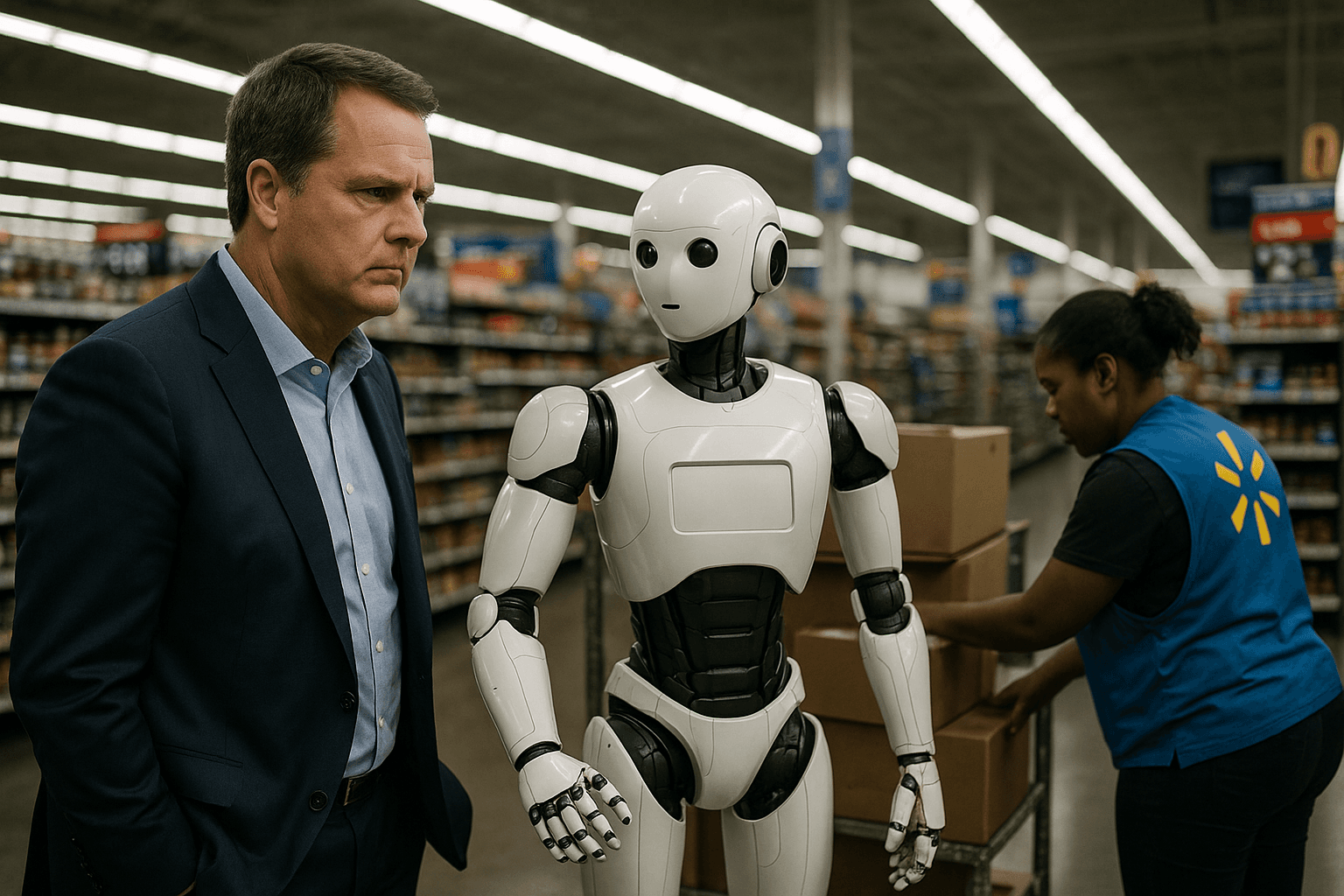
Labor experts and workforce advocates see both promise and risk in the plan. Better scheduling and clearer instructions could reduce burnout and improve productivity for store teams. At the same time, the scale of change poses challenges for training delivery, for managers charged with implementing new tools, and for employees who may have limited time to participate in retraining while meeting daily work demands.
How rapidly roles will change depends on rollout speed and whether the company follows through on training commitments. For now Walmart is betting that pairing automation with robust upskilling can preserve jobs while transforming them. The outcome will shape one of the largest private sector workforces as AI becomes a standard part of retail operations.