Walmart joins Google Gemini to enable in-chat purchases
Google added Walmart to its Gemini agent-led commerce initiative, letting customers buy inside the chatbot. That could shift discovery, fulfillment, and frontline work for associates.

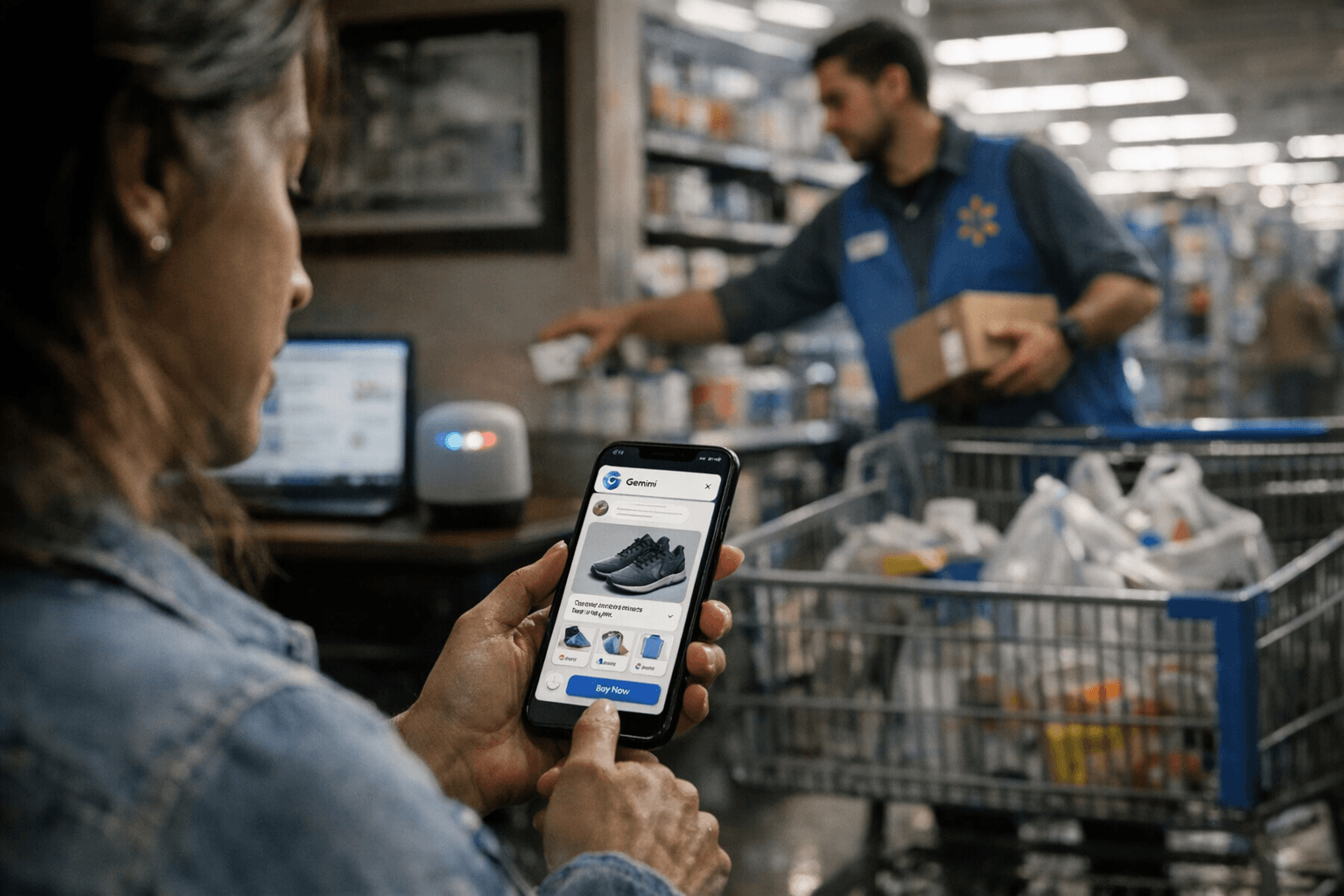
Google unveiled a new agent-led commerce initiative that plugs retailers including Walmart, Shopify, and Wayfair directly into its Gemini AI chatbot and Search AI Mode. The integration lets Gemini surface retailer inventory, generate shopping recommendations, and complete purchases through an instant checkout flow inside the Gemini interface, eliminating the need for shoppers to navigate to retailer sites.
The joint work, built around what Google and participating retailers described as a Universal Commerce Protocol, was announced during National Retail Federation events. Walmart executives, including John Furner, identified as the incoming CEO, framed the partnership as part of a broader push to make AI-assisted discovery and frictionless checkout native to consumer workflows. Google said the rollout will begin in the U.S. with phased expansion to other markets.
For Walmart workers the change is operational as much as technological. If discovery and checkout move into conversational AI, traffic that once flowed to Walmart.com or the Walmart app could be diverted into the Gemini interface. That shift increases the premium on real-time inventory accuracy. Stores and fulfillment centers will need reliable, up-to-the-minute stock feeds so the AI can promise items that are actually in stock and schedulable for pickup or delivery.
Fulfillment operations could feel the impact in pick-and-pack rhythms, shipping forecasts, and BOPIS volumes. More purchases driven through an AI agent may concentrate demand into faster time windows or create new micro-peaks that strain backroom processes and last-mile partners. Associates who handle in-store pickup, order assembly, and customer service may see different patterns of work and new training requirements around AI-driven orders and conversational purchase flows.
The integration also raises questions about returns, fraud prevention, and customer support handoffs. Completing payments inside a third-party AI interface changes the touchpoints where disputes or returns start. Retailers will need to adapt backend reconciliation, fraud detection, and customer service playbooks so associates and contact centers can resolve issues efficiently when purchases originated in an AI chat.
For managers, the immediate priorities are inventory integration, staffing flexibility, and clear workflows for AI-originated orders. Technology teams face the practical task of connecting product catalogs, pricing, promotions, and fulfillment windows to the Universal Commerce Protocol so that the agent’s recommendations and checkout promises are dependable.
The takeaway? This is another step toward commerce happening where customers already live - inside search and chat. Associates and local leaders should watch for training and scheduling updates, prioritize inventory accuracy, and expect shifts in pickup and fulfillment patterns. Our two cents? Treat this as a change in how customers find and finish purchases, not just another sales channel - and get your inventory sync and processes tightened now so the technology delivers for both shoppers and the frontline.
Sources:
Know something we missed? Have a correction or additional information?
Submit a Tip