Webinar guides Bemidji landowners on storm recovery, funding
A webinar in Bemidji today explains storm tree damage recovery and available funding, crucial for landowner safety and wildfire prevention.
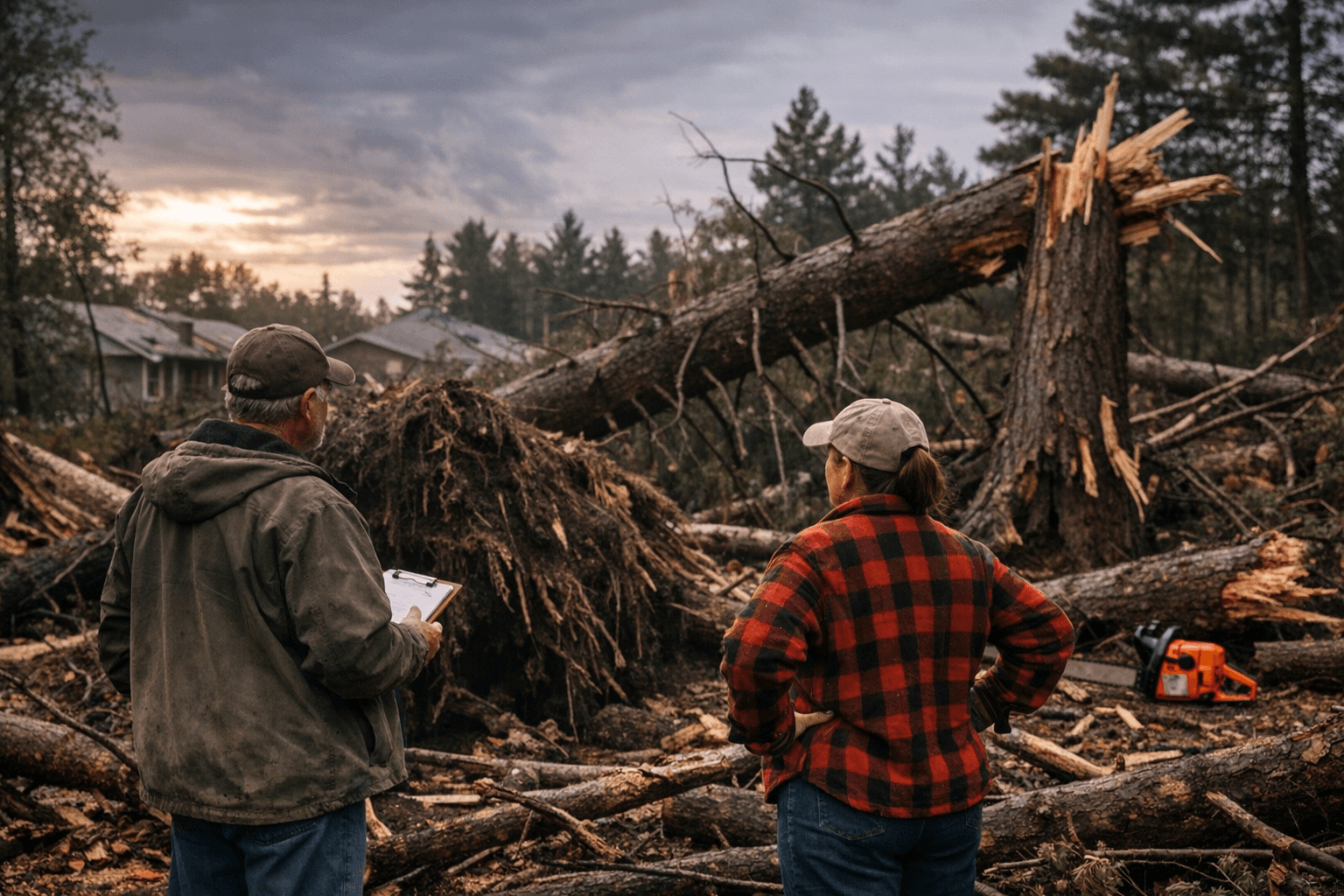
A Minnesota Forestry Association webinar today will walk Bemidji and Beltrami County landowners through practical steps to recover from the extensive tree damage left by the June 21 storm and to access federal and state help. The online session runs 4 to 5:30 p.m. via Zoom and brings together local and state experts to explain safety, salvage and funding options.
Nathan Peterson of the U.S. Department of Agriculture Farm Service Agency will review the Emergency Forest Restoration Program and the cost-share application process, which opens Feb. 2. Ben Lang of the Minnesota Department of Natural Resources will outline the FIREWISE Program and discuss safe winter disposal of downed trees as well as wildfire-prevention steps to take heading into spring. A question-and-answer session will be led by former MFA President Dave Roerick.
For residents still coping with fallen trees across woodlots, yards and public rights-of-way, the webinar is timely. Downed trees are not only an economic hit for private landowners but a public health and safety issue: they can create physical hazards, block emergency access, raise fuel loads that increase wildfire risk, and prolong power outages or infrastructure damage. For tribal members, renters with shared land responsibilities, and households on fixed incomes, the cost and logistics of salvage can be a major barrier to recovery.
The Emergency Forest Restoration Program's cost-share model aims to reduce that barrier by offsetting removal and restoration costs, and the MFA session is intended to demystify how to apply and what documentation homeowners should prepare. The DNR's FIREWISE guidance addresses both individual property measures and community-level practices to reduce the chance that remaining debris contributes to a larger wildfire incident as spring dries the forest floor.
Beyond technical advice, the event highlights equity concerns in disaster recovery. Rural landowners without transportation, internet access or funds to hire contractors often face slower, more dangerous recoveries. Community leaders and agency staff who join the webinar can help make applications and safety guidance more accessible, but local outreach and proactive assistance remain critical to prevent uneven outcomes across Beltrami County neighborhoods and townships.
If you own or manage timber or property damaged in the storm, attending will help you document losses, learn safe disposal methods in winter conditions, and understand whether you qualify for cost-share aid when the application window opens. The session also offers an opportunity to ask about timing, paperwork and on-the-ground safety considerations during the Q&A.
The takeaway? Treat fallen trees as both a safety hazard and a resource-management problem: document damage, prioritize hazards that block access or threaten structures, and seek help from USDA FSA and DNR programs before doing risky work yourself. Our two cents? Join the webinar, take notes on application requirements, and check in with agency staff early so recovery doesn’t leave the most vulnerable further behind.
Sources:
Know something we missed? Have a correction or additional information?
Submit a Tip