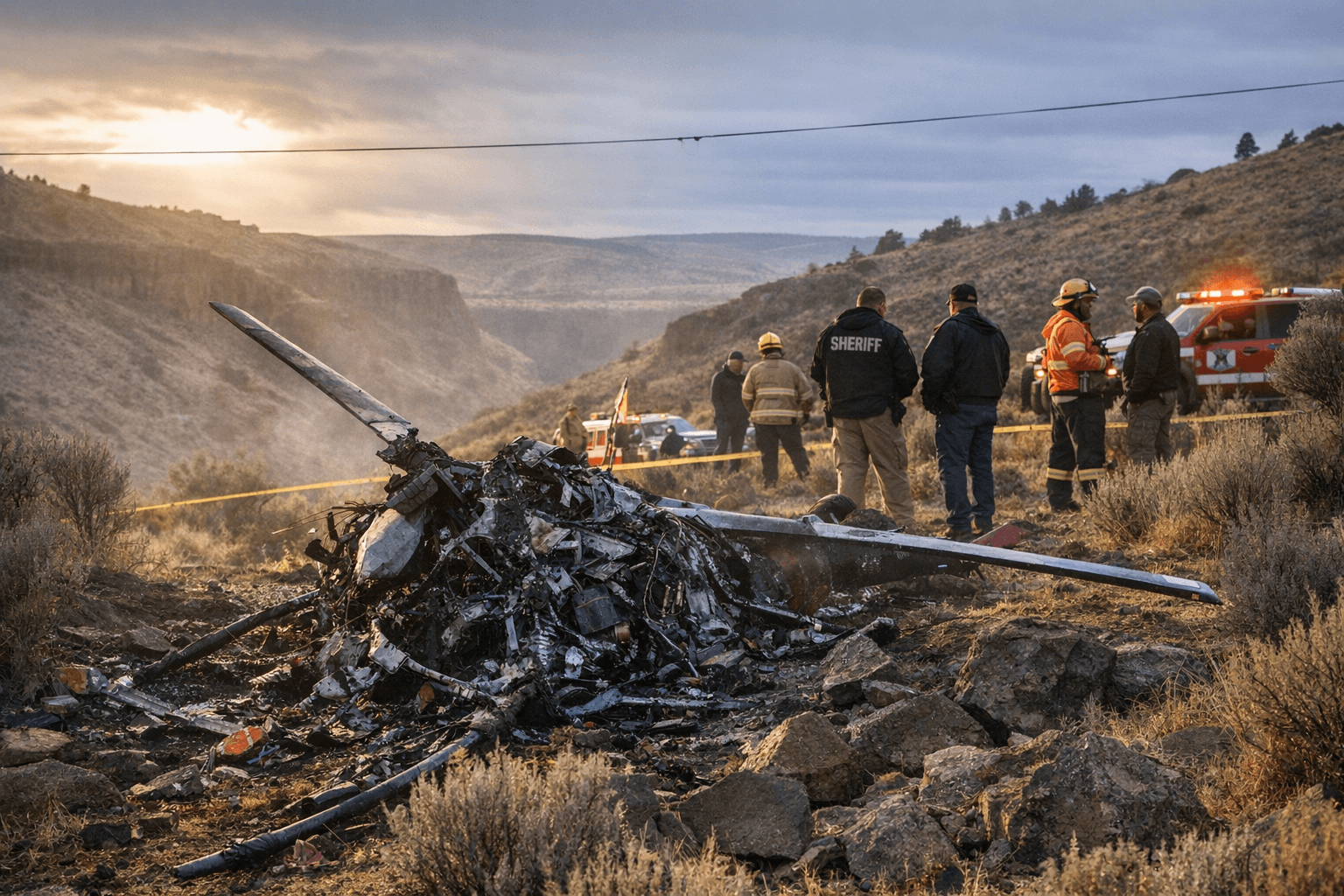
Winter storm shut down mountain passes, strained rural services in Union County
A winter storm Jan. 6–8 delivered heavy high-elevation snow and strong winds in the northern Blue Mountains, disrupting travel and risking service access for mountain residents.

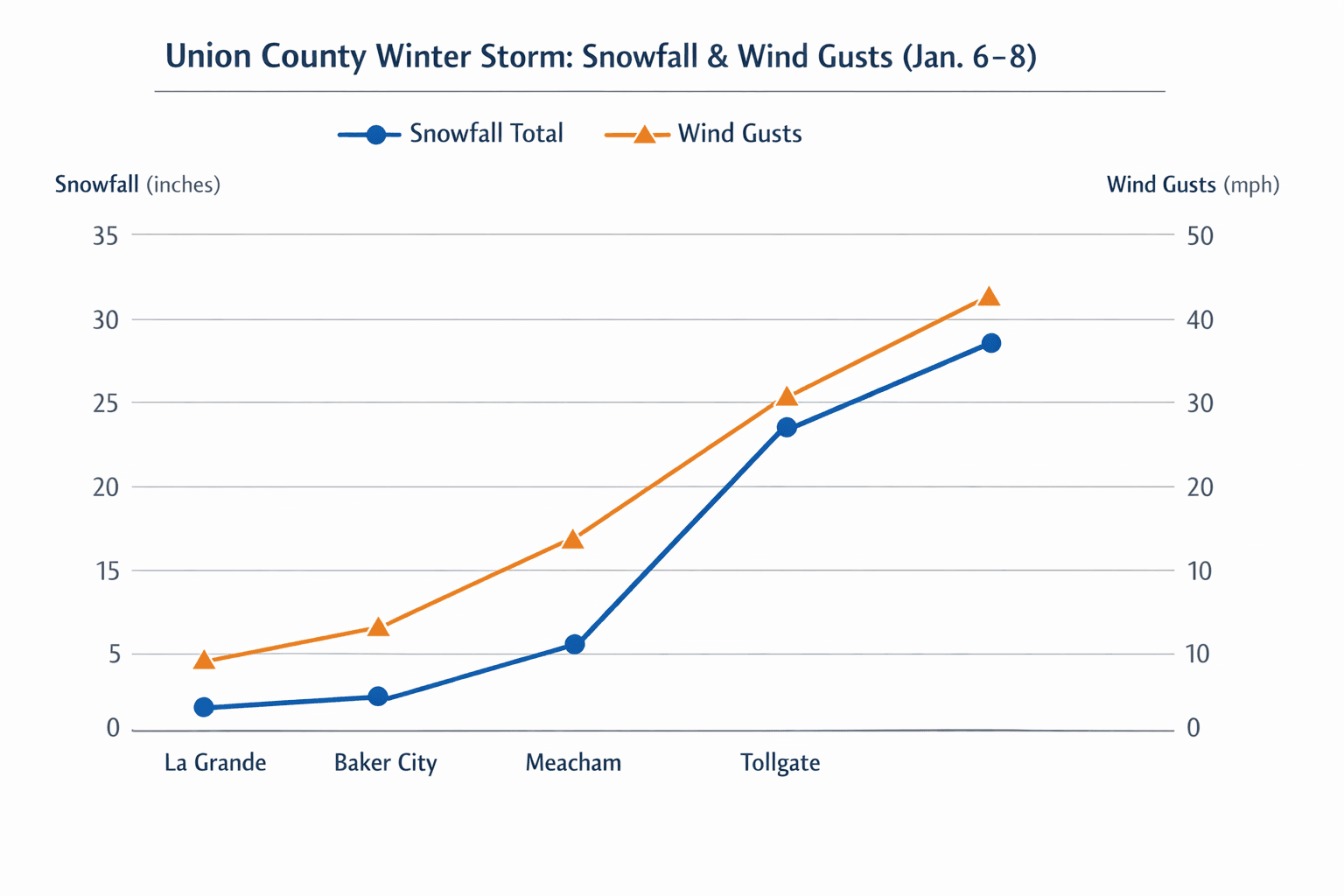
A strong winter storm that hit the northern Blue Mountains Jan. 6–8 dropped heavy snow at higher elevations, creating hazardous conditions and straining services for Union County's mountain communities. Snowfall totals in places such as Tollgate and Meacham reached as much as 12 to 30 inches, with snowfall rates of 1 to 4 inches per hour and wind gusts up to about 45 mph. Most of the heavy snow stayed above valley floors, leaving La Grande and Baker City with little or no accumulation.
The concentrated nature of the storm meant that hazards were unevenly distributed across the county. Mountain roads and passes experienced the worst impacts - rapid accumulation and gusty winds that reduce visibility and accelerate drifting. For people who live, work, or recreate at elevation, those conditions translated into delayed travel, risk of being stranded, and interrupted access to basic services.
The immediate public health concerns centered on access to care and basic needs. Rural residents who rely on regular medical services - including those requiring dialysis, oxygen, or timed medication refills - face amplified risk when roads are blocked or travel becomes unsafe. Power outages remain a common companion of heavy mountain snow and wind, disproportionately affecting households without backup heat or transportation. Older adults, people with disabilities, low-income families, and people living alone in remote homes are the most vulnerable during these short but intense weather events.
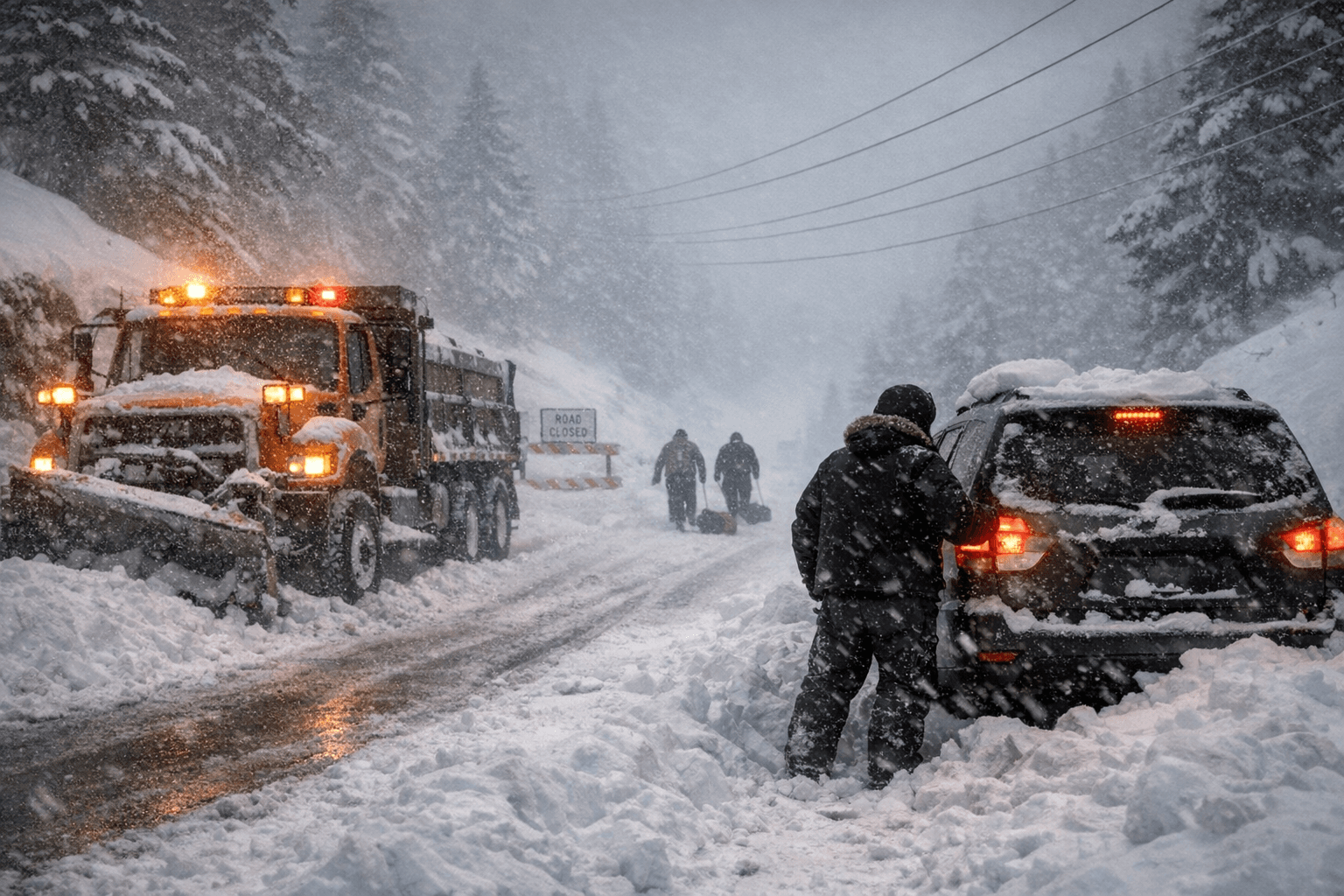
Emergency response and public works face familiar challenges: prioritizing snow removal on limited networks, reaching remote driveways, and clearing routes to clinics and community shelters. The storm underscored structural gaps that persist in Union County and similar rural regions - limited redundancy in supply chains, single-access roads to some communities, and gaps in broadband and communication that make outreach and telehealth less reliable during emergencies.
By the end of the week cooler, drier weather moved in, easing the immediate snowfall threat and allowing crews to focus on clearing roads and restoring services. But the episode highlights policy choices that could reduce risk going forward: investment in road and power resilience, funding for community warming centers, expanded emergency transport options for medically vulnerable residents, and targeted outreach to ensure continuity of prescriptions and treatments.
Our two cents? If you live up in the Blues or care for someone who does, use this as a reminder to check prescriptions and backup power plans, make sure neighbors are reachable, and delay nonessential travel when forecasts call for rapid mountain accumulation. Small preparations now can keep Union County families safer when the next quick-hitting storm comes through.
Sources:
Know something we missed? Have a correction or additional information?
Submit a Tip