Years of Tap Failures in Northfork Spur Phased Elkhorn Water Overhaul
Northfork residents have endured multi-year boil-water advisories and repeated weeks-long outages, prompting a phased regional upgrade known as the Elkhorn Water Project. The project has brought a new water plant and storage tank online for surrounding communities, but later phases must connect Northfork, Keystone and others to restore reliable drinking water and resolve longstanding public-health and economic strains.
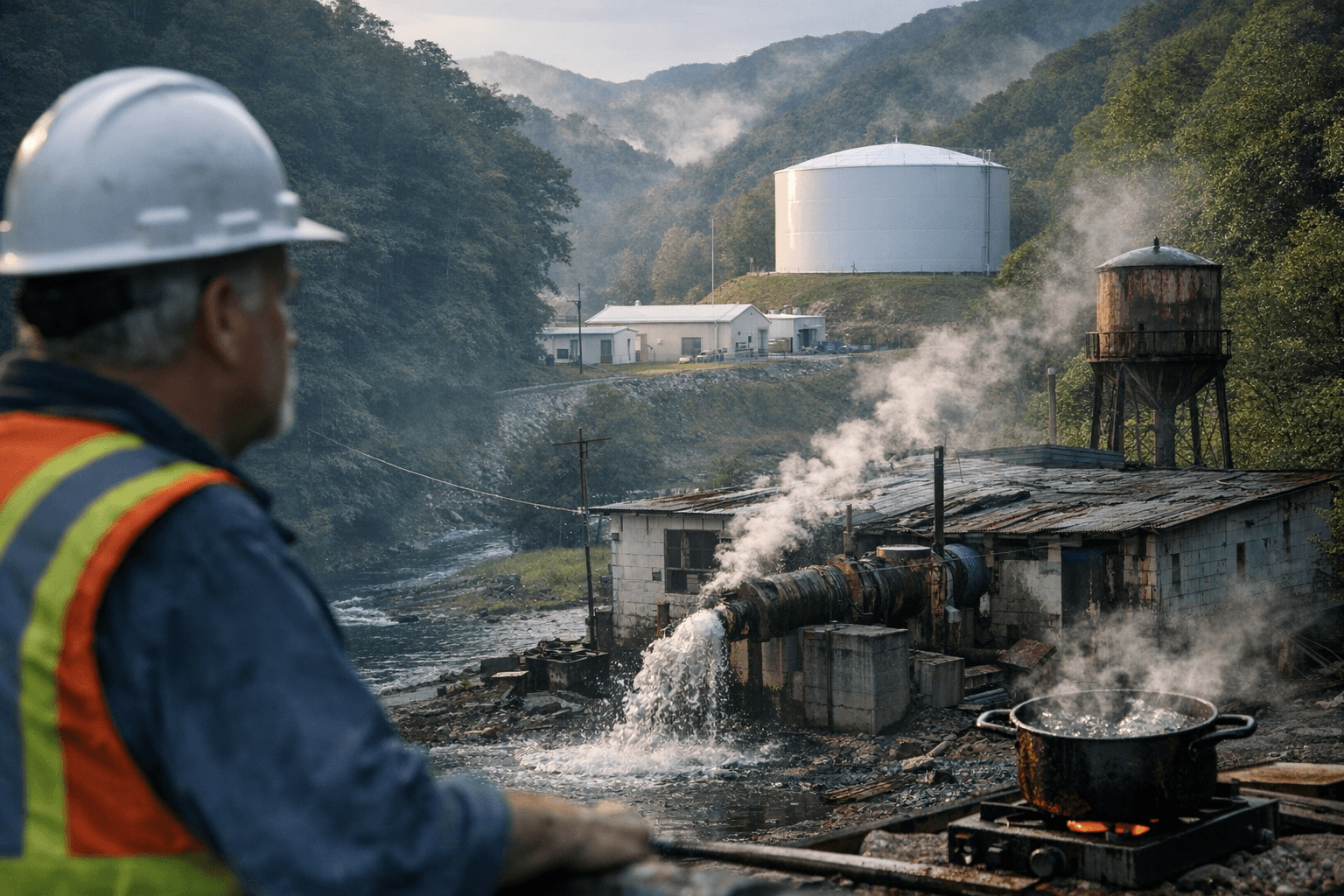
For years households in Northfork, a small McDowell County community, have coped with chronic interruptions to tap service and a lengthy boil-water advisory that at times left families without safe running water for weeks. The instability forced daily adaptations: storing water in buckets and containers, relying on alternate sources for cooking and hygiene, and bearing extra time and expense to secure potable water.
Public agencies and local officials turned to a phased engineering and funding approach to address the systemic problems. Early phases of the Elkhorn Water Project delivered a new water treatment plant and a storage tank that now serve nearby communities, improving capacity and treatment for portions of the county. Subsequent phases are designed to extend service lines and connect isolated systems in Northfork, Keystone and other neighborhoods still affected by legacy infrastructure failures.
Advancing the project required assembling multiple sources of capital. Federal and state grants including funds from the U.S. Department of Agriculture and the Economic Development Administration, along with county contributions, underpinned construction and planning. Payment schedules and grant conditions have meant that a full solution could not arrive in a single step; the phased model reflected the reality of limited, competitive funding and the need for matching dollars or local commitments.
The human toll of recurring water problems has been significant. Residents reported lost time, additional health concerns tied to unsafe or uncertain water, extra spending to purchase or transport water, and disruptions to household routines. Those burdens highlight how utility instability compounds economic stress in a county still recovering from industrial decline and population loss.
Institutionally, the situation exposes the challenges rural public service districts face in maintaining aging systems and in competing for federal grants that often favor larger projects or jurisdictions. The McDowell Public Service District has overseen planning and phased construction, but long-term resilience will depend on sustained maintenance funding, routine monitoring and clear communication with residents about timelines and service expectations.
For voters and civic participants, the case underscores the importance of local governance. Board elections for the public service district, county commission decisions about matching funds, and public engagement in planning meetings all shape how quickly and effectively infrastructure upgrades proceed. Continued attention from residents and elected officials will be necessary to ensure later phases are completed, that operations are staffed and funded, and that the gains from new treatment capacity translate into reliable taps for Northfork households.
Work on the project continues, and its eventual completion will be a test of whether a multi-phase, grant-dependent strategy can deliver sustained clean water to some of McDowell County’s most vulnerable communities.
Sources:
Know something we missed? Have a correction or additional information?
Submit a Tip