$188.9 Million Award to Strengthen Rural Health Across Hawaiʻi Islands
The state of Hawaiʻi received a $188.9 million federal award to implement a five-year Rural Health Transformation Plan designed to modernize care delivery for neighbor-island and rural communities. Kauaʻi facilities such as Kauaʻi Veterans Memorial Hospital in Waimea are named as potential beneficiaries, with funds aimed at improving access to primary care, behavioral health, emergency response and telehealth.
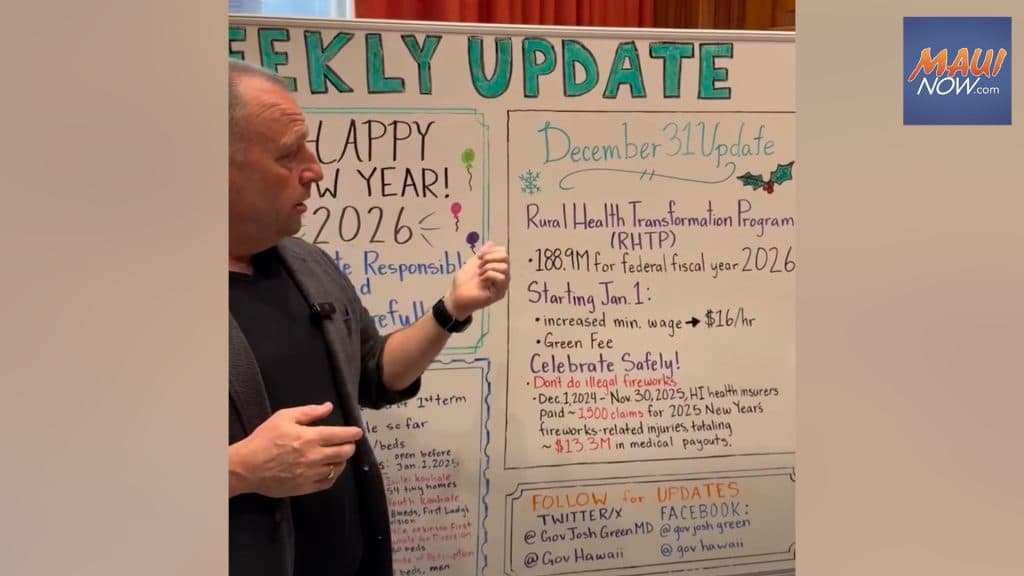
The federal Centers for Medicare & Medicaid Services awarded Hawaiʻi $188,892,440 for federal fiscal year 2026 to begin implementation of the state’s five-year Rural Health Transformation Plan. The investment is part of a nationwide Rural Health Transformation Program intended to shore up care in rural and under-resourced areas, with additional annual awards expected through 2030.
The plan targets longstanding barriers in geography, workforce and infrastructure that have limited access to timely, coordinated care on neighbor islands. Key initiatives identified for this funding include a Rural Health Information Network, the Pili Ola Telehealth Network, and a Rural Infrastructure for Care Access program to expand EMS, mobile healthcare, community paramedicine and behavioral health capacity. A workforce pipeline called HOME RUN will support training, residencies, scholarships and mentoring to recruit and retain rural health professionals. The plan also includes a Rural Respite Network to expand medical respite care for unhoused and post-acute patients and competitive funds to help rural providers adopt value-based and innovative care models.
For Kauaʻi County residents the award could translate into more virtual care options, better emergency response and strengthened local capacity to treat behavioral health needs without traveling to Oʻahu. Kauaʻi Veterans Memorial Hospital in Waimea is cited as an example of the kind of rural facility that stands to benefit from upgraded technology, staffing supports and expanded community-based services. Expanded medical respite capacity aims to reduce avoidable hospitalizations among people experiencing homelessness, a public health priority with direct community impact.
The Rural Health Information Network component would create a statewide digital backbone linking hospitals, clinics and health centers through interoperable electronic health records and shared data hubs. That interoperability is intended to improve continuity of care for patients who move between providers or islands, but will require parallel investments to address rural broadband and workforce training needs.
Policy implications are significant: the CMS award provides multiyear federal backing for a state-led strategy to rebalance services toward accessibility and equity. Successful rollout will depend on effective coordination among state agencies, county health partners, rural hospitals and community organizations, and on explicit plans for distributing competitive funds to smaller providers.
State officials said they will release more detailed guidance in the coming weeks on allowable uses and program implementation. For Kauaʻi communities, the coming months will determine how quickly these federal dollars translate into workforce hires, telehealth training, EMS expansion and other on-the-ground improvements.
Sources:
Know something we missed? Have a correction or additional information?
Submit a Tip