Alice Joins Regional Water Partnership, Expands Engineering Capacity
The Alice City Council voted on December 3 to join an interlocal agreement with Corpus Christi, Beeville and Mathis to collaborate on water and wastewater projects, allowing Alice to use Corpus Christi engineering and testing capacity. The move could speed project delivery and reduce outsourcing costs for well design and emergency water testing, while city oversight is preserved for projects above the city manager spending threshold.
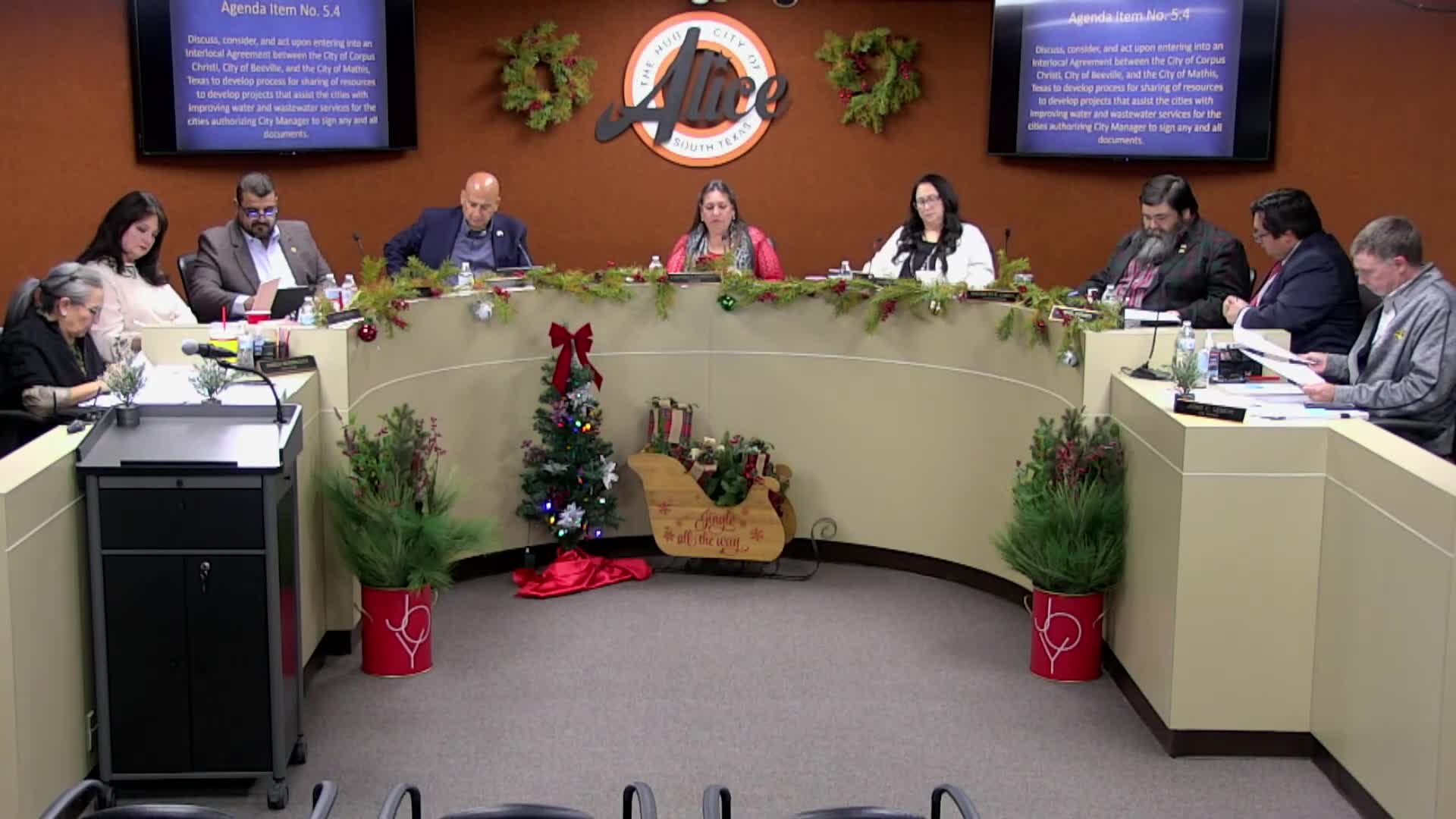
At its December 3 meeting the Alice City Council authorized the city manager to execute interlocal agreement documents to join a regional collaboration on water and wastewater services with Corpus Christi, Beeville and Mathis. The agreement is designed to give smaller cities access to Corpus Christi engineering and laboratory testing capacity for tasks such as well design and emergency water testing, which council members said could shorten timelines and reduce the need to contract outside providers.
City legal staff clarified the governance framework for project commitments during council discussion. The city attorney explained that project level letter agreements entered under the interlocal could obligate funds up to the city manager spending authority, which was noted in the meeting as fifty thousand dollars. Any projects that would commit funds beyond that threshold must return to council for approval. The council action both authorized the city manager to sign interlocal documents and directed staff to bring higher value projects back to the council for review.
For Alice residents the agreement promises more rapid access to specialized engineering and testing resources when infrastructure problems arise. Faster well design and more timely emergency water testing can reduce downtime and potentially lower costs associated with outsourcing. The arrangement also creates a dependency on a regional partner for technical capacity, making clear procedures for oversight and project approvals more important to protect municipal finances and service reliability.

Policy and institutional implications include closer regional coordination of essential utilities, increased efficiency for small city projects, and the need for transparent reporting on project level commitments. The council preserved a control point by requiring council approval for expenditures above the fifty thousand dollar threshold, but the city will need clear public disclosures about work authorized under the interlocal and the cumulative fiscal exposure of ongoing projects.
Next steps include signing the interlocal documents and presenting any projects exceeding the spending authority to the council for approval. Residents can track upcoming council agendas to review specific project proposals and fiscal details as the interlocal arrangement is implemented.