State inspectors increase border screenings, guard against screwworm return
Texas Animal Health Commission inspectors operated mobile inspection stations in Brooks County on December 2, 2025 as part of intensified efforts to prevent the return of screwworms to Texas. The action matters to Jim Wells County livestock owners because a confirmed case remains roughly 70 miles south of the Texas border and reestablishment could trigger quarantines and significant economic losses.

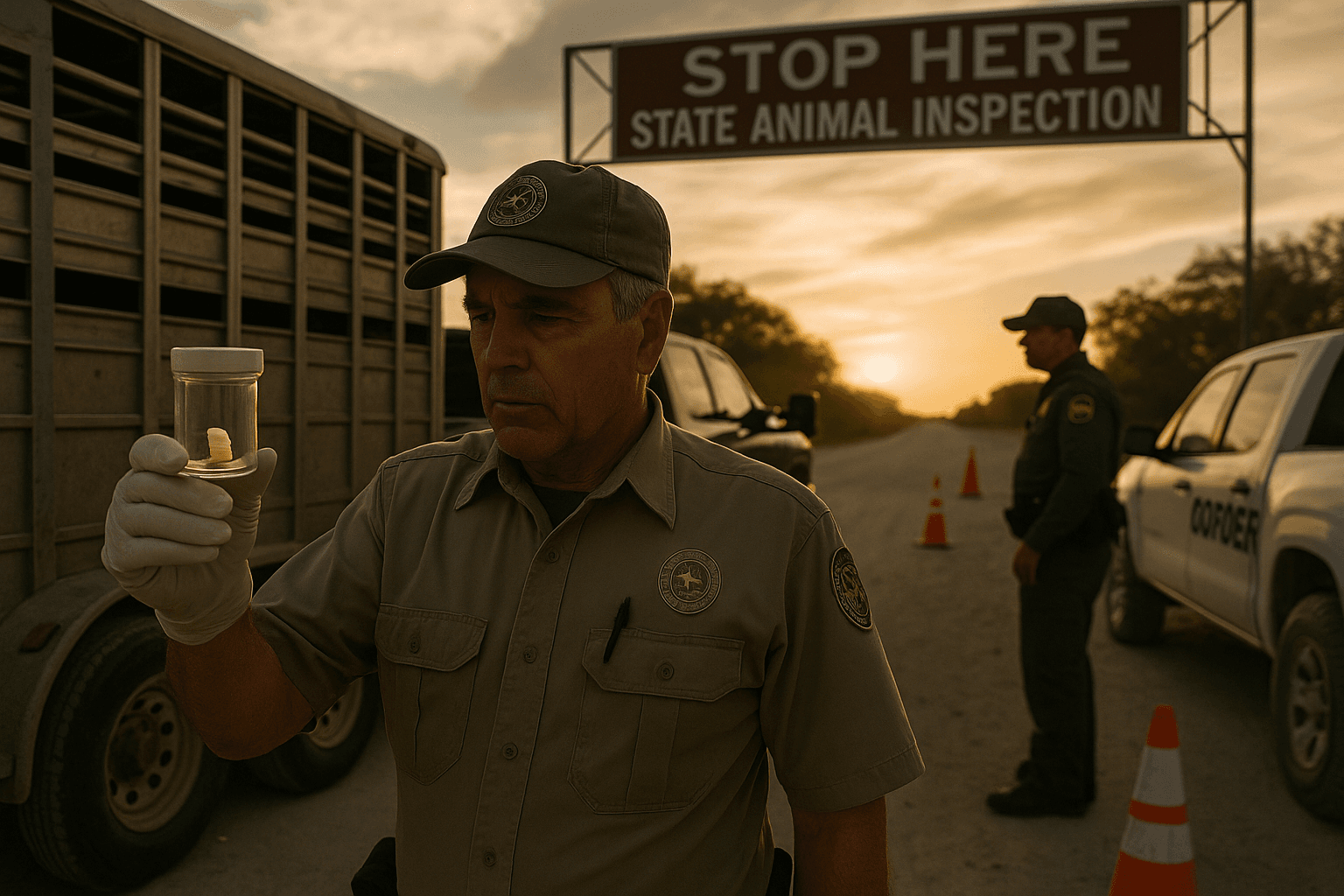
On December 2, 2025 Texas Animal Health Commission inspectors staffed screening points in Brooks County to detect and contain screwworm infestations before they cross into Texas. Inspectors examined animals for open wounds and signs of larvae and carried out targeted screening at checkpoints near known livestock routes. The agency described the operations as a preventative measure following a confirmed case located roughly 70 miles south of the Texas border.
Screwworms lay eggs in open wounds on livestock, and when larvae hatch they consume living tissue. Left unchecked an infestation can cause rapid and severe losses in cattle and other animals, and can trigger movement restrictions by states and trading partners. Brooks County veterinarian Dr. Michael Vickers cautioned that if screwworms were to reestablish in Texas other states could impose quarantines on Texas cattle, a policy outcome that would directly affect regional markets and the livelihoods of ranchers in Jim Wells County.
The immediate local impact would be twofold. First, producers could face quarantine orders and inhibited access to out of state markets, which would depress prices and complicate herd management. Second, increased inspection activity and potential emergency control measures would place new operational burdens on small operations that lack large animal veterinary capacity. For Jim Wells County, where agriculture and livestock remain important to the local economy, those outcomes could reverberate through feed suppliers, transport services, and rural employment.
Institutionally the episode underscores the role of the Texas Animal Health Commission in border surveillance and the need for sustained surveillance funding and rapid reporting networks. Effective containment depends on timely detection by producers and veterinarians, rapid response capacity at inspection stations, and clear communication between state agencies and county officials.
Ranchers and animal handlers are advised to monitor livestock for wounds, seek veterinary evaluation for suspicious cases, and report potential infestations to state animal health officials. Preventing reestablishment will require continued vigilance at the border and cooperative action across county and state lines to protect the region s agricultural economy.