Arkansas Supreme Court Finds Legislature May Amend Voter Approved Amendments
The Arkansas Supreme Court ruled on December 11 that the Legislature can amend constitutional amendments approved by voters, overturning a 71 year precedent. The decision restores legislative authority over measures such as the 2016 medical marijuana amendment, and civic groups say it threatens the stability of direct democracy in Arkansas.
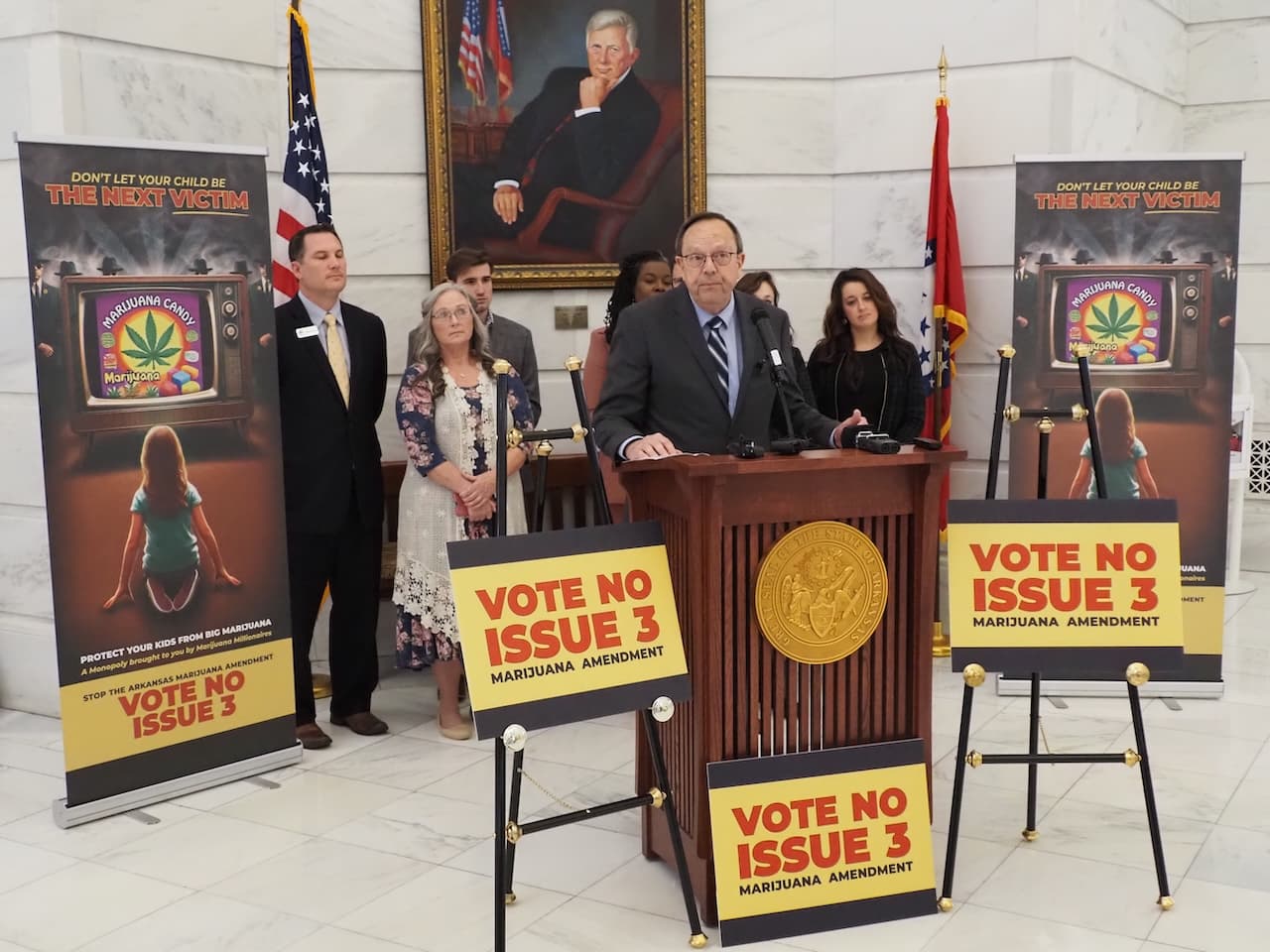
In a unanimous opinion issued December 11, the Arkansas Supreme Court concluded that Article 5, Section 1 of the state constitution gives the General Assembly the authority to amend voter approved constitutional amendments by a two thirds vote of each chamber. The ruling reversed a 2023 Pulaski County Circuit Court decision that had struck down more than two dozen legislative changes to Amendment 98, the 2016 citizen initiated measure that legalized medical marijuana with certain restrictions.
The court overturned a 1951 decision known as Edgmon, which had been the basis for Circuit Judge Chip Welch’s 2023 ruling in favor of two medical marijuana license holders, Good Day Farms and Capital City Medicinals. These companies had challenged a series of laws passed by the Legislature since 2016 that further restricted the industry by outlawing the sale of combustible marijuana, requiring child proof packaging, limiting the THC content of edibles, and prohibiting advertising.
Justice Cody Hiland wrote the opinion, finding that an earlier precedent had given judicial preference over plain constitutional text. “The Edgmon court’s reasoning substituted judicial preference for plain constitutional text …,” Hiland wrote. The opinion restores authority to the Legislature to amend voter approved measures by the constitutionally prescribed supermajority.
Arkansas Attorney General Tim Griffin, who represented the Department of Finance and Administration and its Alcoholic Beverage Control Division in the appeal, applauded the decision. “The Constitution is clear that the General Assembly has the power to amend the laws initiated by the people by 2/3 vote in both chambers,” Griffin said in a statement.

Two justices issued separate concurring opinions. Justice Rhonda Wood agreed with the majority on the meaning of Article 5, Section 1 but wrote that “Overruling Edgmon goes a step too far.” Justice Shawn Womack concurred while relying on the doctrine of sovereign immunity. Chief Justice Karen Baker and Special Justices Barbara Halsey and Don Curdie joined the majority. Justices Courtney Hudson and Nick Bronni did not participate.
Civic groups in Arkansas reacted swiftly, saying the ruling heightens the urgency of 2026 ballot efforts to protect the initiative process. One group said, “One thing is clear: Arkansans must protect our own power.” The League of Women Voters of Arkansas said the ruling “will have an enormous impact on the voters’ constitutional right to pass and enact amendments.” David Couch, general counsel for the League, called it “more important than ever” to protect direct democracy and said the organization had included a provision in its proposed ballot measure to bar the General Assembly from amending citizen initiated amendments. LWVA president Bonnie Miller urged voters, “Don’t lose hope.”
For Phillips County residents the ruling raises immediate questions about the durability of voter approved reforms and the balance of authority between elected lawmakers and the electorate. Local voters and civic groups who rely on the initiative process may face new uncertainty about whether measures they approve at the ballot can be altered by the Legislature without a further vote of the people. The decision is likely to shape legislative strategy and campaign planning ahead of the 2026 ballot season.
Sources:
Know something we missed? Have a correction or additional information?
Submit a Tip