Avelo Ends ICE Deportation Flights, Closing Mesa Base After Backlash
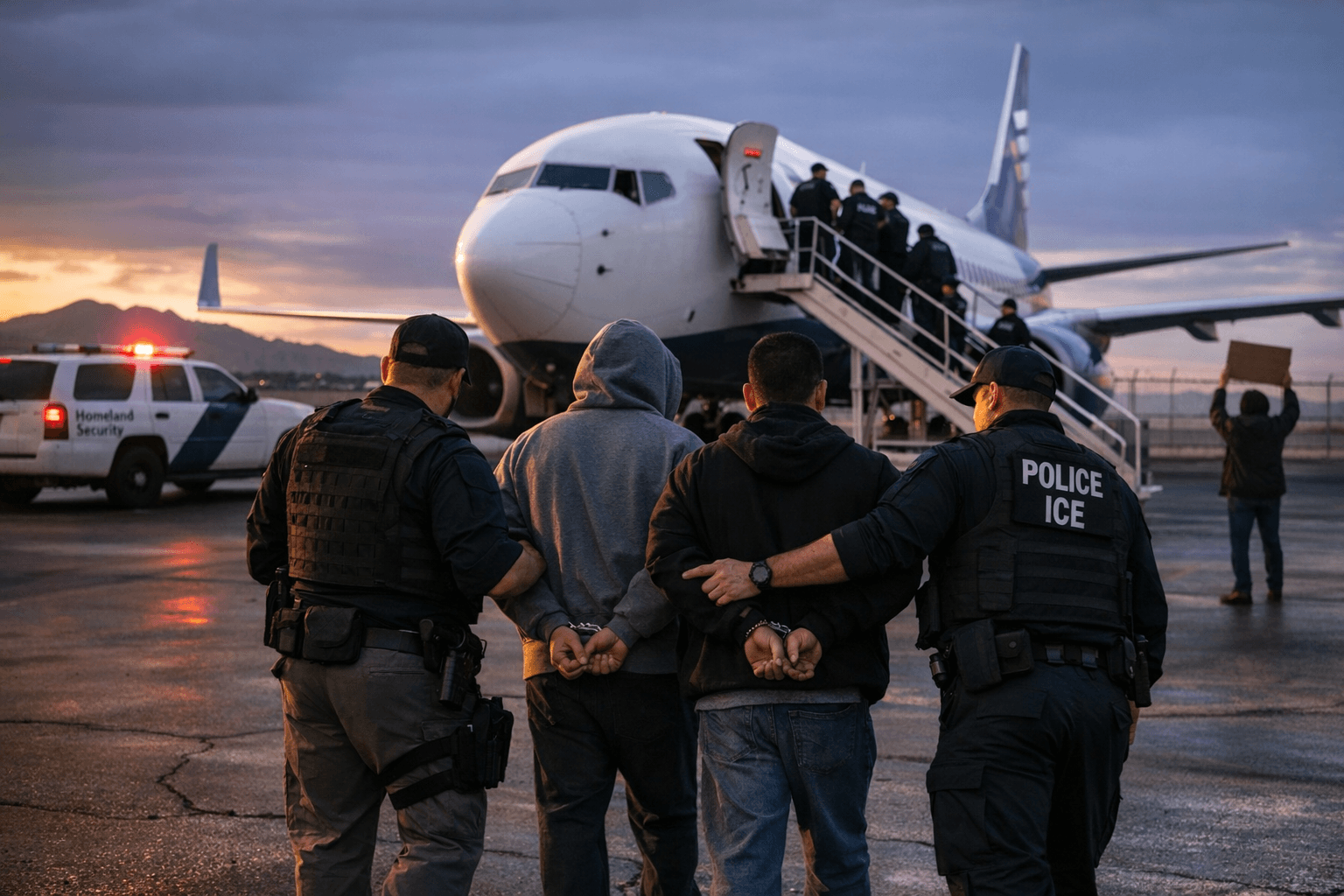
Avelo Airlines announced it would stop operating deportation charter flights for U.S. Immigration and Customs Enforcement and will close its Mesa Gateway Airport base by Jan. 27. The decision follows months of public protests, union pressure and operational strain, raising questions about the government’s reliance on private carriers and the local economic and political fallout.

Avelo Airlines said in early January that it would cease participation in the Department of Homeland Security and ICE charter program and close its Mesa Gateway Airport base in Mesa, Arizona, by Jan. 27. Company statements and internal briefings also told staff the carrier would cut some commercial routes and reduce headcount as it refocused on regular passenger service.
Company spokeswoman Courtney Goff characterized the government charters as providing “short-term benefits” but said they “ultimately did not deliver enough consistent and predictable revenue to overcome their operational complexity and costs.” Avelo began transporting detained immigrants from Mesa on May 12 and rapidly became a visible commercial partner for deportation flights, a role that drew sustained public attention and protest.
The airline’s exit removes one of the few regular commercial partners for ICE’s full-aircraft deportation program. Human Rights First data shows the federal government conducted at least 11,192 ICE air-charter flights from January through November 2025, and that Avelo accounted for roughly 17 percent of ICE flights in November 2025. Public records show the Department of Homeland Security awarded a large charter contract earlier in the year to CSI Aviation; that agreement is reported to be worth more than $560 million. Avelo has said CSI Aviation will determine when deportation operations that used Avelo aircraft formally end, leaving the exact timing of the final government-charter flights dependent on the contractor and DHS scheduling.
The announcement capped months of organized opposition. Activists staged protests at airports across the country, organized boycott campaigns, and used targeted messaging and job-post submission tools to pressure the carrier. Progressive advocacy groups and local coalitions maintained sustained actions, and independent efforts including billboards near airports sought to draw public scrutiny to Avelo’s role. Flight attendants’ unions pressed the company as well; the Association of Flight Attendants-CWA said the airline had faced “far too much change” including operating flights it “didn’t originally sign up for,” and expressed hope that ending the ICE flying and securing new financing would stabilize conditions for Avelo flight attendants.
Local civic actors welcomed the development with caution. Mesa-based organizers said closing the base was a victory for sustained community pressure but pledged to continue opposing detention policies and practices tied to deportation. For Mesa and other communities that hosted flights, the immediate consequence is economic and employment uncertainty at a small carrier that built a hub around connecting smaller markets.
The move underscores broader policy and institutional questions about how immigration enforcement relies on private contractors and commercial carriers to move detained people long distances. With a multihundred-million-dollar contract in place and contractors coordinating logistics, the government’s capacity to sustain large-scale air deportations depends on a fragmented mix of vendors and commercial routes. Avelo’s brief participation highlights both the revenue pressures that drive airlines to accept complex government work and the political and reputational risks that can follow.
As Avelo winds down operations at Mesa, observers in government and aviation will be watching whether DHS and its contractors shift flights to other carriers, scale back air deportations, or face increased logistical constraints. The decision also illustrates how organized civic engagement and labor pressure can influence the operational choices of private firms tied to contentious federal programs.
Know something we missed? Have a correction or additional information?
Submit a Tip