Avelo Suspends ICE Deportation Flights From BWI After Protests
Avelo Airlines announced on Jan. 8, 2026 that it will suspend its contract with U.S. Immigration and Customs Enforcement to operate deportation charter flights out of BWI Thurgood Marshall Airport later this month. The decision, tied to what the airline called operational reasons, follows months of local protests and renewed scrutiny over a contract estimated at $150 million.
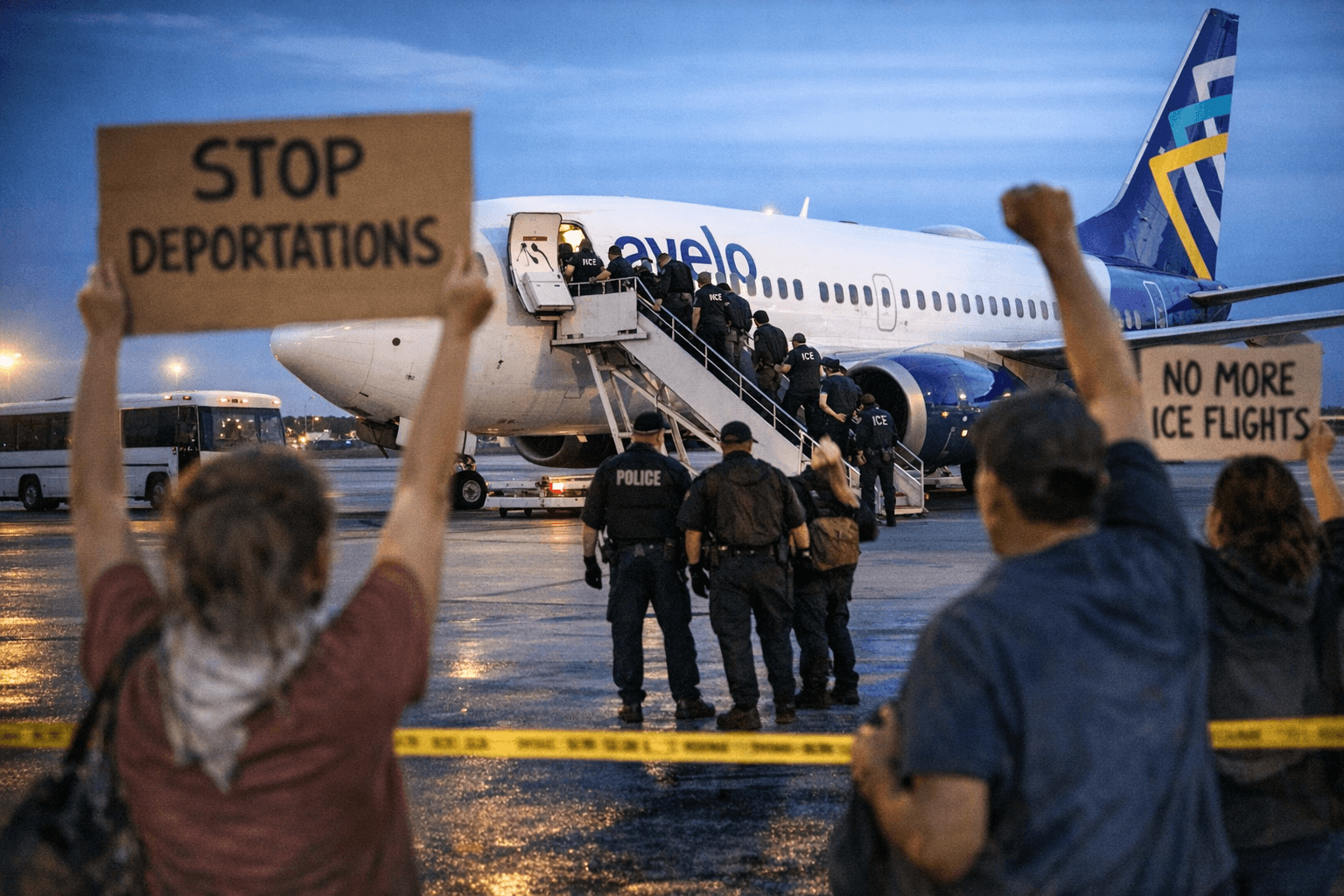
Avelo Airlines said it will suspend a program of deportation charter flights operated for U.S. Immigration and Customs Enforcement out of Baltimore/Washington International Thurgood Marshall Airport, with the pause set to begin later in January 2026. The move removes a public flashpoint in Baltimore after sustained local protests and activist pressure aimed at forcing state leaders to bar the carrier from operating the flights.
The contract supporting the program was estimated at roughly $150 million, making it a sizable revenue source tied to government charter operations. Avelo attributed the suspension to operational considerations rather than political or public pressure. State officials were not persuaded by activists to terminate the arrangement prior to Avelo’s announcement.
For Baltimore residents, the suspension has immediate symbolic and practical consequences. Activists and immigrant-rights groups who staged demonstrations at the airport and pushed public officials had sought to halt deportation flights on moral and public-safety grounds; the airline’s decision was widely characterized by advocates as a meaningful, if partial, victory. For immigrant communities, the change offers at least temporary relief from flights specifically associated with ICE removals operating from BWI.
Economically, the pause reshuffles revenue expectations for Avelo and highlights the fiscal scale of government-charter business in the airline industry. A contract of the estimated magnitude can materially affect a small carrier’s route planning, fleet utilization, and quarterly results. For the airport and local economy, impacts may be more muted: the flights were chartered operations rather than scheduled commercial service, so effect on passenger traffic and airport employment is likely limited though not negligible.
Policy implications are unfolding. The episode underscores tension between state officials’ authority over airport operations and civic pressure to restrict airlines that work with federal immigration enforcement. With state leaders not having intervened to cancel the contract, the responsibility for the suspension rested with the carrier’s operational decision. The outcome could influence how activists, local governments, and airlines engage over future ICE-charter arrangements nationwide.
Avelo’s suspension is scheduled to take effect later this month; advocates and city stakeholders will be watching whether the pause becomes permanent, whether state policymakers pursue new restrictions, and how the market for government-charter flights adjusts in response.
Sources:
Know something we missed? Have a correction or additional information?
Submit a Tip