Orioles Set Arbitration Payouts for Key Players, Raising Payroll Pressure
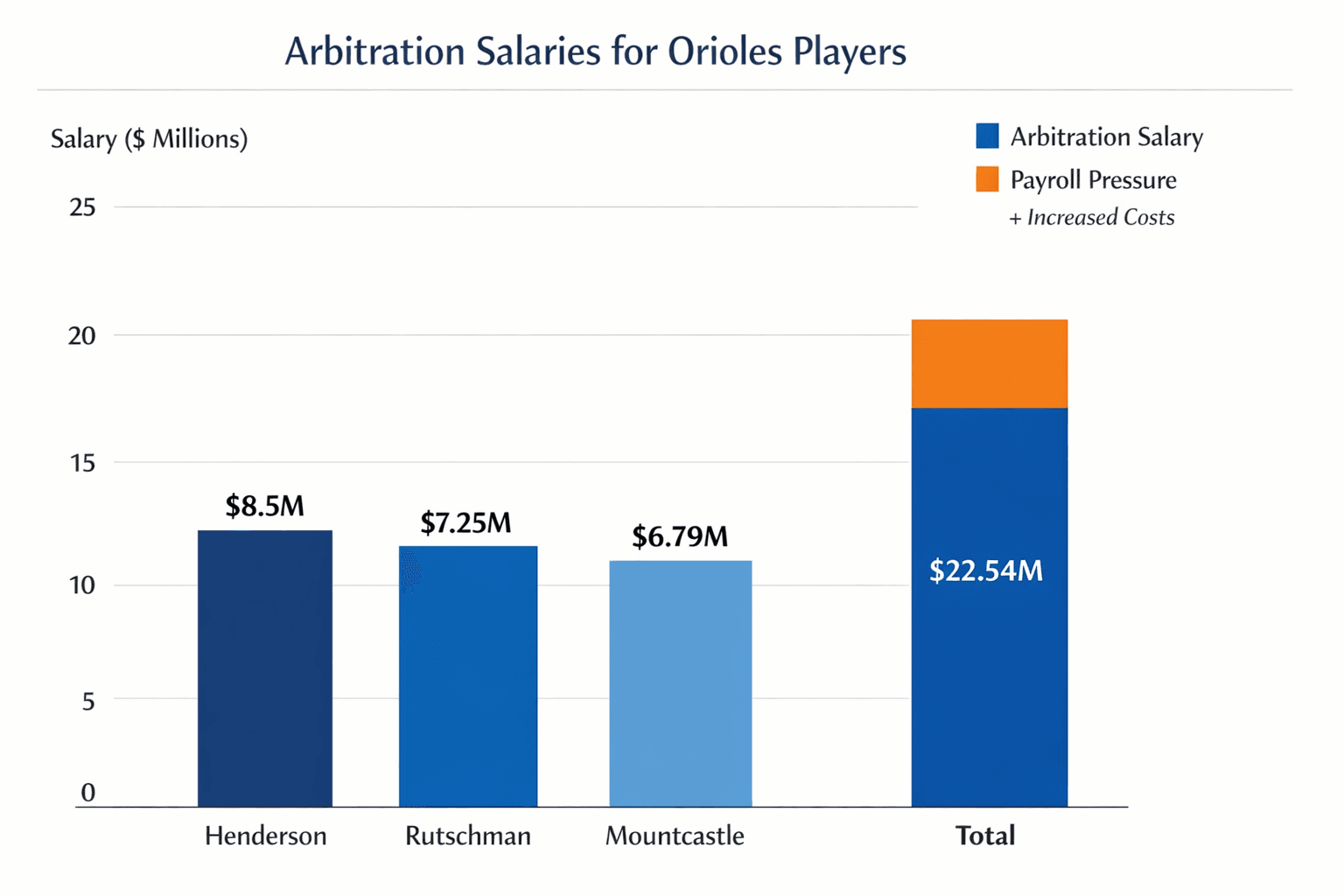
The Orioles reached one-year arbitration agreements on Jan. 8 for several core players, including Gunnar Henderson at $8.5 million, Adley Rutschman at $7.25 million and Ryan Mountcastle at $6.787 million. These commitments increase short-term payroll obligations for the 2026 season and sharpen fiscal choices the club will face between retaining homegrown talent and allocating resources across the roster.
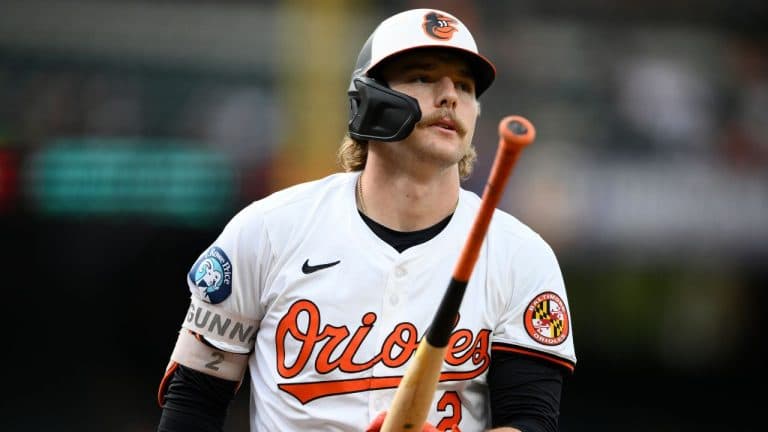
The Baltimore Orioles finalized arbitration figures for several arbitration-eligible players on Jan. 8, locking in one-year salaries that will count against the club’s 2026 payroll. Gunnar Henderson’s $8.5 million award was the largest-ever first-year arbitration payment for an Oriole, while catcher Adley Rutschman was set at $7.25 million and Ryan Mountcastle at $6.787 million. Together, those three deals total $22.537 million in guaranteed salary for a single season.
Arbitration is a mechanism that determines salaries for players typically between three and six years of major-league service. These one-year agreements reflect recent performance and market comparisons, and they remove near-term uncertainty for both players and the front office. For Baltimore, the outcomes signal that the team’s young core is commanding prices closer to established major-league peers, pushing early-career payroll upward.
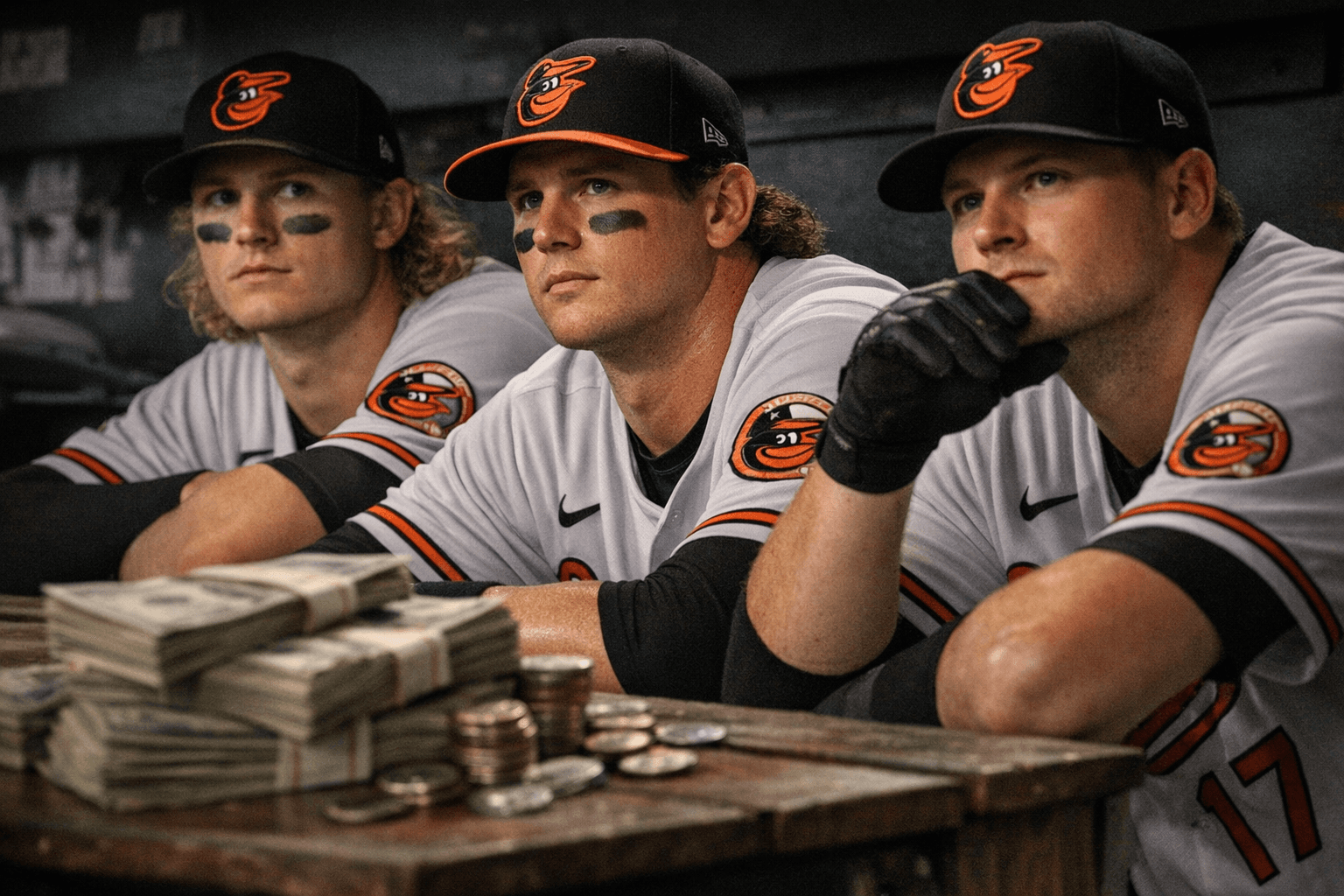
The immediate financial implication is less about one-off numbers and more about cumulative impact. Payroll commitments in arbitration years reduce short-term flexibility: funds that go to arbitration salaries are not available for free-agent signings, midseason acquisitions, or other roster investments. The club will have to weigh those costs when setting priorities for the 2026 campaign, including whether to pursue long-term contract extensions to lock down rising stars or to continue renewing one-year pacts.
Local economic effects are indirect but real. Higher payroll often correlates with on-field competitiveness, which affects attendance, concessions, and game-day spending that support jobs and businesses around Camden Yards. Fans will watch whether the team’s investment in homegrown players translates into wins that boost local revenues and neighborhood activity.
These arbitration figures also fit a broader trend across baseball: younger players are reaching higher arbitration salaries earlier as performance and market comparators push valuations up. For Baltimore, the challenge is managing a growing bill for its breakout players while maintaining depth and sustaining the development pipeline that produced them. How the Orioles balance short-term payroll pressure against long-term roster stability will shape both the team’s competitive prospects and its economic footprint in the city in 2026 and beyond.
Sources:
Know something we missed? Have a correction or additional information?
Submit a Tip