Former Institute of Notre Dame to Become Senior Affordable Housing
Developers said the long-delayed conversion of the shuttered Institute of Notre Dame in East Baltimore will break ground in 2026, launching a $45 million redevelopment that will create 126 affordable apartments for seniors and an on-site community center. The project, financed with historic tax credits and private funds and supported by local investors including a Neighborhood Impact Investment Fund, is expected to wrap up in 2027 and will repurpose a vacant institutional property into housing and neighborhood space.
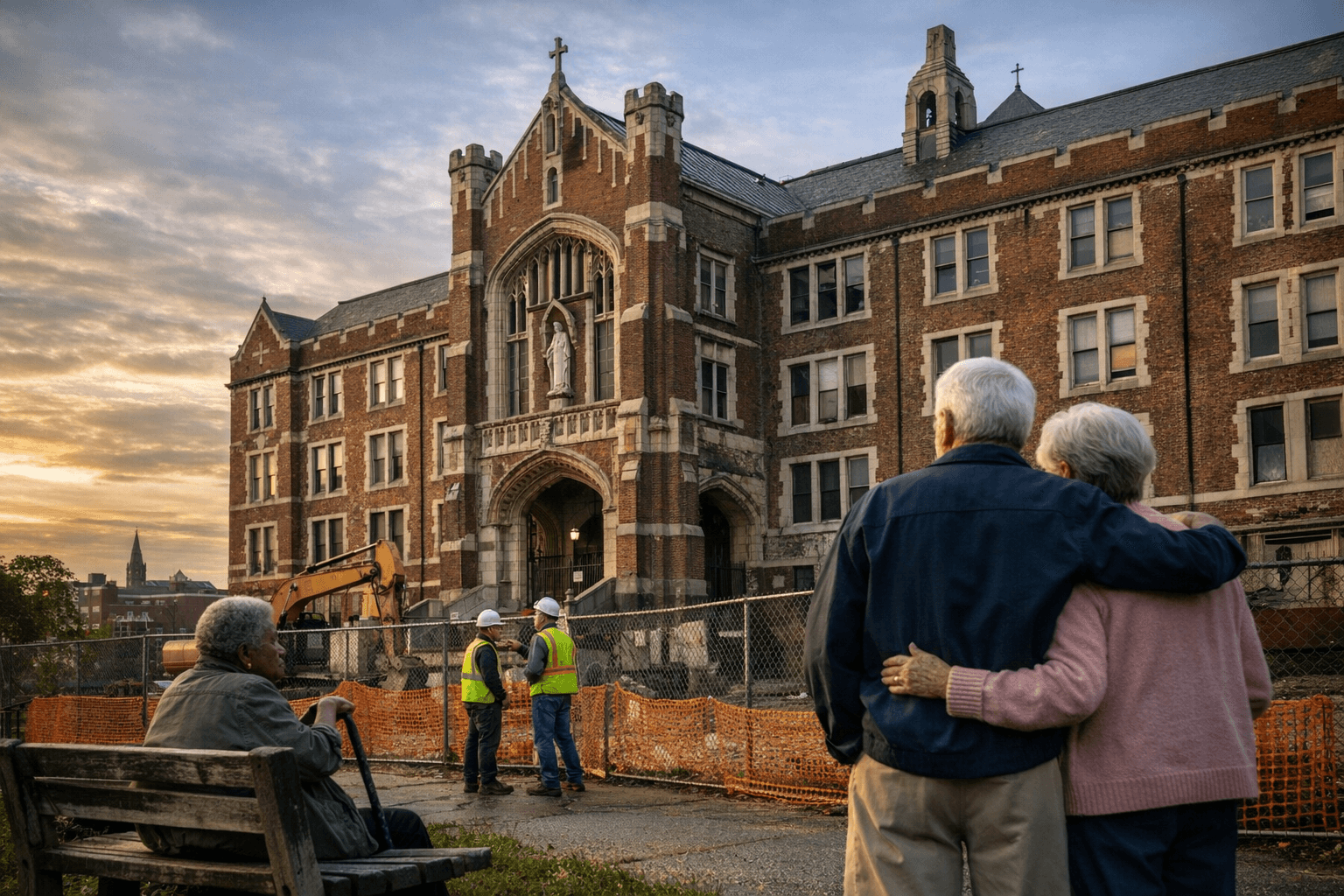
Developers announced on January 6 that work will begin in 2026 to convert the former Institute of Notre Dame, the all-girls Catholic high school in East Baltimore that closed several years ago, into affordable senior housing. The $45 million project will produce 126 apartments targeted to older residents, include an on-site community center and some small office space, and is scheduled for completion in 2027.
Financing for the redevelopment will combine historic tax credits with private funds, officials said, reflecting a common model for adaptive reuse of older institutional buildings. Local investment support played a role in closing the sale of the property, which finalized just before the end of 2025. Design work for the conversion has been handled by Urban Design Group. A Neighborhood Impact Investment Fund is among local investors backing the project.
For Baltimore residents, the development converts a long-vacant landmark into active housing and services. The addition of 126 affordable senior units will increase stock tailored to older households in East Baltimore and create a community center that could host programming and support services. The inclusion of small office space could attract neighborhood-serving nonprofits or social service providers looking to co-locate near residents.
The project also has short-term economic implications. Construction activity beginning next year will generate jobs and contracting opportunities during the buildout, and the reuse strategy preserves existing structures rather than new construction on a vacant lot. Relying on historic tax credits signals an intent to retain character-defining features of the former school while converting interior space to apartments and community uses.
Policy and market context matters for how much this development will move the needle on housing needs. Historic tax credits and private capital are frequently essential to make adaptive reuse financially viable in Baltimore, especially for affordable units. Local investor participation through neighborhood-focused funds helps redirect capital to projects that might otherwise be overlooked by conventional lenders.
Longer term, the conversion fits a broader trend of repurposing institutional buildings to meet housing demand and of mobilizing blended financing to deliver affordable units. For neighbors, the key milestones will be the 2026 groundbreaking and the anticipated 2027 completion, which will transform a dormant campus into housing, services, and small-scale office space serving East Baltimore residents.
Sources:
Know something we missed? Have a correction or additional information?
Submit a Tip