Black Hills Energy completes 260-mile Ready Wyoming transmission upgrade
Black Hills Energy finished a $350 million, 260-mile transmission build that creates its own Wyoming grid backbone and could affect reliability and costs for local customers.

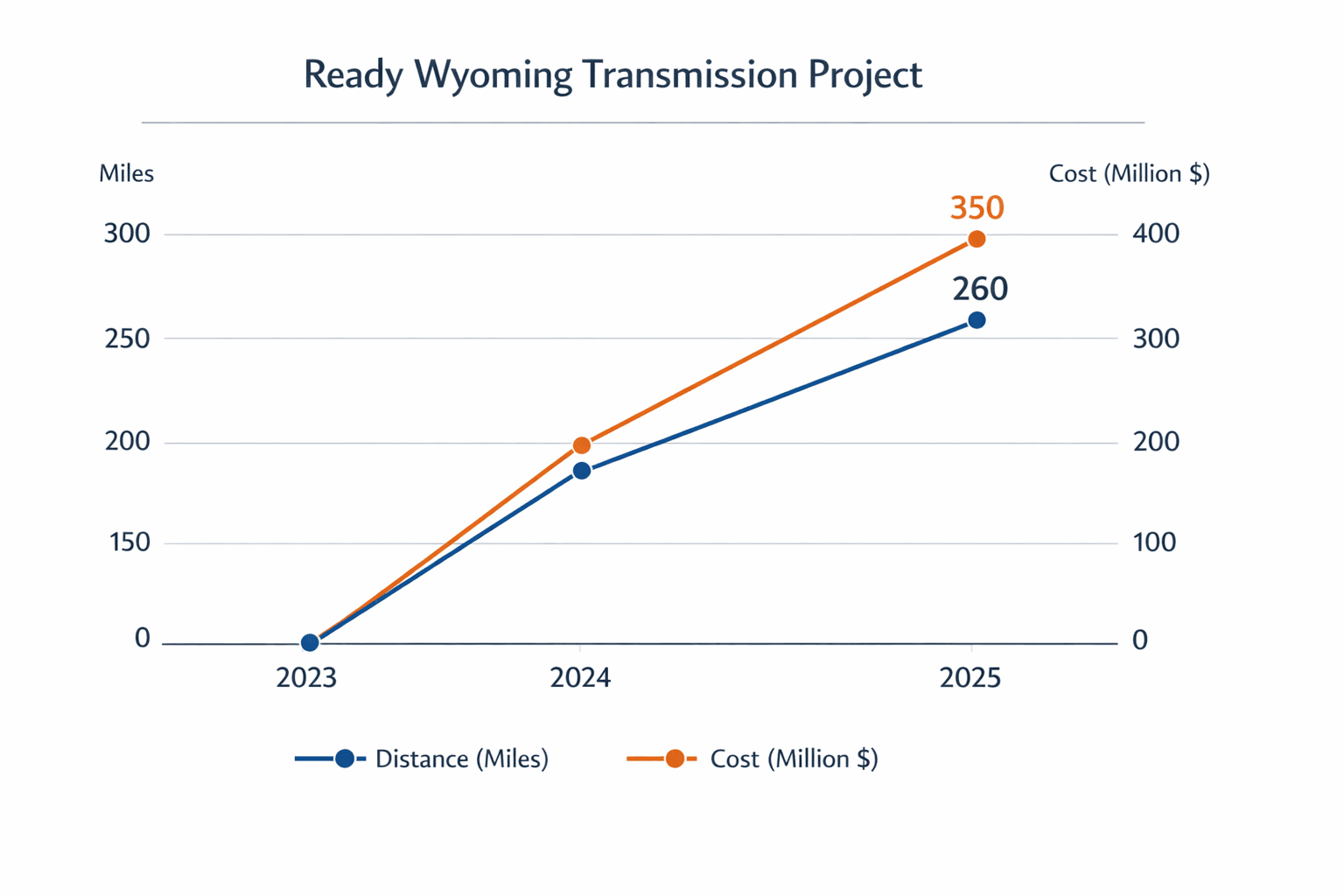
Black Hills Energy announced the completion of Ready Wyoming, a 260-mile electric transmission expansion that establishes an independent transmission system for the utility in Wyoming. Completed in late 2025 after construction that began in 2023, the roughly $350 million project runs from near the Wyoming-Nebraska border through the Cheyenne area and on toward Casper.
The build included one new substation, two replacement substations, four expanded substations, three new 230 kilovolt transmission lines and two new 115 kilovolt lines. Company officials said the new configuration will materially reduce third-party transmission expenses by putting more of the high-voltage network under Black Hills Energy’s direct control.
“With Ready Wyoming, we are powering the future with safe, reliable and cost-effective energy for our customers,” said Wes Ashton, vice president of Wyoming and South Dakota Utilities. “Our customers depend on us to deliver the energy they need to power their homes and businesses. Critical to this process is the transmission system and its vast network of powerlines and substations.”
For Albany County residents the immediate implications are familiar and practical: improved bulk transmission capacity generally supports reliability for communities served by regional grids, reducing the likelihood of outages tied to congestion or third-party failures. The project’s stated aim of lowering third-party transmission expenses could, over time, affect what customers pay if those savings are incorporated into rates through regulatory processes.
A 2022 study from the University of Wyoming Center for Economic and Business Analysis estimated the Ready Wyoming build would produce economic impacts including construction jobs and tax revenue during the build phase. While the study did not appear in today’s announcement, its findings point to typical local benefits from large infrastructure projects: temporary employment, contractor spending, and increased property and sales tax receipts tied to construction activity.
Market and policy implications extend beyond immediate local effects. For Black Hills Energy, owning more transmission reduces exposure to fees charged by other grid owners and can smooth operating costs, which matters for long-term financial planning and investor forecasts. For local policymakers and regulators, the central question will be how savings and costs are allocated between shareholders and ratepayers as the utility seeks approval for any rate changes tied to the new assets.
Long-term trends in the region favor more transmission investment to support load growth and potential clean-energy projects; a stronger, locally controlled backbone makes it easier to connect generation and withstand extreme-weather events. Albany County residents should watch local utility filings and county budget reports for how construction-related tax revenue and any operational savings are used.
Our two cents? Keep an eye on utility rate dockets and county meeting agendas—those are where potential customer savings and tax receipts turn into concrete benefits for your household and community.
Sources:
Know something we missed? Have a correction or additional information?
Submit a Tip