UW Athletic Director Details NIL Revenue Plan and Local Impacts
University of Wyoming Athletic Director Tom Burman outlined the school's approach to Name, Image, Likeness (NIL) revenue and athlete compensation, saying the department has been "playing catch up" while identifying several revenue avenues. His remarks highlighted an internal $1.5 million allocation for revenue sharing between football and men’s basketball, potential sponsorship and fundraising streams, and the role of state and private support — all factors that could affect Laramie’s local economy and community investment in UW athletics.
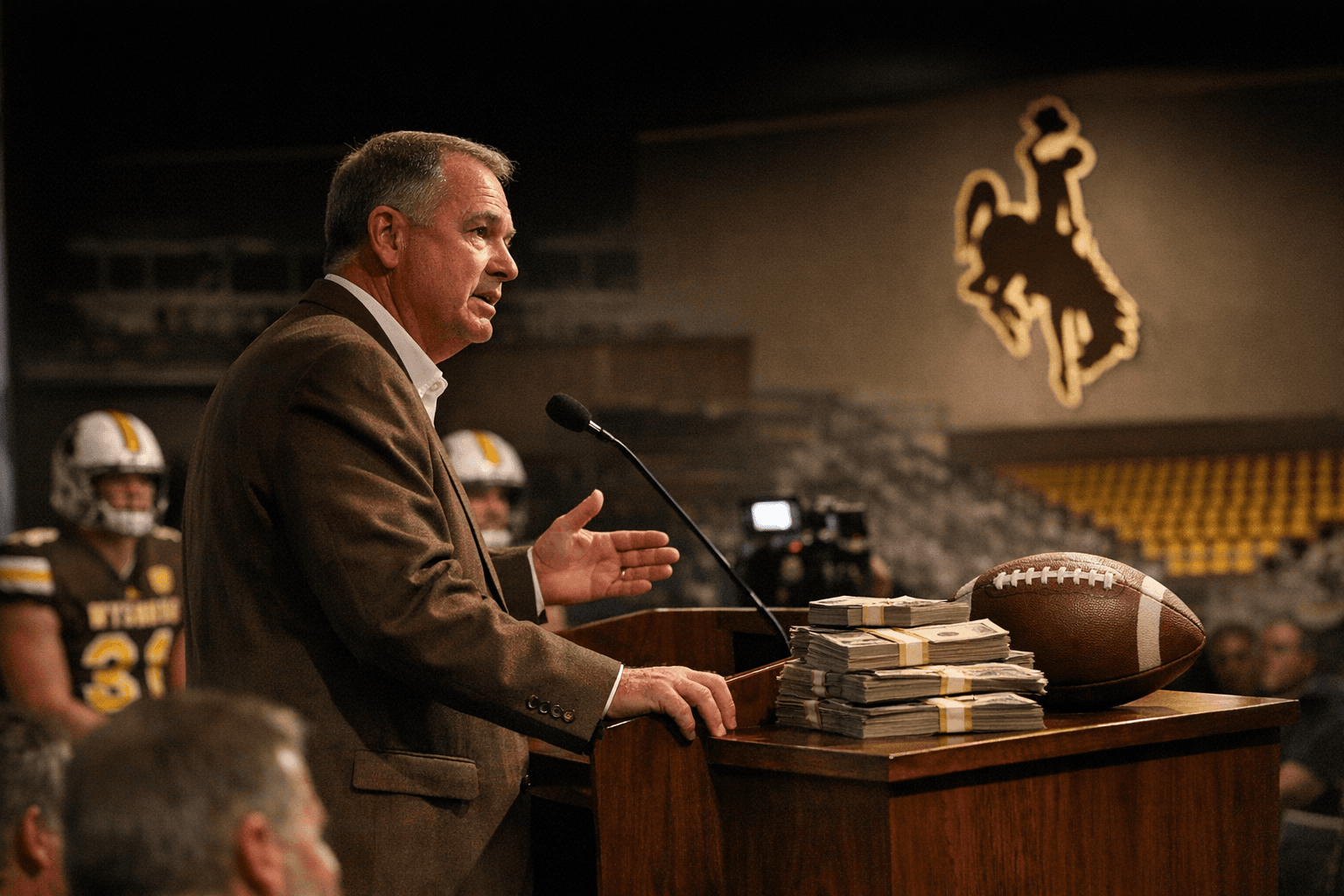
On Dec. 27, 2025, UW Athletic Director Tom Burman described how the athletic department is adapting to the evolving NIL landscape and shifting revenue dynamics across college sports. Burman acknowledged the program has been "playing catch up" and outlined a multi-pronged strategy that relies on internal revenue sharing, reimbursements tied to Alston/House settlement mechanisms, potential jersey and field sponsorships, and targeted fundraising through the Cowboy Joe Club.
Burman cited an internal $1.5 million allocation meant to be shared between the football program and men’s basketball, with additional smaller allocations earmarked for other sports. Those figures signal an effort to centralize a portion of NIL-related spending while preserving competitive recruiting resources for marquee programs. He also noted the possibility of settlement-related reimbursements and private sponsorships as supplementary funding sources, though specifics on timing and amounts remain fluid.
For Albany County and the Laramie community, these decisions have tangible implications. Athletic events drive visitor spending on lodging, restaurants and retail; increased athlete compensation or new sponsorship deals could change the scale and visibility of Wyoming sports, altering local economic activity. Fundraising through the Cowboy Joe Club and private donors will likely become more central to balancing budgets if media-rights and conference revenue streams remain unsettled.
Burman’s comments came amid recent requests from the university to the state Legislature for support and as the broader conference and media-rights landscape continues to shift nationwide. Those changes have budgetary consequences: uncertainty in media contracts and conference alignments can compress revenue forecasting and make state or private contributions more critical to sustain nonrevenue sports and facility needs.
Economically, UW faces the familiar trade-off of investing in competitive success to boost enrollment and local spending versus containing costs within a limited public funding envelope. Centralized revenue-sharing of the kind Burman described can smooth distributions and reduce short-term volatility for lower‑profile sports, but it may also prompt debate among stakeholders about fairness and priorities.
What to watch next for local residents are any formal budget proposals to the state, specific sponsorship deals or donor campaigns announced by the Cowboy Joe Club, and how quickly settlement reimbursements are realized. Those developments will determine how much additional spending reaches athletes and programs and how that translates into economic activity across Laramie and Albany County.
Sources:
Know something we missed? Have a correction or additional information?
Submit a Tip