Buncombe County Adopts Formula to Stabilize School Funding
The Buncombe County Board of Commissioners unanimously approved a new formula on January 7, 2026, to determine annual operational funding for Asheville City Schools and Buncombe County Schools. The change aims to provide steadier, more predictable local support by fixing school operations at 37.76% of property tax revenue plus certain county sales tax receipts, with adjustments tied to enrollment shifts and provisions for emergency supplements.
At its first regular meeting of January 2026, the Buncombe County Board of Commissioners ratified a funding formula designed to bring greater budget reliability to K–12 operations across the county. Presented by county budget director John Hudson, the agreement sets annual operational funding for Asheville City Schools and Buncombe County Schools at 37.76% of property tax revenue plus specified sales tax receipts collected by the county over the prior 12 months. The board adopted the measure unanimously on January 7, 2026.
Applied to the current fiscal year, the formula would have produced $119.5 million for K–12 operations, roughly 1.9% more than the $117.3 million the county actually adopted in this budget cycle. The formula includes an automatic adjustment if public-school enrollment changes by more than 2% in any year, allowing the percentage to move up or down to reflect shifts in student population. It also permits schools to request supplemental funds for "sudden, unexpected, or extraordinary" events.
County leaders framed the move as a local step toward predictable funding that supports long-term planning. Because property and sales tax receipts generally increase over time, the new approach is intended to smooth year-to-year fluctuations and give district leaders greater clarity when setting staffing levels, maintaining student support services, and planning capital needs. Predictable local revenues can be especially important for services that affect student health and equity, including school nursing, mental health counselors, special education, and nutrition programs that serve low-income children.
The action does not, however, replace the role of state funding. Board Chair Amanda Edwards and other officials emphasized the local benefit of the formula while urging continued action at the state level to fulfill court-ordered or legislature-driven funding obligations that shape overall school finances. State allocations, categorical grants, and other mandates still determine a large share of resources available to meet equity goals across schools with differing needs.
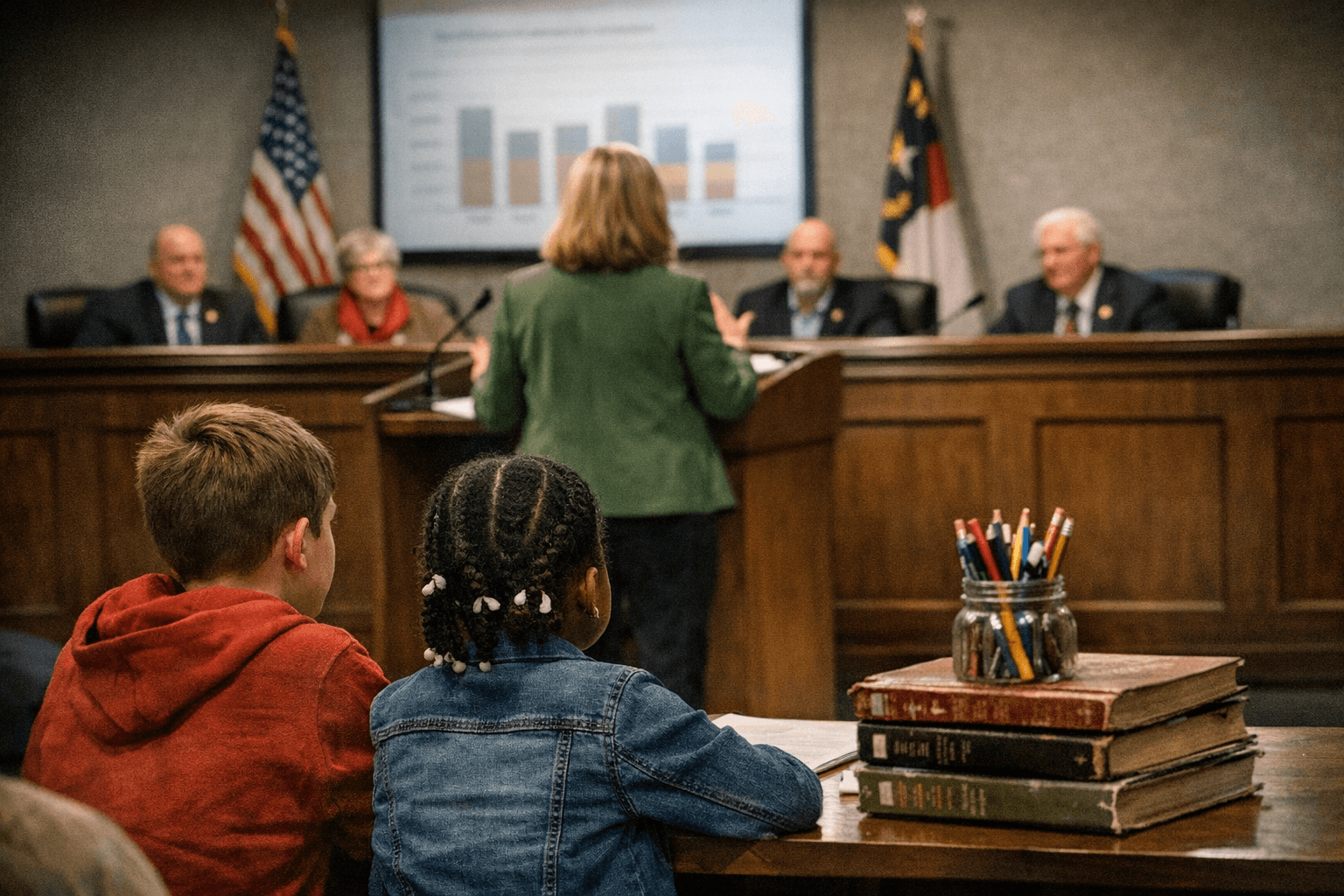
For families and educators in Buncombe County, the new policy could mean steadier support for classroom staffing and student services and fewer abrupt funding shortfalls that disproportionately hurt students already facing economic or health challenges. At the same time, advocates note that predictable local funding must be paired with robust state investments to address long-standing disparities so all students receive a fully resourced education.
The Board’s unanimous vote begins a new local budgeting practice intended to reduce volatility and improve planning, while leaving broader questions about state-level commitments and equitable outcomes for students to ongoing public policy discussions.
Sources:
Know something we missed? Have a correction or additional information?
Submit a Tip