CES 2026 Debut: ChocoPrint Brings Custom Chocolate 3D Printing
At CES 2026 Sweet Robo unveils ChocoPrint, a 3D printer that extrudes chocolate-based material to produce custom shapes, logos and on-demand confections. The system targets corporate and event applications but has clear implications for makers experimenting with edible printing, novel materials and rapid prototyping of food-safe designs.
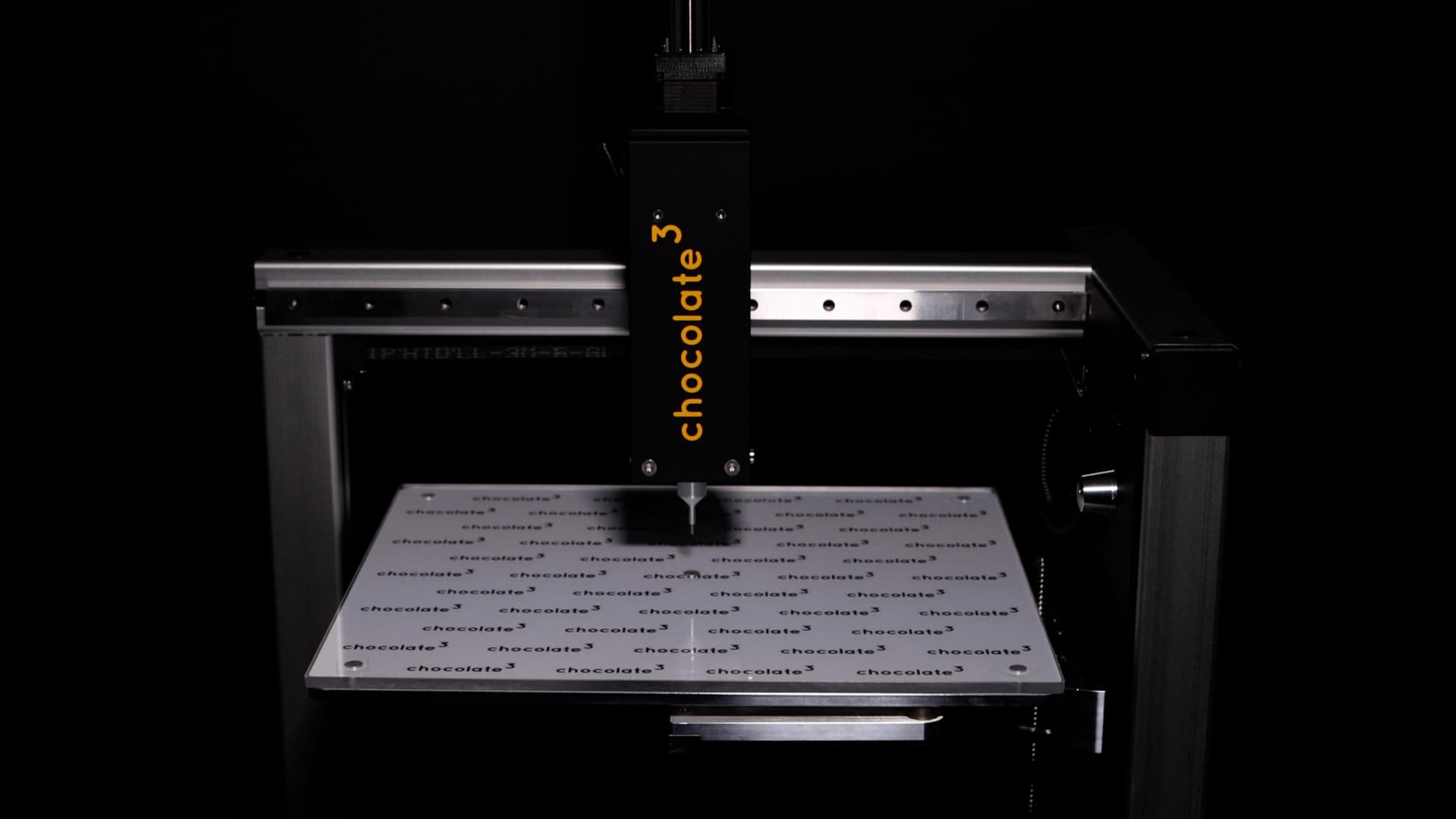
Sweet Robo is demonstrating ChocoPrint on the CES show floor today, positioning the machine for businesses that need branded chocolates and novelty items produced quickly and on demand. The unit prints a chocolate-based formulation that enables intricate geometries difficult or time-consuming to achieve by hand, and the display emphasized real-time customization of designs and logos for events and promotional giveaways.
Technical detail on the demo shows ChocoPrint handling viscous chocolate compounds with a deposition system tuned to manage flow and layering. That capability matters because chocolate printing relies heavily on temper and viscosity: too warm or too fluid and structures slump; too cool or too thick and the extruder clogs or details degrade. The machine’s containment and feed systems appear designed to control those variables on a production scale, a useful starting point for anyone thinking about bringing food-printing workflows into a maker space.
Practical adoption for home or community use requires attention to food safety, cleaning and sanitation. Smooth, accessible surfaces and removable components simplify washdown, and any hobbyist or makerspace that plans to print edible items needs to establish cleaning protocols and avoid cross-contamination with non-food materials. Material formulation is another operational frontier; experimenting with chocolate blends, tempering processes, and additive stabilizers will be central to achieving consistent print quality outside a factory setting.
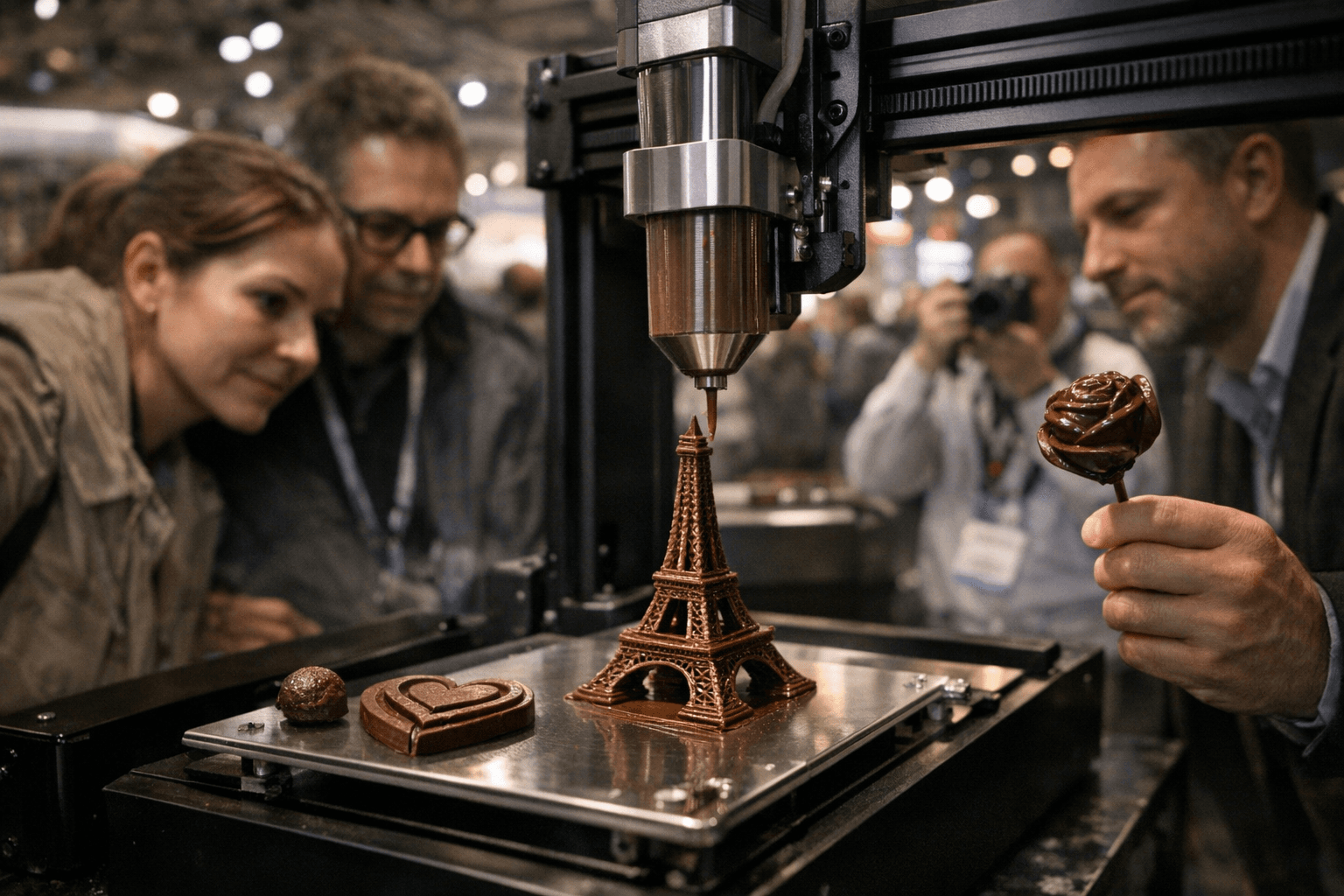
Although Sweet Robo is marketing ChocoPrint at corporate and event customers, the mechanics and control systems revealed at CES invite adaptation. Watch for future consumer models or community-driven modifications that scale the hardware down or adapt it for shared workshop use. Community projects that retrofit desktop extruders with temperature and flow controls could follow this design language, translating event-focused features into maker-friendly hardware and open-source firmware.
ChocoPrint also fits a broader CES narrative emphasizing novelty manufacturing devices that make specialized production approachable. For readers who focus on edible 3D printing, ceramics or bioinks, the debut is timely: it shows commercial attention to materials and sanitation alongside customization capabilities. Track follow-up announcements for pricing, developer access, and any consumer-oriented variants, and evaluate any unit by checking how it handles temper control, cleanability, and the practicalities of daily operation in a non-industrial environment.
Sources:
Know something we missed? Have a correction or additional information?
Submit a Tip