Clear Buying Advice for Home Espresso Machines for Small Kitchens
Erin Bashford, a senior writer and former barista, laid out a practical comparison of three broad home-espresso machine categories and concluded compact manual machines are the best entry point for space- and budget-conscious home baristas. Her testing-backed guidance explains the trade-offs between convenience, control, size, and cost so you can match a machine to your kitchen and coffee goals.
Home espresso buyers face a clear set of trade-offs: convenience, control, counter space, and price. Erin Bashford, drawing on barista experience and hands-on testing, broke the market into three categories and offered actionable advice for each to help readers decide what to buy next.
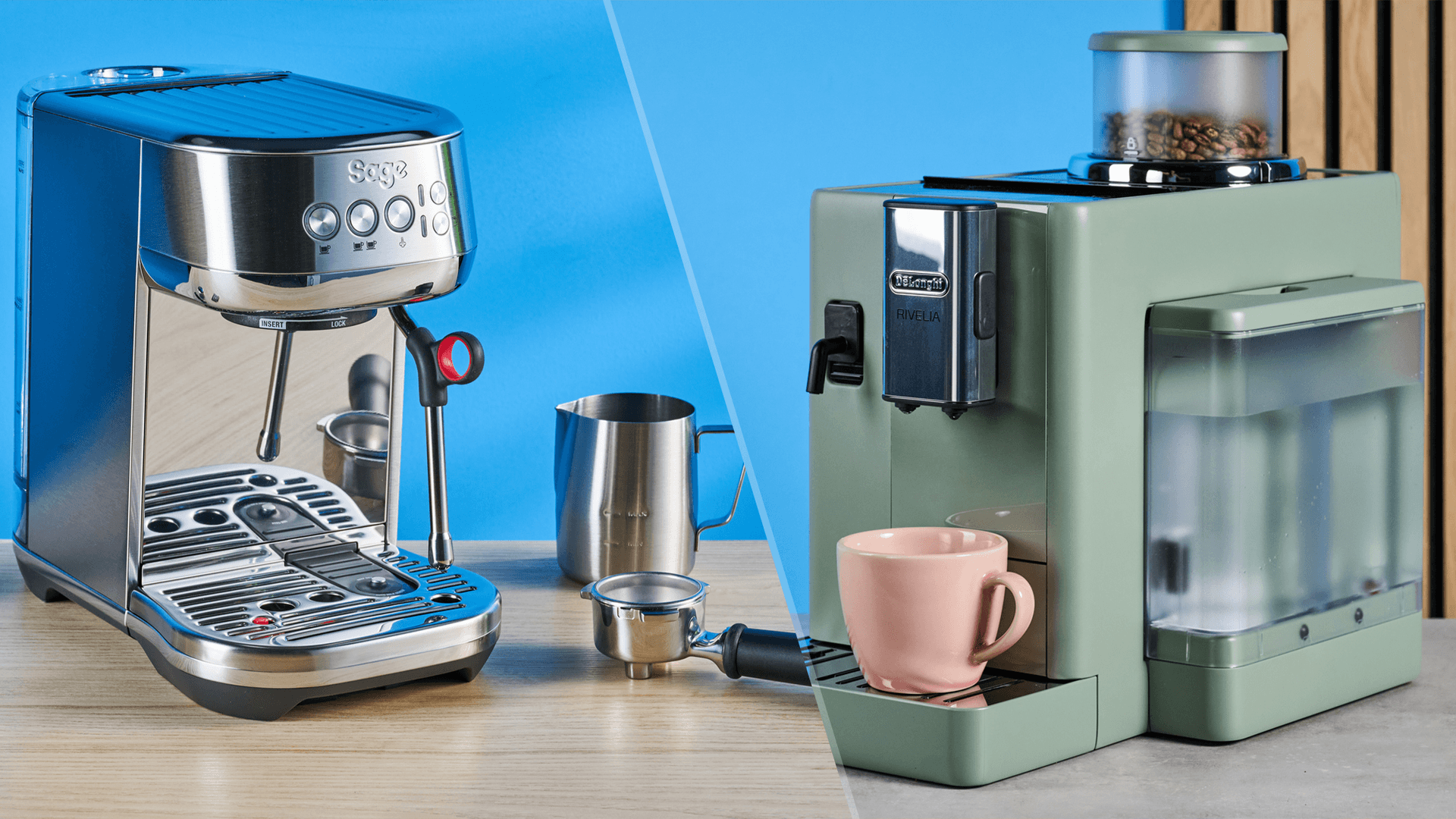
At the top end are automatic, or superautomatic, bean-to-cup machines. These deliver unmatched convenience by grinding, dosing, tamping, and brewing with minimal input. That convenience comes at a cost: typical street prices run roughly $1,500 to $3,000, and these machines tend to take up more counter space. For households that prioritize fast, consistent espresso with little fuss and have room to spare, automatics make sense. For those balancing kitchen real estate and budget, the price and footprint are real downsides.
The middle category consists of manual or semiautomatic bean-to-cup machines with built-in grinders. These machines aim to blend convenience and control: users get more influence over extraction while still benefiting from integrated grinding. They are, however, large and still relatively pricey. If you want built-in convenience but also crave the ability to tweak shots, this category offers a compromise — expect substantial size and cost.
For most readers, Bashford found compact manual machines to be the best starting point. Examples include the Breville Bambino family. These machines generally cost roughly $100 to $450 and fit tight kitchens, making them attractive for renters and small households. The trade-off is that compact machines do not include a built-in grinder, so you must pair one with a separate grinder to reach consistent, barista-level results.
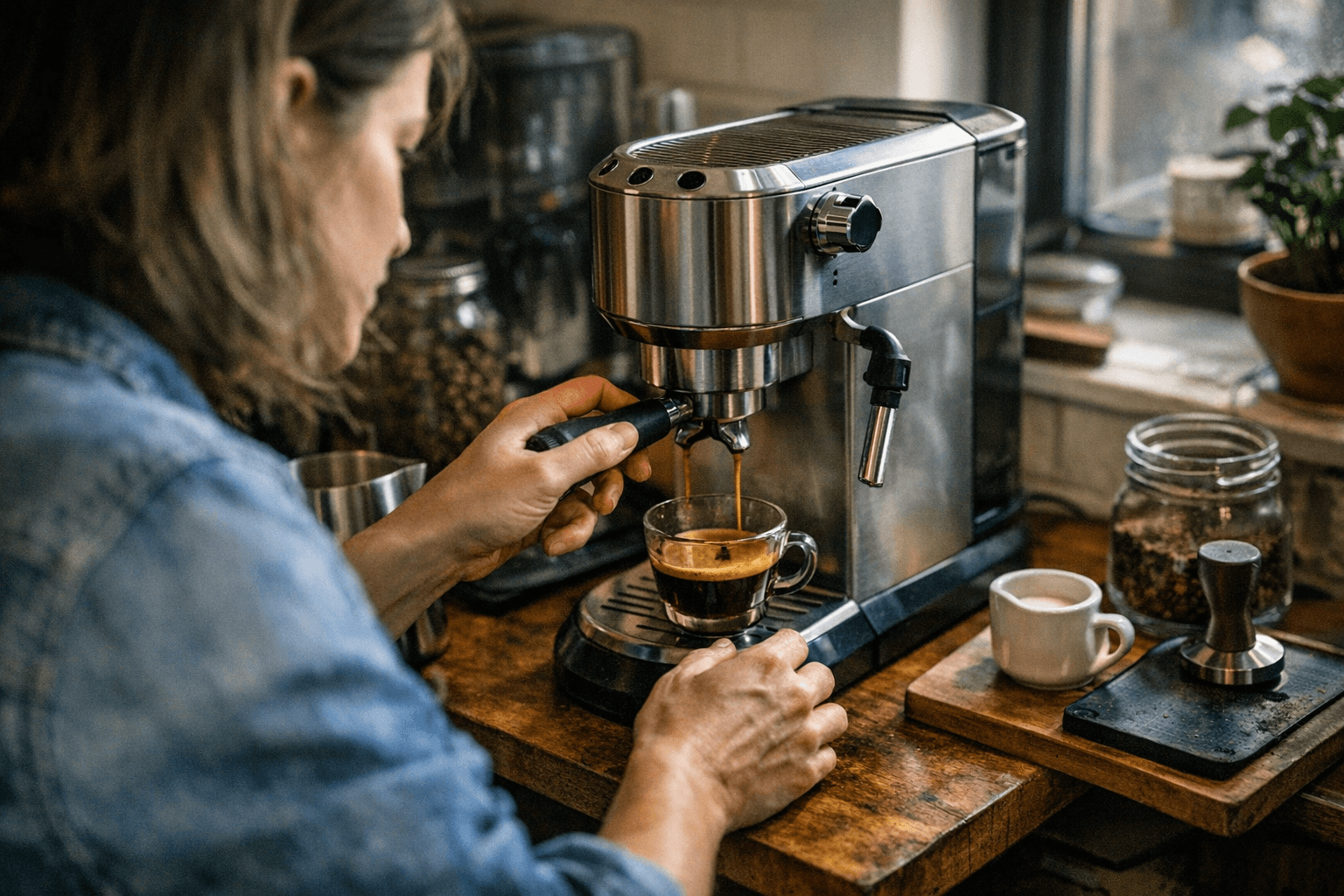
Practical value in Bashford's testing centers on grinder importance and basic technique. A quality grinder is the single biggest upgrade you can make for extraction consistency. She also covered straightforward practical advice such as aiming for sensible coffee-to-water ratios and dialing grind size for your machine and beans. The testing experience informed specific model recommendations and real-world tips on setup and daily use.
What this means for readers: match your choice to how you live with coffee. If you want push-button ease and have the space and budget, a superautomatic delivers. If you want control with fewer steps, consider a semiautomatic bean-to-cup with a built-in grinder but plan for a larger footprint. If you are tight on space or budget, buy a compact manual and invest in a decent grinder; that combination will give the best balance of cost, performance, and kitchen compatibility.
For home baristas weighing options, the clearest next step is to prioritize which trade-off matters most and pick the category that aligns with kitchen layout, spending limit, and how involved you want your daily espresso routine to be.
Sources:
Know something we missed? Have a correction or additional information?
Submit a Tip