Creality Debuts SparkX i7 AI-Driven Desktop 3D Printer
Creality launched the SparkX i7 on January 3, 2026 as the flagship of its new SparkX lifestyle brand, positioning the machine as an approachable, AI-assisted desktop 3D printer for non-technical users. The i7 pairs onboard camera AI monitoring, photo-to-3D mobile tools, and simplified automated workflows that aim to lower the barrier to reliable printing.
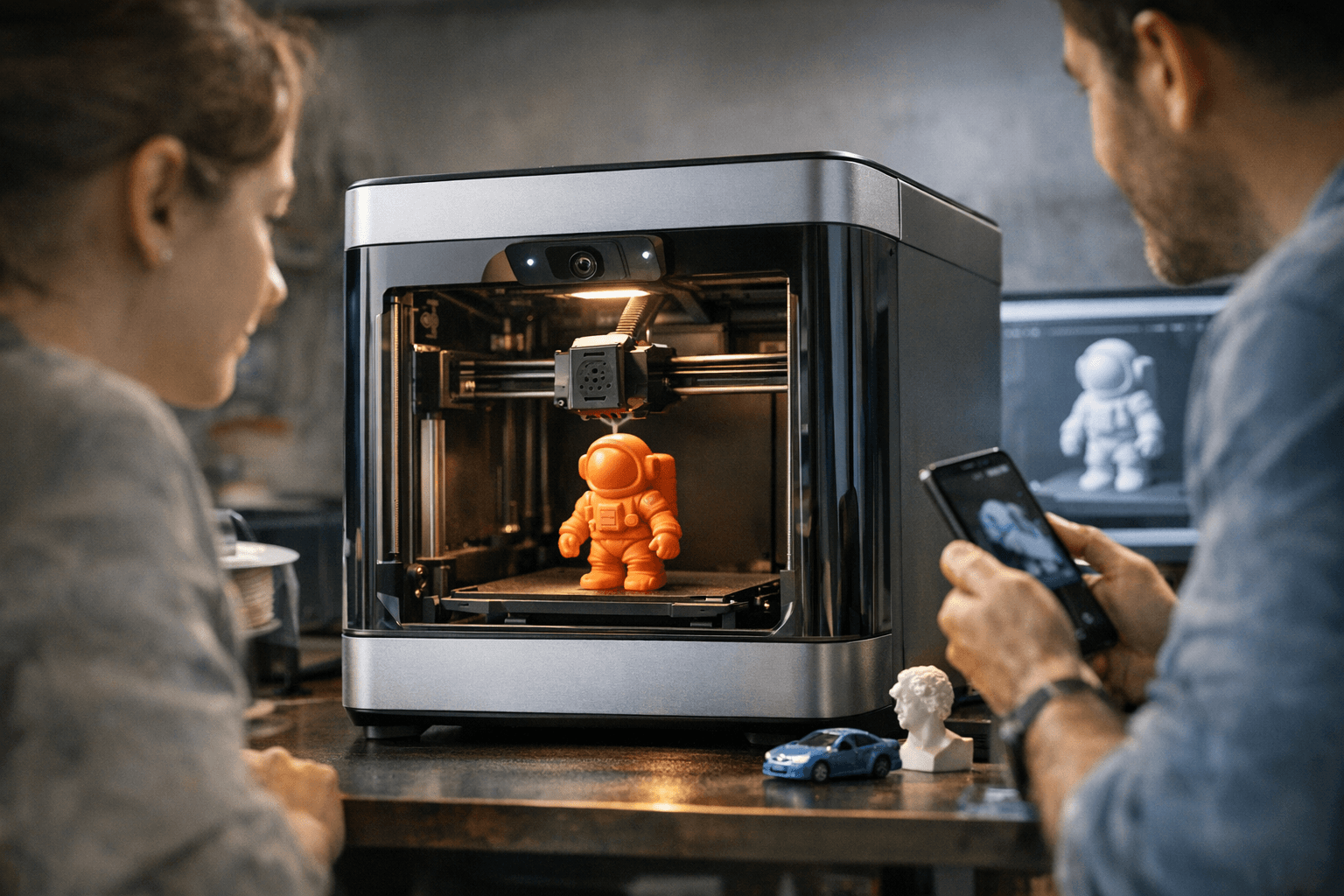
Creality unveiled the SparkX i7 as the centerpiece of a new SparkX lifestyle line, marketing the machine toward general consumers and creative users who want usable results without deep technical expertise. The announcement highlighted AI-driven real-time print monitoring, mobile photo-to-3D conversion, and automated calibration to streamline the path from idea to finished object.
The i7’s AI system uses an onboard camera and onboard processing to detect common failure modes such as spaghetti printing, filament entanglement, and build-plate issues, then provides alerts and corrective suggestions. A companion mobile app includes photo-to-3D capability that can generate printable models from images and offers integrated search for ready-made models, reducing the need for advanced slicing knowledge. Creality says firmware and AI features will expand over time.
Calibrating and preparing prints is simplified with automated bed levelling concentrated on the target print area, automatic Z-offset adjustment, input shaping, and touchscreen-guided workflows. The machine features a 260 × 260 × 255 mm build volume and Claimed printing speeds up to 500 mm/s, although practical speeds will depend on materials, part geometry, and print settings. A low-noise night mode is included for overnight jobs.
Hardware highlights include a quick-change hotend engineered for tool-free nozzle swaps in approximately three seconds, rated for up to 500 verified insertion cycles and a 220 °C hot-swap temperature. Multi-colour handling and material management use intelligent algorithms to reduce purge waste, and advanced firmware features such as pressure advance aim to limit oozing and improve corner detail.
For makers, educators, library labs, and small studios, the SparkX i7’s promise is practical: fewer manual interventions, faster iteration from concept to print, and guidance for users who do not want to become 3D-printing technicians. Verify filament compatibility and start with conservative speed settings; run calibration prints before committing to long overnight jobs even with AI monitoring and night mode enabled. Expect software and AI capabilities to evolve via updates, which will be key to realizing the device’s user-friendly ambitions.
The SparkX i7 represents a clear push toward consumer-facing, AI-assisted 3D printing that packages hardware and software into a more approachable experience. Community members planning to adopt the machine can evaluate its quick-change hotend, built-in monitoring, and photo-driven modeling tools against local needs for speed, multi-material work, and low-fuss production.
Sources:
Know something we missed? Have a correction or additional information?
Submit a Tip