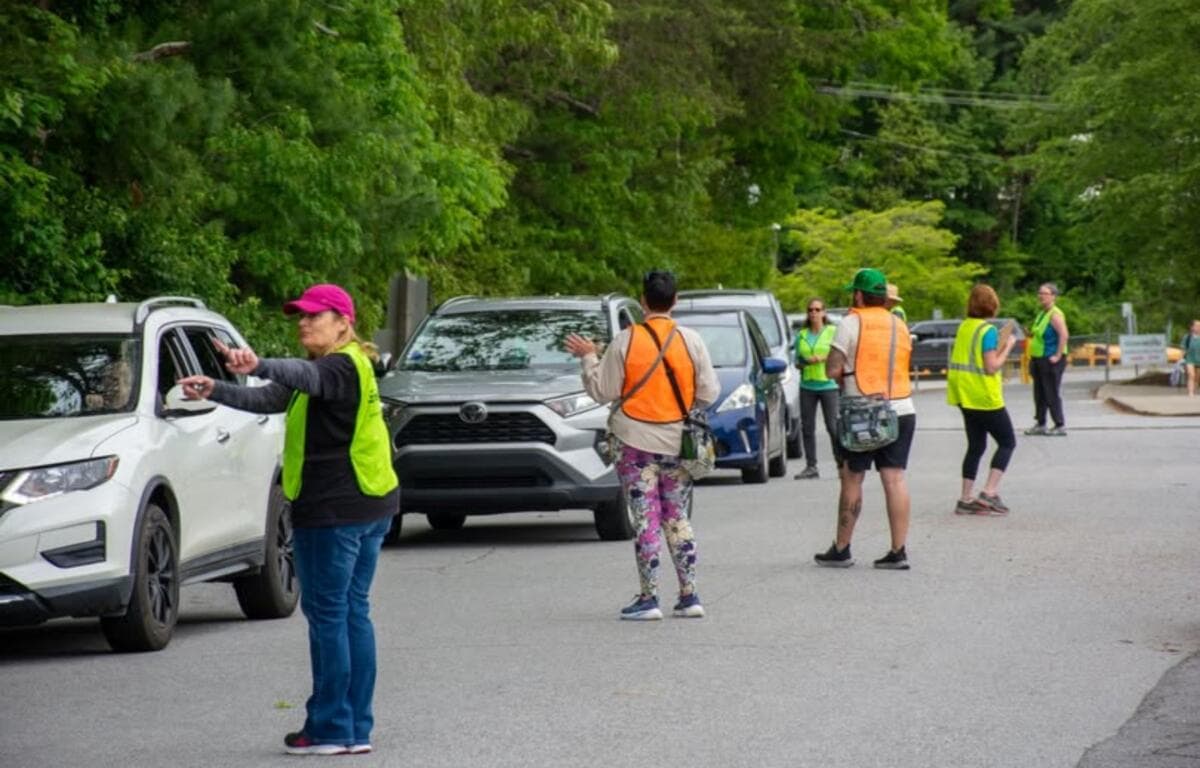
Crews Continue Cleanup in Hickory Nut Gorge, Recovery Still Uneven
Crews from MountainTrue spent December 4 conducting sustained debris removal across Western North Carolina, a year after Tropical Storm Helene, working in the Hickory Nut Gorge near Bat Cave and Gerton where flood and landslide damage remain visible. The ongoing cleanup matters to Buncombe County residents because creek corridors, private properties, and local infrastructure still face contamination, access challenges, and health risks that could persist without coordinated funding and services.

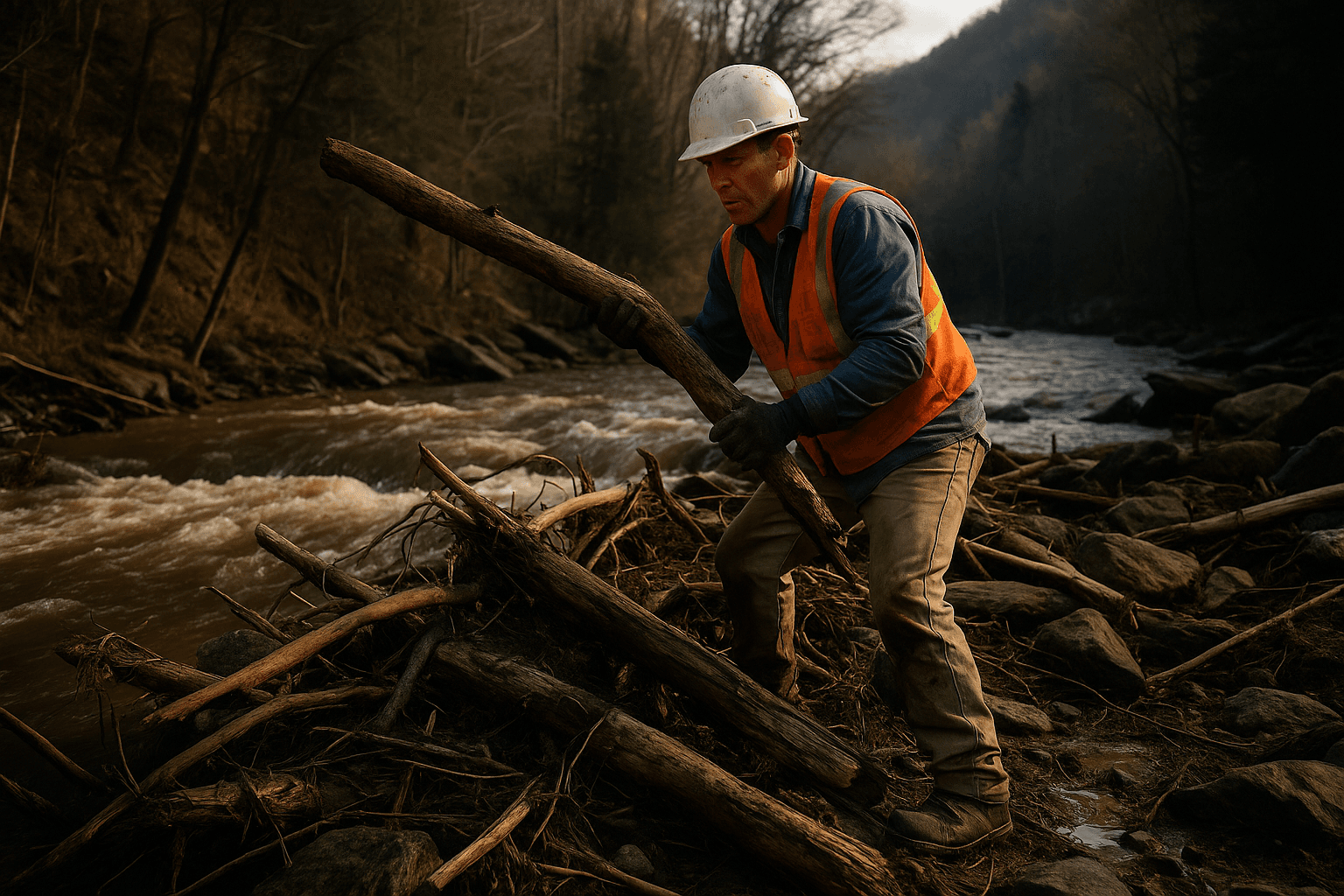
On December 4 crews from MountainTrue and a rotating group of volunteers and partner staff carried out sustained manual cleanup operations in portions of the Hickory Nut Gorge near Bat Cave and Gerton. A year after Tropical Storm Helene, silt, uprooted vegetation, and signs of slope failure were still visible along creek corridors and on private properties, and access issues continued to complicate recovery work.
Workers relied on shovels, crowbars, and heavy gloves to remove deposited sediment, debris, and potentially hazardous material from channels and yards. Coordination with local partners guided where to concentrate efforts, and crews spent much of the day carrying material out by hand where equipment could not reach. The scale of manual labor underscores how much recovery remains to be done and how limited access for heavy machinery is in steep, rural terrain.
The public health implications are immediate and long term. Residual silt and debris in streams can carry contaminants into drinking water sources and create conditions for mold in damaged homes. Unstable slopes and blocked channels raise the risk of future flooding, while physical labor in contaminated sites increases the likelihood of injury and exposure among volunteers and residents. Mental health strains are also evident, with crews and homeowners reporting exhaustion and frustration as they confront slow progress and ongoing logistical hurdles.
For Buncombe County, the cleanup highlights systemic gaps in disaster response and recovery funding, especially for communities with limited insurance coverage or constrained capacity to hire contractors. Equitable recovery will require sustained investment in stream restoration, targeted support for low income households to repair and rebuild, and expanded access to mental health and medical services for those exposed to environmental hazards.
Local officials and nonprofit partners face a multi year challenge to restore infrastructure, stabilize slopes, and clear waterways to reduce future risk. As crews work through the winter, residents should expect intermittent road closures and continued volunteer operations. Long term recovery will depend on coordinated policy responses, flexible funding streams, and sustained community engagement to ensure that the most vulnerable neighborhoods are not left behind.