Ferndale Outage Disrupts Central Town Services - 1,484 Affected Initially
A PG&E outage that began Jan. 3 at 12:55 p.m. cut power to central Ferndale, initially affecting 1,484 customers and prompting emergency repairs. The utility reduced the outage to about 50 customers by midafternoon and estimated full restoration by Jan. 4 at 8:45 p.m., raising questions about infrastructure resilience and local economic impacts.
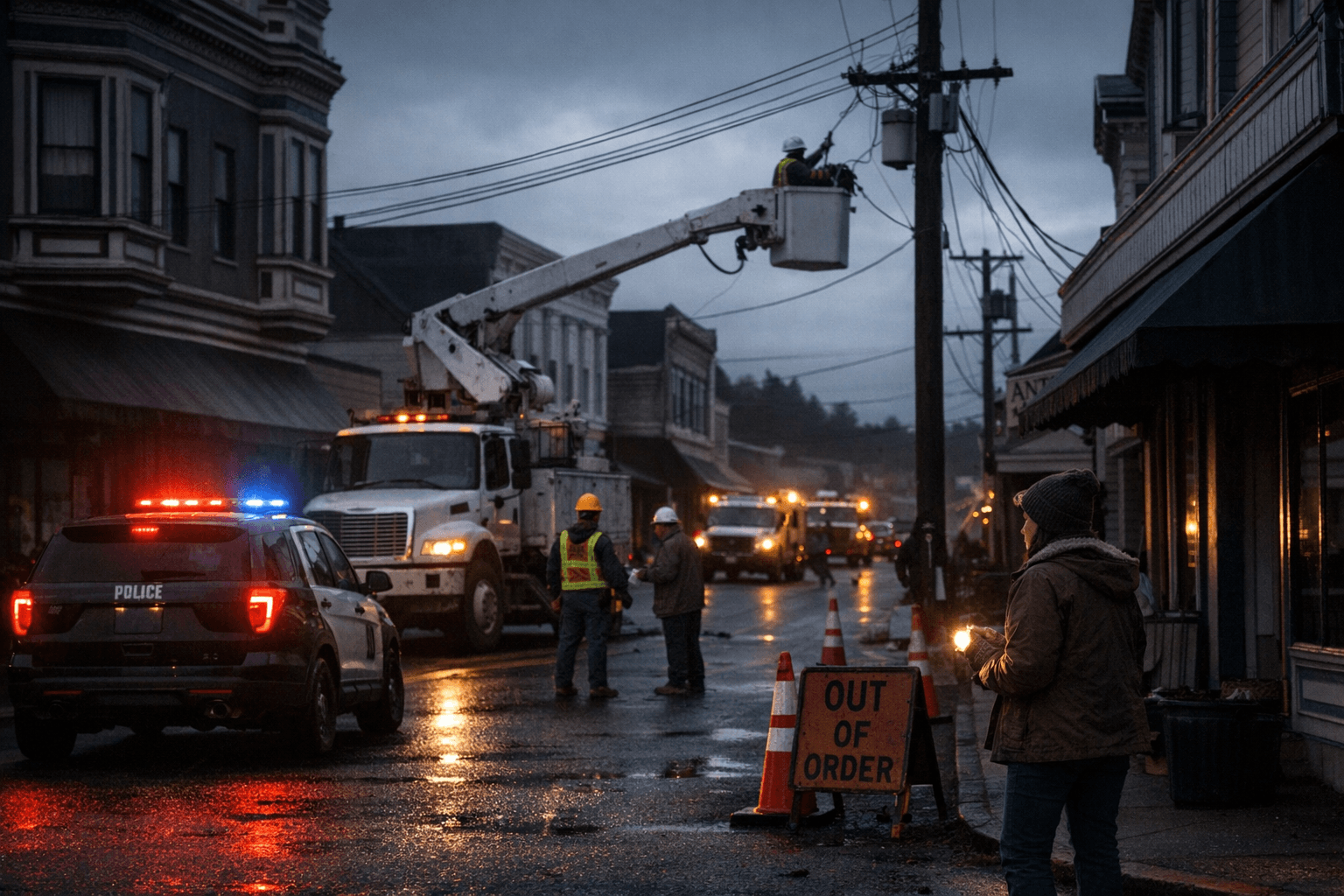
On Jan. 3, a power outage in central Ferndale began at 12:55 p.m., knocking out service to 1,484 customers as PG&E listed the cause as "EMERG REPAIRS." By 4:02 p.m. the number of customers without power had fallen to roughly 50, and PG&E estimated full restoral would occur Jan. 4 at 8:45 p.m. The outage and public timestamps came from the utility's live status updates.
For residents and small businesses in Ferndale, even a single-day outage can have measurable economic effects. Retail shops, restaurants and service providers rely on electrical service for point-of-sale systems, refrigeration and lighting; prolonged interruptions threaten perishable inventory and daily revenue. Local government operations and community services also face strain when central town blocks are affected, with potential costs tied to overtime for municipal crews and lost productivity. The number of impacted accounts—1,484 at the outset—represents a significant portion of central Ferndale's connected customers and underscores how localized outages can ripple through a small-economy community.
The listed cause, "EMERG REPAIRS," signals that crews responded to an unexpected infrastructure problem requiring urgent fixes rather than scheduled maintenance. Emergency responses typically draw on field crews and materials at short notice, which raises labor and logistical costs for the utility and can extend restoration timelines when specialized equipment or external crews are needed. For ratepayers and local officials, recurring emergency outages intensify debates over investment priorities: whether to accelerate grid hardening, underground lines in dense commercial corridors, install community microgrids or expand backup power for critical facilities.
From a policy and long-term planning perspective, episodes like Ferndale's outage feed into broader questions about utility reliability and resilience in rural and semi-rural areas. Regulators weigh the tradeoff between capital investments to prevent infrequent but disruptive failures and the immediate rate impacts on customers. For Humboldt County, where small businesses and agricultural operations are sensitive to electricity disruptions, targeted resilience measures—such as incentivizing battery storage for main streets, supporting community backup power, or prioritizing hardening of feeders that serve commercial centers—could lower the local economic cost of future outages.
PG&E's restoration estimate of Jan. 4 at 8:45 p.m. provided a concrete window for residents and businesses to plan short-term mitigation, such as securing perishable goods and arranging power-dependent services. As crews completed repairs and service returned, local attention will likely turn to whether the outage was an isolated incident or part of a pattern that warrants more sustained investment in Humboldt County's electric infrastructure and emergency preparedness.
Sources:
Know something we missed? Have a correction or additional information?
Submit a Tip