FIFA Orders Mandatory Hydration Breaks at Every 2026 World Cup Match
FIFA announced that all 2026 World Cup matches will include a mandatory three minute hydration break 22 minutes into each half, a change intended to protect player welfare and simplify prior temperature based rules. The decision has tangible implications for player performance, broadcast planning, and the tournament's wider handling of climate related risks.

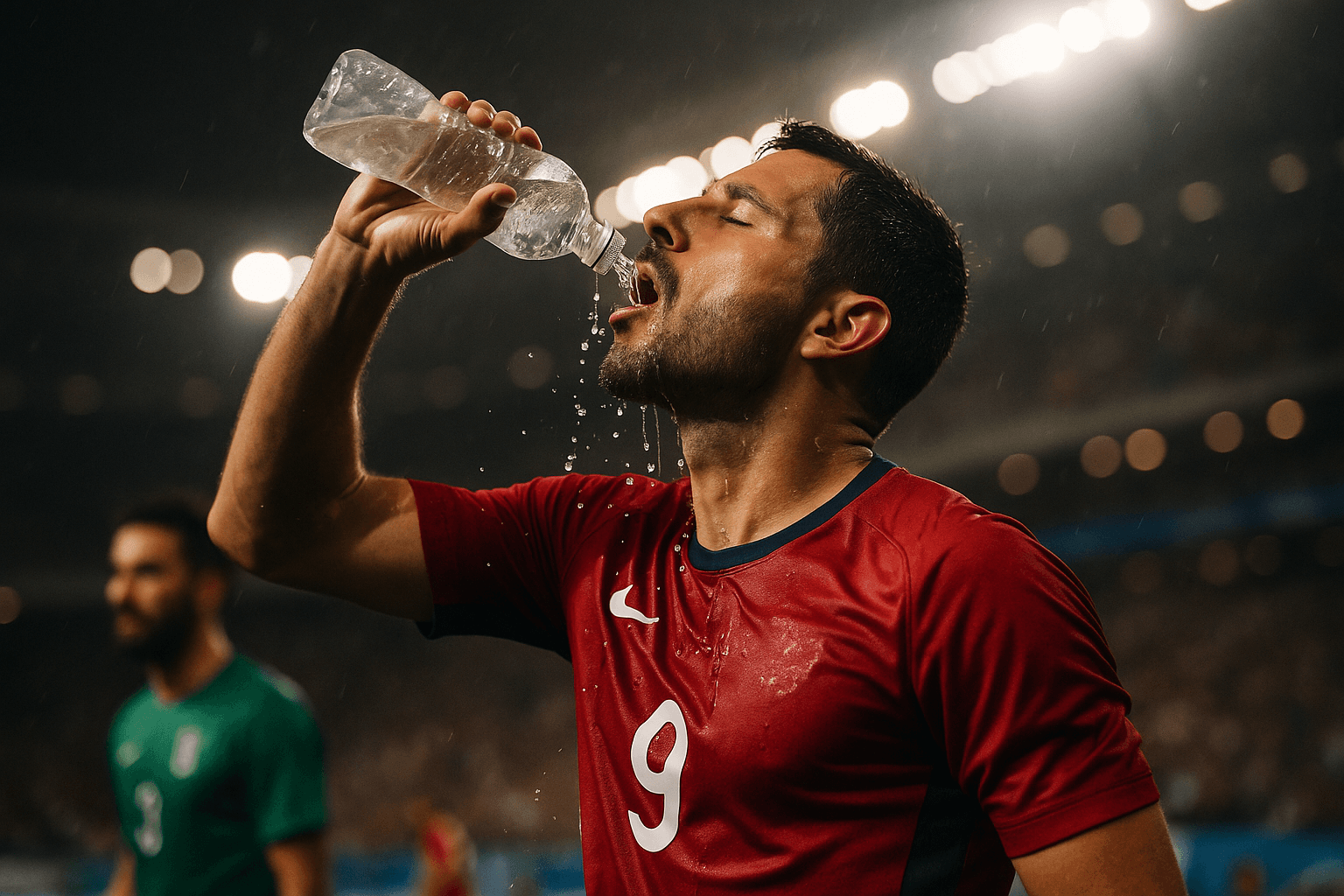
FIFA said on December 8, 2025 that every match at the 2026 World Cup will include a mandatory three minute hydration break 22 minutes into each half, irrespective of kickoff temperature or venue. Reuters reported the change as a standardization of earlier practice that allowed cooling breaks only when conditions exceeded a set threshold. FIFA’s World Cup chief tournament officer Manolo Zubiria framed the move as a player welfare measure and said exceptions would be handled on the spot, for example if an injury treatment overlapped the scheduled break.
The rule is straightforward in implementation but far reaching in effect. For athletes, a guaranteed pause at roughly the midpoint of each half presents a predictable window for recovery and medical attention. That predictability can reduce the cumulative risk of heat related illness in matches played in hot and humid venues. It also alters the physiological calculus for teams, since the pause may influence substitution timing, in game hydration strategies, and the management of players recovering from knocks or cramping.
For broadcasters and commercial partners, the hydration break converts an unpredictable interruption into a fixed scheduling element. Networks will be able to plan technical operations and advertiser inventory around known stoppages, potentially increasing the value of mid half advertising slots. Stadium operators and tournament planners will also need to coordinate public address announcements, stadium cooling systems, and the flow of concessions and amenities during these brief pauses.
The decision is a clear reflection of broader trends in sports governance where player welfare is increasingly central to major policy moves. Concerns about heat risk at several 2026 venues contributed to the shift, and FIFA’s blanket approach signals an acceptance that climate variability requires uniform safety protocols rather than venue specific exceptions. That posture is likely to reverberate beyond the World Cup, prompting national leagues and continental competitions to reassess heat related policies and the design of match day medical contingencies.
There are cultural and social dimensions to the change as well. Players from regions accustomed to extreme heat may welcome formal recognition of environmental hazards, while fans will see the pacing of matches adjusted in a way that foregrounds athlete safety. The rule also places a new spotlight on the selection and scheduling of host cities, reinforcing pressure on organizers to demonstrate how infrastructure and timing mitigate climate risks.
Practical questions remain about how referees and match officials will manage the overlap of hydration breaks with other stoppages such as injuries or VAR reviews. FIFA’s pledge to handle exceptions on site acknowledges that real time judgment will be required, and the consistency of those judgments will shape perceptions of fairness and competitive balance.
As the tournament draws closer, the hydration break will be an early test of FIFA’s ability to translate policy into consistent practice. Its success will be judged not just in reduced medical incidents but in how seamlessly it integrates into the rhythm of the game and the commercial engine that surrounds football at its biggest stage.