Four migrants die in ICE custody in early January 2026
Four migrants died in ICE custody Jan. 3–9; this explains who they were, what officials said, and the policy, operational and economic implications.
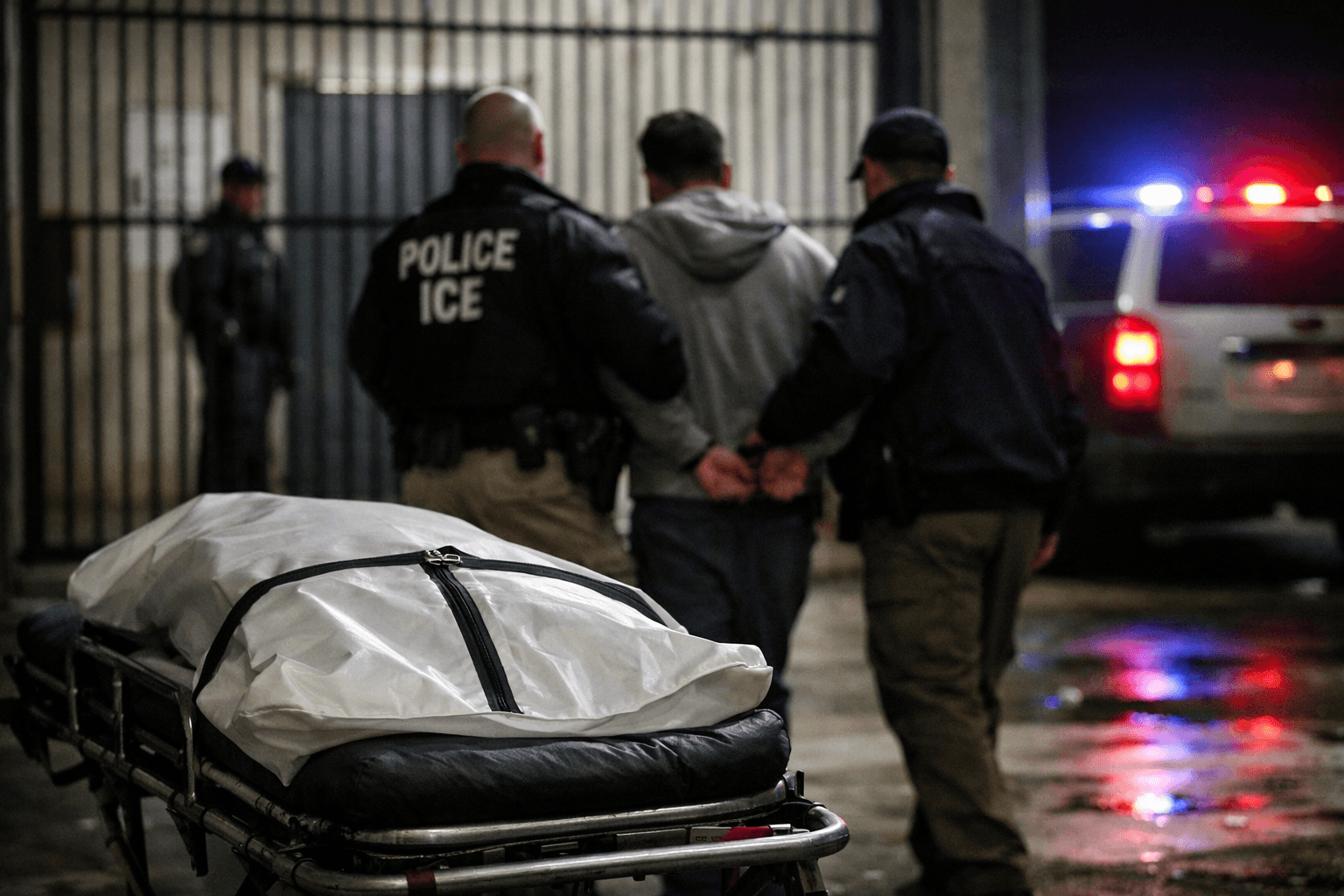
1. Four deaths reported ICE press releases identified four people who died in U.
S. Immigration and Customs Enforcement (ICE) custody between Jan. 3 and Jan. 9, 2026: two Hondurans, one Cuban and one Cambodian. The cluster of deaths occurred across multiple detention sites and hospitals and has renewed scrutiny of medical care, detention conditions and agency capacity as the detained population grows.
2. Geraldo Lunas Campos Geraldo Lunas Campos, 55, a Cuban detainee at Camp East Montana (the ICE facility located on the Fort Bliss military base in El Paso, Texas), was pronounced dead on Jan.
3 at 10:16 p.m., according to ICE. The agency said he experienced medical distress after becoming disruptive while waiting for medication, was placed in segregation, later observed in distress, and that on-site medical personnel responded and initiated lifesaving measures before emergency medical services were summoned; the death is under investigation.
3. Luis Gustavo Nunez Caceres Luis Gustavo Nunez Caceres, 42, a Honduran national, died Jan.
5 in an area hospital in Houston; ICE described his death as heart-related. ICE’s public account supplies the cause as cardiac-related but does not provide additional documented preexisting-condition or arrest-history details in its press release, underscoring limits to publicly available medical background in many custody fatalities.
4. Luis Beltran Yanez–Cruz Luis Beltran Yanez–Cruz, 68, another Honduran, died Jan.
6 in a hospital in Indio, California, also described by ICE as due to heart-related issues while he was held pending removal proceedings. Reporting adds that Yanez–Cruz was arrested Nov. 16, 2025, during an ICE targeted enforcement operation in Newark, New Jersey, and that he had a prior 1993 Texas arrest on suspicion of illegal entry; those arrest-history details were included in aggregated reporting of ICE statements.
5. Parady La Parady La, 46, a Cambodian detainee, died Jan.
9 at the Federal Detention Center in Philadelphia; ICE said he died following severe drug withdrawal symptoms. The Philadelphia facility was brought into use by the administration in 2025, and officials’ account points to withdrawal as the proximate clinical circumstance, raising questions about intake screening, medication-assisted treatment availability and clinical monitoring protocols.
6. 2025 mortality spike and long-term trend The four early-January deaths follow a sharp rise in detention deaths in 2025: agency figures and reporting indicate at least 30 people died in ICE custody last year, the highest level in roughly two decades.
That trajectory signals a structural shift in custodial mortality risk tied to a larger detention population and creates statistical momentum for policymakers and watchdogs to demand audits, independent reviews and reform.
7. ICE and DHS public defense DHS and ICE officials have defended detention care as capacity has expanded.
DHS spokesperson Tricia McLaughlin said the rate of deaths “had remained in step with historic norms” as the detained population increased and asserted that, as bed space expanded, the department had “maintained (a) higher standard of care than most prisons that hold US citizens - including providing access to proper medical care.” Those claims frame the agency’s legal and political defense but are contested by outside observers.
8. Advocacy and criticism Advocates have responded strongly.
Setareh Ghandehari, advocacy director at Detention Watch Network, called the high number of deaths “truly staggering” and urged the administration to close detention centers; reporting also notes policy changes that have reduced humanitarian releases, which critics say have left more people in custody or pushed them toward expedited deportation rather than release.
9. Operational scale, funding and local effects As of Jan.
7, 2026, ICE reported roughly 69,000 people in custody — a population expected to rise after a substantial ICE funding increase in 2025. Higher detention levels have downstream economic and operational effects: increased federal spending on detention beds and contracts, greater demand on local hospitals and emergency services near facilities, and potential fiscal exposure for counties that absorb public-health costs. For markets, larger enforcement budgets can shift federal spending priorities and affect contractors that operate detention and medical services, while litigation risk and reputational issues can influence contract pricing and insurer assessments.
10. Facility history, unrest and accountability Camp East Montana had seen at least one earlier detainee death (Guatemalan detainee Francisco Gaspar Cristóbal Andrés was taken to hospital Nov.
16 and died Dec. 3, 2025), and reporting highlights concerns about medical staffing and trained personnel at new or expanded sites. The wave of in-custody deaths coincided with broader unrest tied to immigration enforcement, including the fatal shooting by an ICE officer of a Minnesota mother of three that sparked demonstrations; those events intensify political scrutiny, increase the likelihood of congressional oversight hearings, and could prompt administrative or legislative policy changes with budgetary and market consequences.
Conclusion (implicit) Taken together, the four deaths in the first 10 days of January and the 2025 mortality peak present an immediate policy challenge for DHS and Congress: balancing enforcement goals with medical stewardship, legal risk and the economic effects of expanding detention. The statistical pattern — rising custody numbers and mortality — will shape oversight, litigation, local health system planning and federal budget debates through 2026.
Sources:
Know something we missed? Have a correction or additional information?
Submit a Tip