Iranians use Starlink to pierce blackout, exposing health and equity risks
Iranians are tapping SpaceX’s Starlink to bypass a nationwide blackout during mass protests, raising urgent public health, privacy and equity concerns.
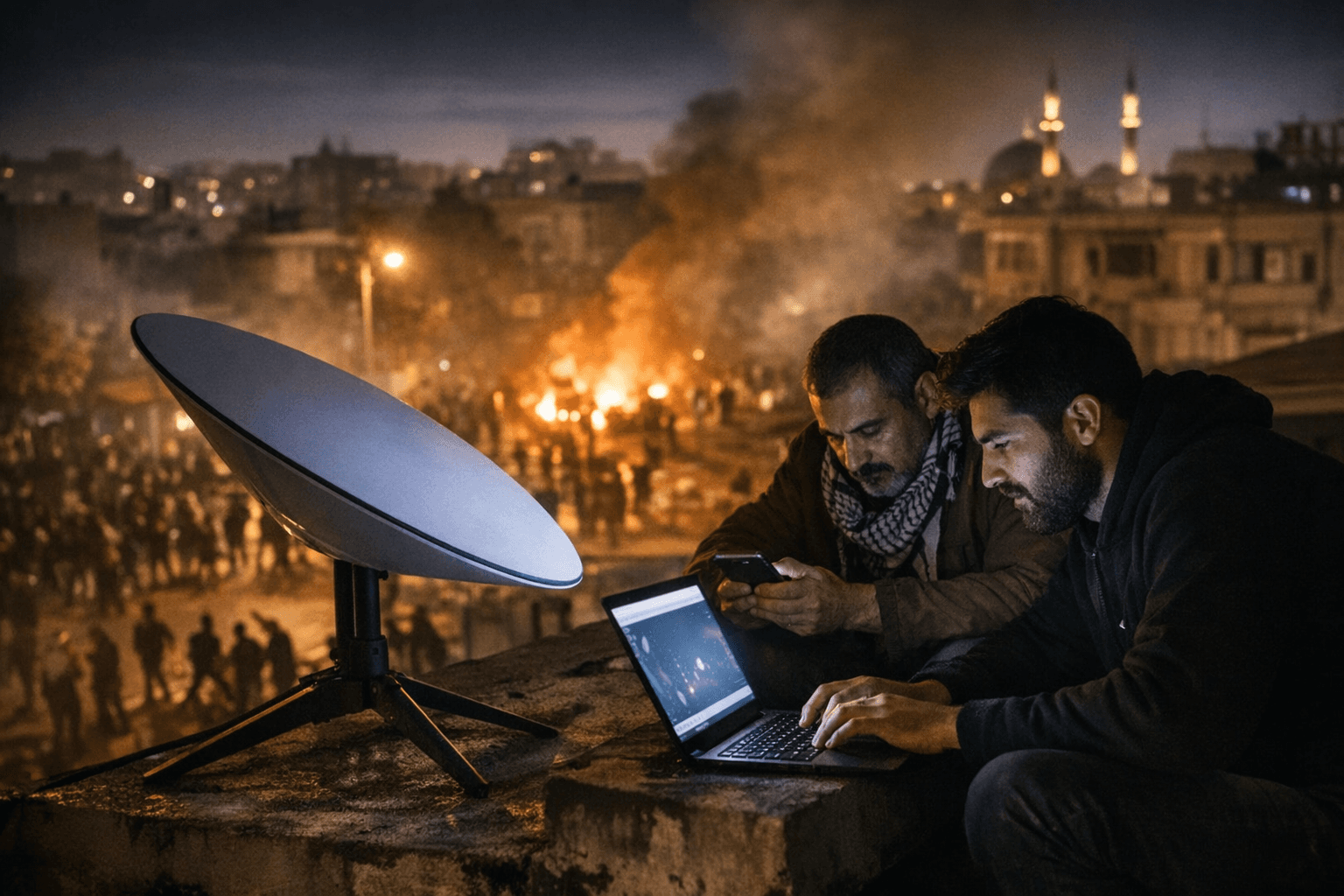
Iranians are using SpaceX’s Starlink satellite internet service to obtain connectivity as the government imposes a near-total communications blackout amid nationwide protests. Elon Musk posted on X that “The beams are on,” and multiple sources say Starlink coverage is presently available over Iran, with some access reportedly offered free for a limited period. Estimates of how many people are online through the system vary widely, reflecting the secrecy and danger surrounding its use.
Smuggled Starlink terminals have become a lifeline in some communities. The flat, pizza-box antennas require an open sky and a local router to provide household internet. Volunteers and, according to multiple accounts, foreign operatives have ferried kits across Kurdish and Baloch border regions, sometimes hidden in truck beds and fuel tanks. Industry analysts and on-the-ground estimates differ: some place clandestine dishes at about 20,000, while others suggest as many as 100,000 users are receiving service on black markets where a terminal can sell for more than $2,000—roughly 20 times the average monthly wage.
The return of connectivity is not only a matter of information flow; it carries immediate public health consequences. Communications blackouts impede emergency dispatch systems, interrupt telemedicine and sever lines between clinics and central hospitals. Hospitals and ambulances in areas with disrupted service face delays in triage and transfers, while families become unable to confirm the safety of relatives. The digital divide is sharpened under these conditions: wealthier Iranians or those connected to smuggling networks can reach aid and information, while poorer and rural communities are left isolated.
The Iranian government has declared Starlink terminals “illegal” and warned that importing or operating them “will expose offenders to the full force of the law.” Tehran has deployed jamming technology to try to interrupt satellite links and has raised the issue with international telecommunications bodies. Those efforts are complicated by the low-Earth-orbit architecture of services such as Starlink, which can blanket large territories and are harder to suppress than terrestrial networks.
The protests themselves are sprawling and contested. Activists, rights groups and local monitors provide conflicting counts: one U.S.-based group, HRANA, has verified the deaths of 490 protesters and 48 security personnel and reports more than 10,600 arrests in recent weeks; other tallies place deaths in the dozens. Protesters have taken to streets across provinces, driven by economic collapse, hyperinflation and political grievances, and security responses have been heavy-handed in many locales.
The shift to satellite connectivity brings cybersecurity risks that imperil both protesters and ordinary users. Security firm Lookout has identified spyware campaigns using Starlink-themed lures, including a family of malicious Android packages labeled with names such as “Earth VPN” and “Comodo VPN.” One sample uploaded under an APK filename tied to “starlink_vpn” was linked to spyware capable of harvesting call logs, location data, SMS messages and audio recordings. Such tools pose grave risks to activists, patients and health workers relying on ad hoc networks.
International precedent complicates policy choices. Starlink has been used in other conflict zones and has at times been subject to temporary restrictions to avoid exacerbating military risks. For humanitarian actors and public health officials, the current situation underscores a pressing need: protecting basic communications as an element of health care and human dignity while safeguarding privacy and preventing surveillance-driven harm. Without concerted international safeguards and equitable access measures, satellite lifelines may feed essential information to some while exposing others to new forms of danger.
Sources:
Know something we missed? Have a correction or additional information?
Submit a Tip