FTC and States Accuse Uber of Deceptive Subscription Billing Practices
The U.S. Federal Trade Commission, joined by 21 states and the District of Columbia, today files an amended complaint accusing Uber of misleading consumers about its Uber One subscription and making cancellation unduly difficult. The case could reshape how major platforms sell subscription services and affect millions of riders and shoppers who rely on app based billing.
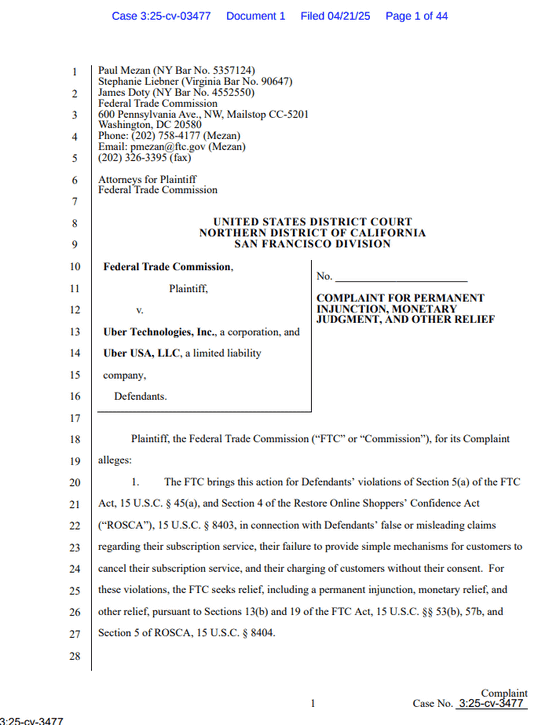
The U.S. Federal Trade Commission, joined by 21 states and the District of Columbia, files an amended complaint in the U.S. District Court for the Northern District of California today, accusing Uber Technologies and Uber USA of deceptive billing and cancellation practices tied to the Uber One subscription service. The filing updates an original case the FTC brought in April and expands the group of state enforcers pursuing the matter.
The complaint alleges that Uber enrolled consumers in recurring paid subscriptions without obtaining informed consent, failed to deliver the savings it advertised, and erected a complicated cancellation process that in many cases prevented consumers from successfully ending their subscriptions. The amended pleading says Uber did not clearly and conspicuously disclose, before obtaining billing information, key terms of the transactions including whether enrollment would result in a recurring charge, how much consumers would actually save, when billing would occur, and how to cancel.
The FTC asserts violations of the Federal Trade Commission Act and the Restore Online Shoppers Confidence Act, statutes the agency says require clear disclosure of material terms, affirmative consumer consent before billing, and a simple means to cancel subscriptions. In the amended complaint the agency seeks a permanent injunction, refunds for affected consumers, and other equitable relief consistent with prior enforcement actions.
The updated case follows an investigation that the agency says began after numerous consumer complaints about unexpected charges and difficulty canceling Uber One subscriptions. The April complaint launched the litigation, and the addition of 21 states and the District of Columbia in the amended filing signals a broader state and federal alignment on how subscription commerce should be regulated.
Enforcement precedent cited by regulators includes recent actions against other technology companies for similar practices. In March the agency reached a settlement with a startup that the FTC said required consumers to enroll in a recurring paid subscription to access advertised services. That matter was treated as an early example of the agency applying both statutes in subscription cases and may inform remedies sought in the Uber litigation.

Legal experts say the case could have wide consequences for the technology sector because many companies rely on subscription models and in app billing to generate recurring revenue. If the court finds the alleged conduct unlawful, companies may need to redesign checkout flows, make annual and monthly savings claims more transparent, and redesign cancellation pathways to be simpler and more obvious to consumers.
For consumers the litigation highlights a common tension in modern digital commerce between convenience and consent. Regulators contend that the ease of buying services in an app should not come at the cost of clear notice when those purchases trigger ongoing charges. For Uber the allegations threaten both a potential financial penalty and a requirement to alter a high profile part of its commerce strategy.
The case will proceed in the U.S. District Court for the Northern District of California where the amended complaint is now filed. The timeline for motions and any trial has not been set by the court.
Know something we missed? Have a correction or additional information?
Submit a Tip