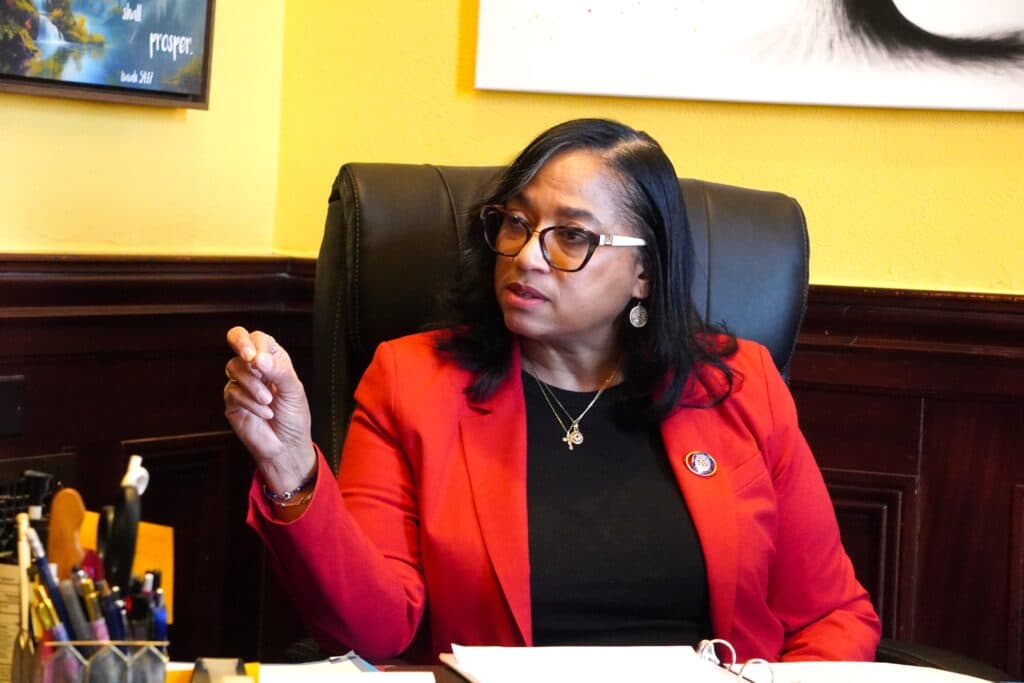
Governor Unveils Housing Plan, Approves Capitol Heights Station Redevelopment
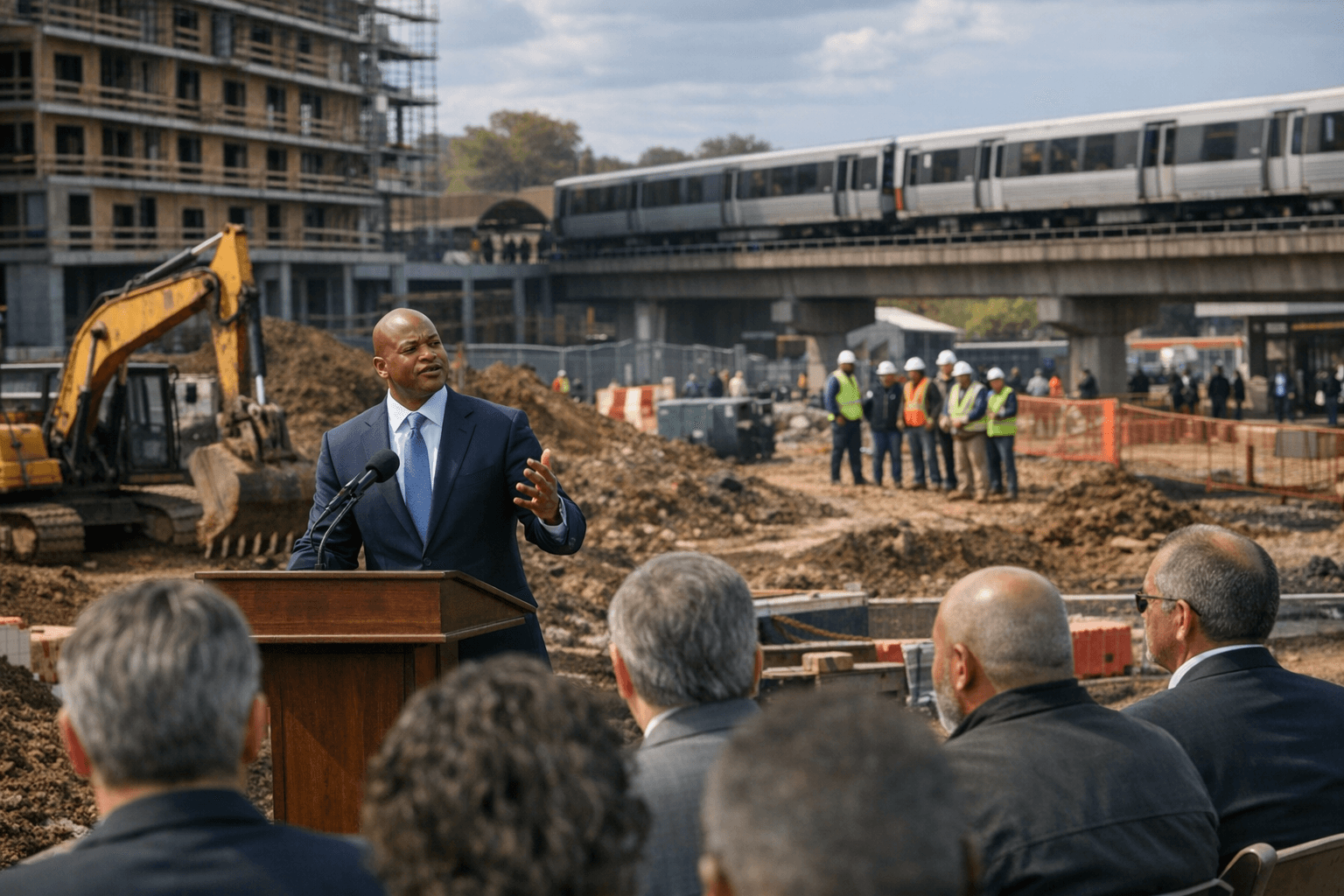
On January 7, Gov. Wes Moore announced a 2026 housing package at the Capitol Heights Metro station that targets transit-oriented development and new incentives to boost affordable housing. The announcement coincided with the selection of a developer to redevelop land adjacent to the Capitol Heights station, a move county leaders say could serve as a model for mixed-use, transit-linked neighborhoods in Prince George's County.
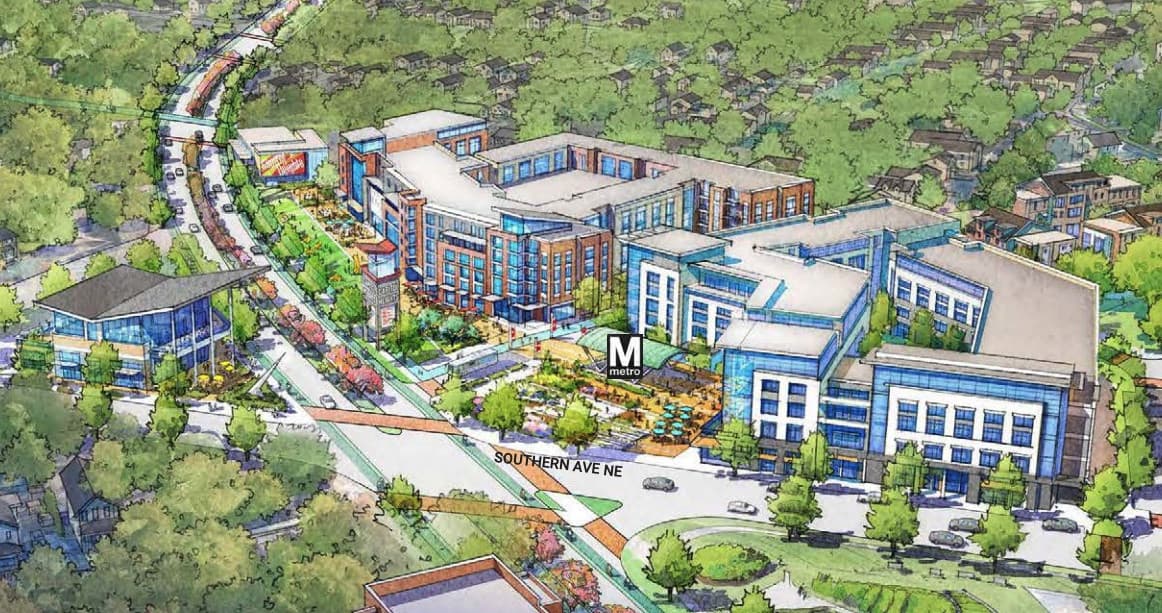
Governor Wes Moore used the high-profile setting at the Capitol Heights Metro station on January 7 to outline a 2026 housing package aimed at accelerating development near transit hubs and expanding affordable housing options. Central to the plan are measures to promote transit-oriented development, including the removal of parking minimums near transit and additional incentives intended to lower the cost of building affordable units. State officials announced the selection of a private developer to redevelop county-owned land beside the Capitol Heights station, a pilot that county leaders have framed as an example for future projects along the Blue Line Corridor.
The selection and package together mark a shift toward using land near transit to create denser, mixed-use communities. State and county investments are being directed to support not only housing but also community amenities that can make the neighborhood more walkable and transit friendly. For residents of Prince George's County, that could mean greater access to affordable rental or ownership options within easy reach of Metrorail, along with new retail, public spaces, or services clustered around the station.
Local officials have responded to the announcement by positioning the Capitol Heights project as a model for housing near transit, signaling cooperation between state and county agencies on broader corridor goals. The Blue Line Corridor initiative provides the contextual framework for coordinated development along this transit spine, and state-level incentives are designed to encourage builders to prioritize affordability and proximity to transit over car-oriented designs.
Practical effects for nearby communities will unfold over time. Redevelopment can bring construction jobs, expanded services, and improvements to public realm infrastructure, but it also raises questions about displacement, affordability protections, and the pace of change. The removal of parking minimums is likely to reduce development costs and encourage lower-car dependency, but it will require careful local planning to ensure access for residents who rely on vehicles and to manage curbside and transit access.
Next steps include detailed project planning, permitting and community engagement before construction can begin. As the Capitol Heights site moves from selection to implementation, residents and local leaders will face choices about design, amenities, and safeguards to ensure new development benefits long-term community members. The initiative places Prince George's County within a national and global trend toward transit-linked housing, offering opportunities to expand affordable options while testing policies that other jurisdictions are watching closely.
Sources:
Know something we missed? Have a correction or additional information?
Submit a Tip